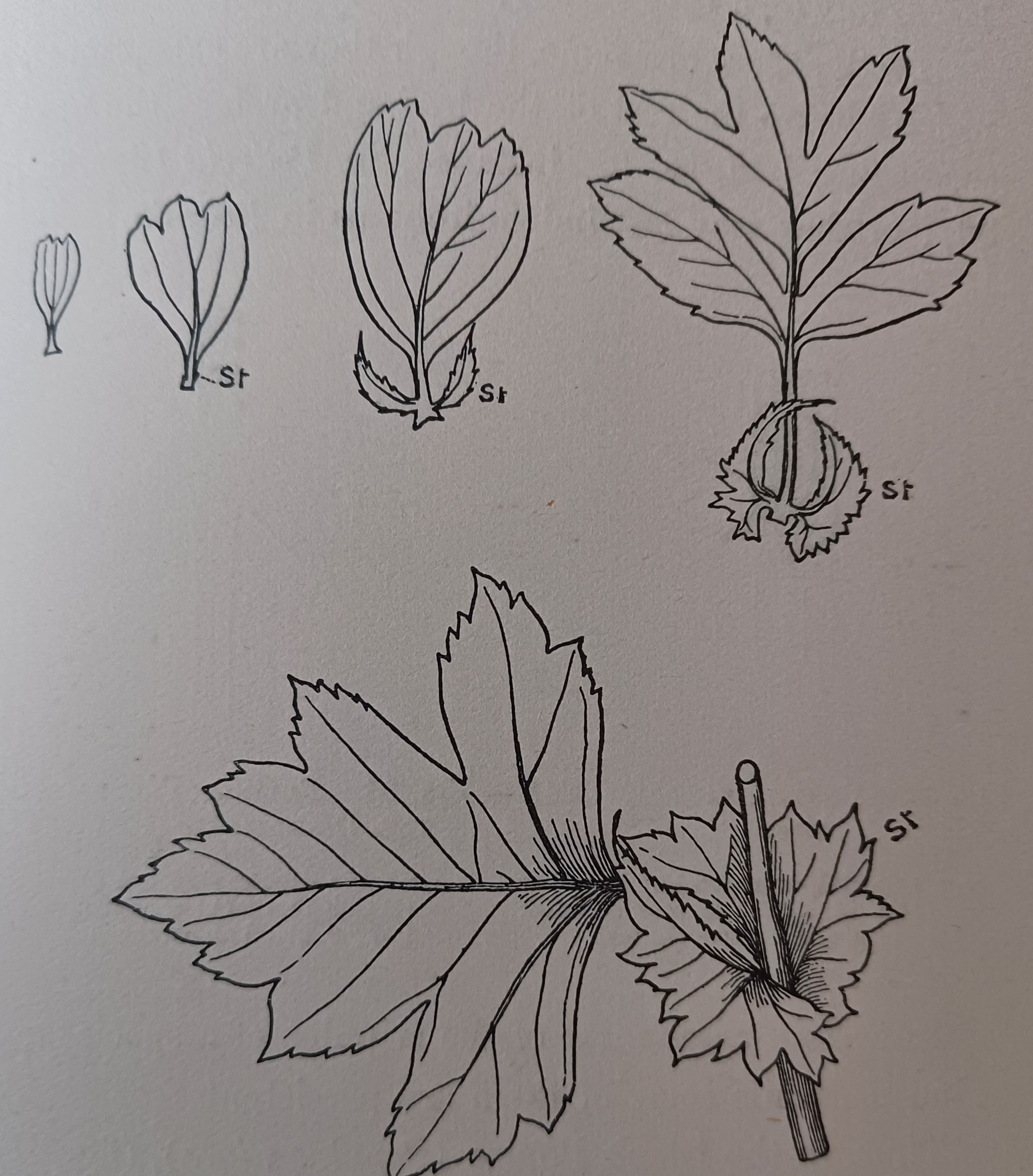
Whilst browsing the second hand books for sale at Leighton Moss RSPB reserve on our recent field trip I was intrigued enough to part with a little cash in exchange for a book titled, ‘On Buds and Stipules’, published in 1908 as part of an ‘International Scientific Series’ by one Lord Avebury, aka John Lubbock. I’m not sure what I was most entertained by – the idea of a whole book on the function of these very specific plant parts or that, from the bookplate in the front, this book had once been part of Sefton Road Congregational Church’s Men’s Fellowship Lending Library. I have to say, though, that there is no evidence that anyone actually borrowed it!
The book takes a systematic look at how different plant species protect their young leaf tissues from cold and insect damage by using buds, before going on to look at why some plant species have stipules – small projections of leaf tissue around the base of the leaves – which add an additional layer of protection to the buds. The book is a true labour of love, full of meticulous line drawings and coloured plates, showing the many different ways in which new leaves can be folded up and protected in a bud or by older leaf tissue.


However John Lubbock’s life (1834-1913) turns out to be at least as interesting as the book. He came from a family of wealthy London bankers and grew up on the High Elms estate near Downe, in Kent. His father, also John Lubbock, was a Fellow of the Royal Society and Vice Chancellor of London university, for a time, so it was always likely that the younger John Lubbock would be fascinated by science. When Charles Darwin and his family moved to Down House in 1842, they became the Lubbocks’ neighbours and John junior, as a young man, was much influenced by Darwin, helping with some of his detailed studies on barnacles. This work on barnacles, niche as it might seem, was key in allowing Darwin to show the huge extent to which variation occurred within a related group of organisms, in both structure and reproductive strategies – early evidence to back up his then-contentious idea that species were not fixed for ever but could change over time – the idea of transmutation.
The biological illustration skills John Lubbock learned while working with Darwin clearly stood him in good stead for his own, later, scientific publications but, more than that, this period had a profound effect on Lubbock’s intellectual development. He became passionate about both archaeology and evolutionary biology and published articles where he used archaeological evidence about human development to support Darwin’s theories. In 1864, he became a founding member of the ‘X Club’; a monthly dining club of nine men (including Joseph Hooker and Thomas Huxley) who worked together to, “partake in scientific discussion free from theological influence” and aimed to reform the Royal Society into a more professional body.
In 1870 Lubbock was elected as a Liberal MP. He was instrumental in pushing a number of important, progressive acts through parliament, promoting the teaching of science and a universal elementary education, as well as the Ancient Monuments Protection Act of 1882, which gave the government responsibility for preserving and maintaining ancient monuments, as you might guess from the name! He put his money where his mouth was and, in the 1870s, bought land at Avebury, the largest Stone Age site in Britain, to prevent part of the stone circle from being built on. This is why, when he was raised to the peerage in 1900, he adopted the title of Baron Avebury.
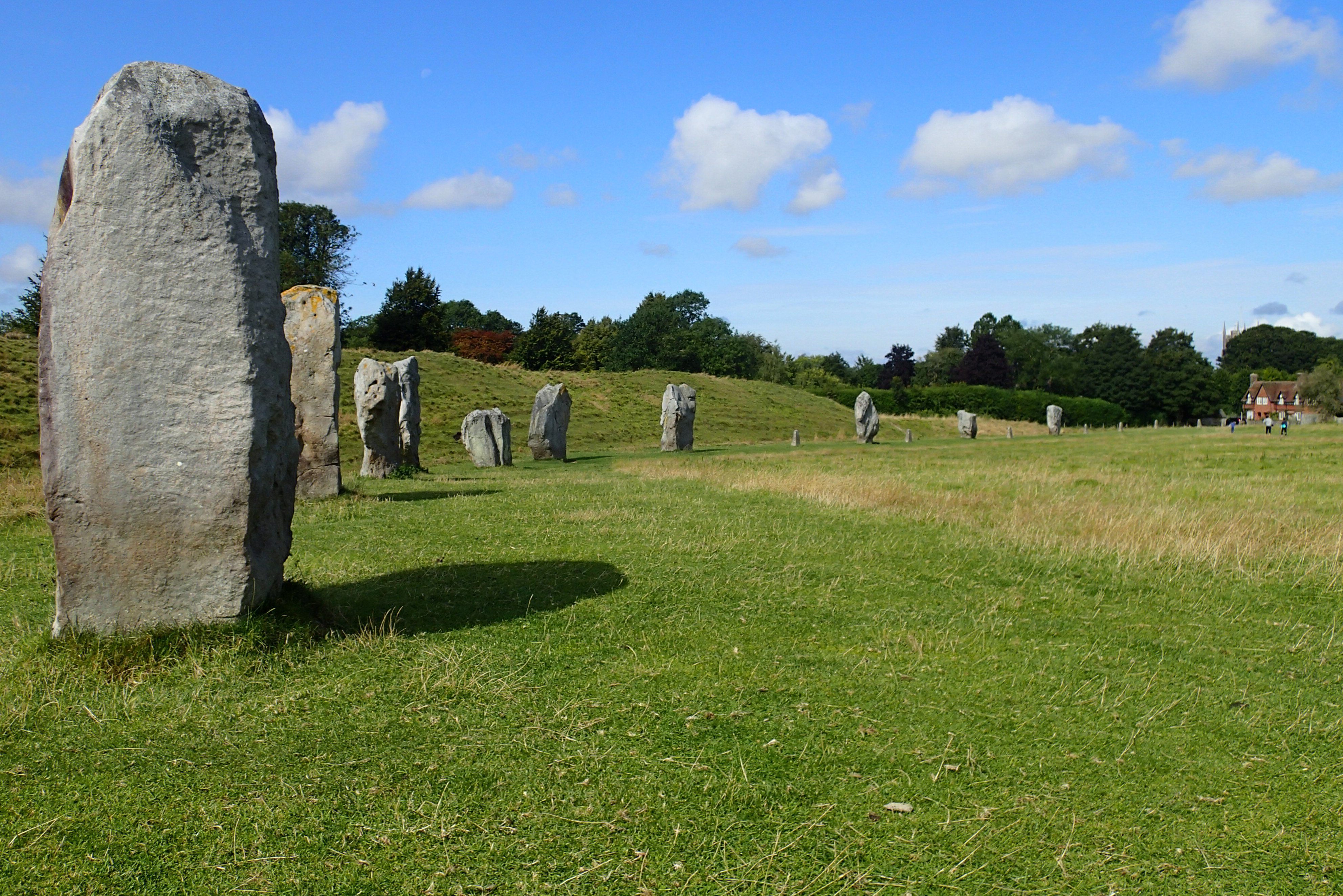
As well writing the standard late-19th Century textbook on archaeology, Pre-Historic Times, a second archaeology book entitled On the Origin of Civilization and his treatise On Buds and Stipules, Lubbock also found time to write books on the hymenoptera (ants, bees and wasps) and springtails – a true polymath and also a philanthropist. He was also president of the Linnean society, British Chamber of Commerce and Chair of London City Council, for a period, as well as being a privy councillor. I suspect little of this would have been possible, though, without the privileged existence into which John Lubbock was born. Not many of us have the financial buffer of being made a partner in our father’s bank at the age of 22!
 heatherkellyblog - travel with me and wonder at what you see!