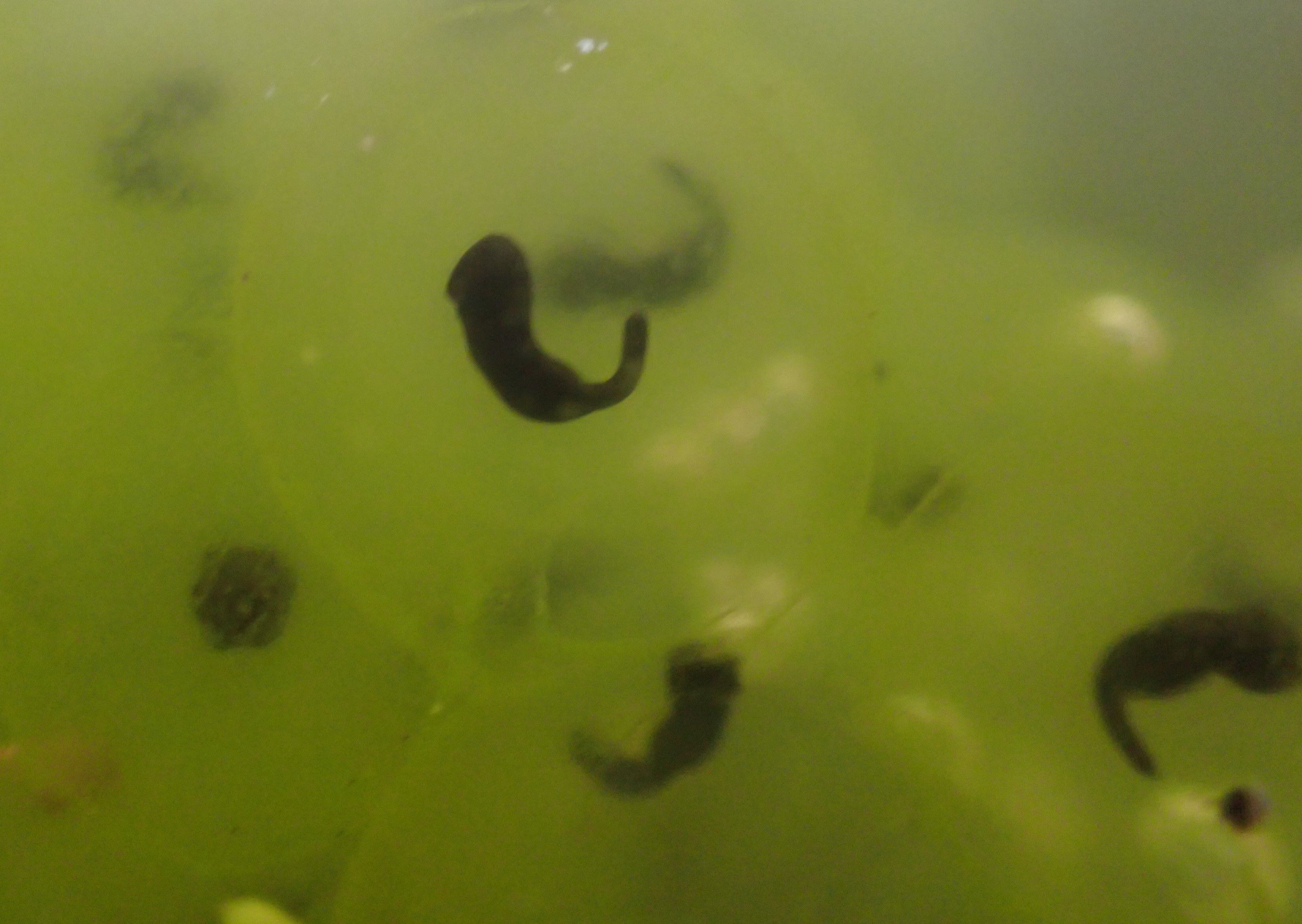
Another week of wildly swithering weather where we woke up some mornings to ice but where, once the sun got up, it was positively spring-like. I worried about the frogspawn when the surface of the pond froze but am happy to report that the pill-like eggs I saw a few weeks ago have now elongated into gently-wriggling, comma-shaped embryos, so all is well.
On a lunchtime walk through the Botanic gardens with students we found a less fortunate Common Newt, squashed on the path – hopefully it’s an indication that there are others around.
I thought I heard lambs as I cycled past East Grange farm on the way to work last week and this week I got to see them, now they’ve been moved to the field near the road with their mums. Tuesday was the first day, too, when there were lots of Dandelion flowers open in the sunshine rather than just a few, bedraggled individuals. Love them or hate them (I love them) they are a very welcome source of food for early insects, including the bees we worry so much about. On my walk up through Cardiac Hill to the department I spotted the first few Wood Anemones in flower and many more leaves, folded up like tiny umbrellas, pushing their way up through the leaf litter. Soon the woodland floor will be covered in nodding white blooms and buzzing with insect life.
I was puzzled on a morning run up to Heugh Hall this week to see a newly planted pine tree near the path, only five feet tall, but with mature looking cones. The mystery was solved when I realised the cones were hung on pretty Christmas ribbons. The tree is very close to the gate so I hope whoever went in for this particular bit of guerilla gardening has thought about how big the tree will grow!
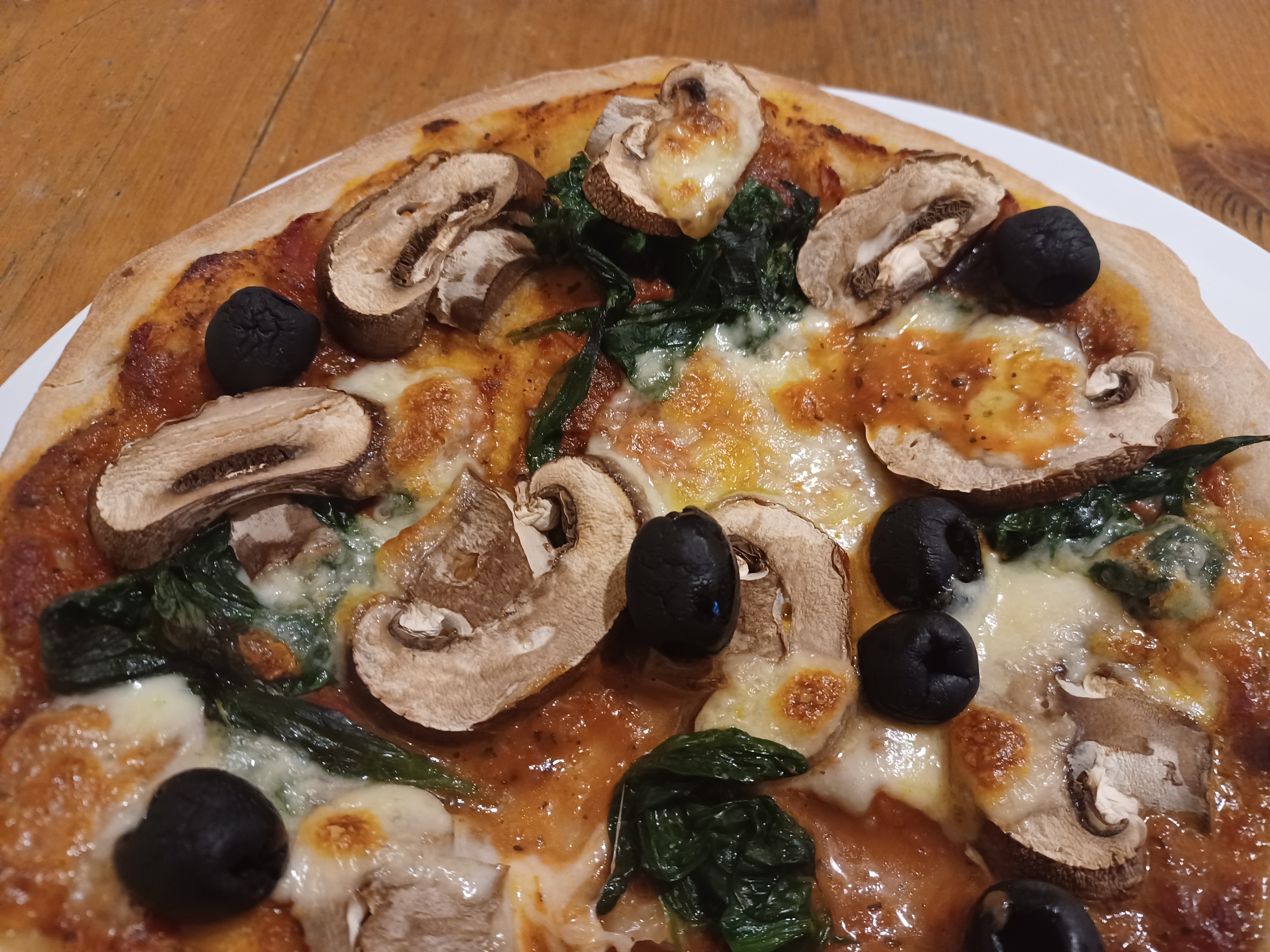
The spring foraging season has officially started, with lots of Garlic Mustard leaves showing beneath hedgerows and the leaves of the self-seeded wild garlic in my garden finally large enough to enjoy on a pizza. Pesto is next on the list!
On Friday evening we headed south towards Leeds for meal at Prashad, a rather special Indian vegetarian restaurant in the little Yorkshire village of Drighlington. The Red Kite I saw wheeling over the M1, with a murder of crows in hot pursuit, is one of an estimated ten thousand in the UK today. I often see them when I travel across the A75 to my parents’ house and sometimes they are lucky enough to see Kites from their garden. It has not always been thus – in the late 1980s, Red Kite numbers in the UK had dwindled to just a few breeding pairs in central Wales, as a result of both egg collection and persecution of the adult birds by gamekeepers; the birds were on the IUCN red list. To try and address this, thirteen young breeding pairs from Spain were introduced in the Chiltern Hills AONB in 1990, and more over the next few years.
My own first recollection of seeing Red Kites is from when they were reintroduced near Loch Ken in Dumfries and Galloway, in 2001, having been extinct in the area for 130 years. At first, the newly released birds were fed daily at a feeding station near Laurieston, and we took our young children there to watch. Happily, this is no longer necessary; the population is now thriving, despite the occasional run in with gamekeepers or farmers convinced the birds are killing lambs or their game birds. The Galloway Kite Trail around Loch Ken was set up in 2003 on the back of the reintroductions, partly as an attempt to help the area recover economically from the effects of the Foot and Mouth crisis in 2001, but also to raise public awareness of Kites. The trail drew some 100 000 visitors to the area between 2004 and 2015; visitors estimated to have spent £54.6m in Dumfries and Galloway, £8.2m of this directly attributable them coming to the area to see the kites. A rare, good news story where conservation and the rural economy have both benefitted, and a model for other conservation efforts, surely.
We have Red Kites closer to home too, reintroduced around the lower part of the River Derwent, on the edge of Gateshead, between 2004 and 2006. It’s a much more urban environment than the earlier introductions, but the birds have thrived here too. We’ve spotted the birds soaring above us when walking parts of the Red Kite trail around Rowlands Gill and Chopwell woods in the past, but writing this has reminded me that walking the whole eleven mile loop would be a good spring or summer project.
My last natural adventure of the week was a short run along old railway lines repurposed as the Spen Valley Greenway, near where we stayed in Liversedge. The area reminds me a lot of our part of County Durham – a patchwork of rural and more urban areas, cheek by jowl. My run was brightened by hearing my first drumming woodpecker of the year and seeing Sally Matthew’s flock of Swaledale Sheep, made from recycled industrial scrap. It was good, too, to pass a sign for the Jo Cox Community Woodland, planted in late 2019 and early 2020, just before the Covid Pandemic struck. I didn’t run through the wood but hope it will prove a welcome sanctuary, like Pages Wood in Harold Wood, for both people and wildlife in years to come. It seems a fitting memorial to the murdered MP, especially in a time of heightened tensions between communities as a result of the war in Gaza.

I’m still reading A Gentleman in Moscow, by Amor
Towles, which is turning into a fascinating account of how Russia changed for ordinary people between the 1920s and 1940s, still seen through the eyes of Count Rostov.
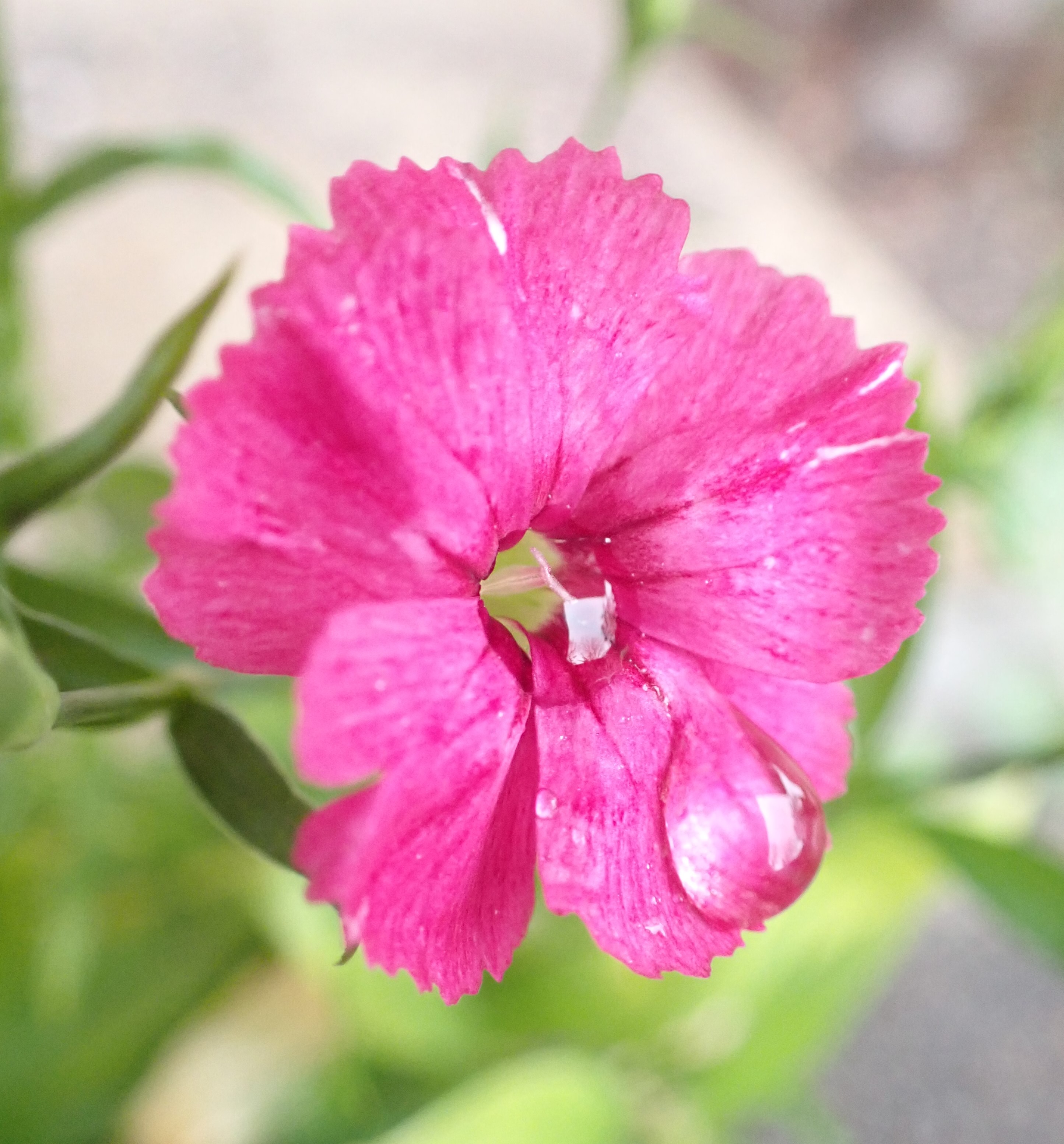
In the garden there are big clumps of purple crocus in flower, when the sun shines, along with the autumn-flowering pinks which were a freebie from Booths supermarket in Windermere, last December – what’s not to love! I’ve still done nothing much about planting seeds though, the weather has been so unpredictable.

Our culinary highlight this week was definitely the seven course tasting menu at Prashad. The Puri served three ways and Lasan Paneer Tikka were probably my favourite courses, though the deconstructed Masala Dosa was also delicious, and easier than the Puri to eat without ending up with Coriander chutney running down my chin!
 heatherkellyblog - travel with me and wonder at what you see!