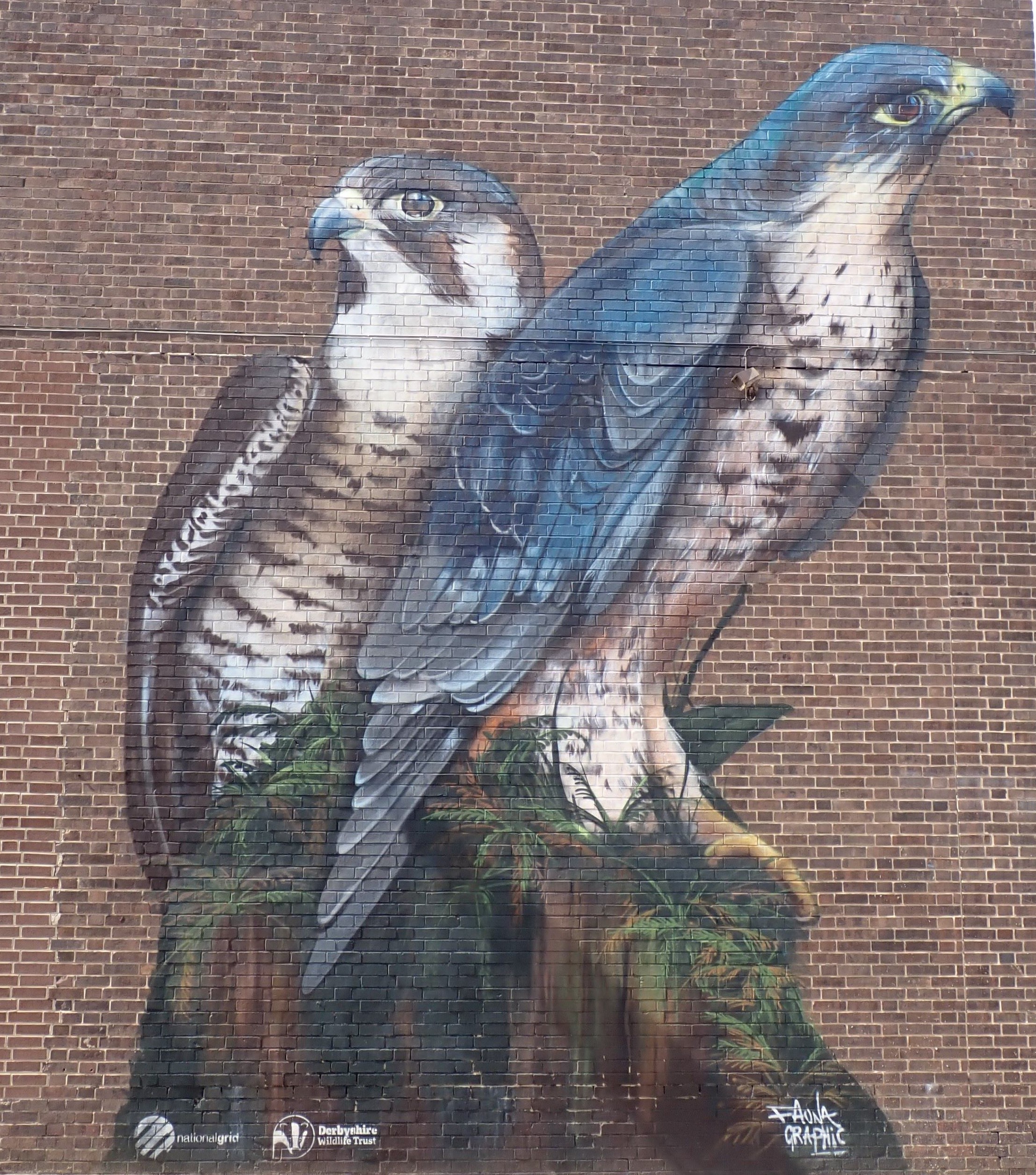
I spent the start of this week at a Nature Connectedness Conference held at the Museum of Making at the Silk Mill in Derby, which claims to be the oldest factory in the world and is home to a beautiful mural of the Peregrine Falcons which live on the nearby Cathedral.
There were lots of thought-provoking talks on both the theoretical importance and the practicalities of how to connect people with nature, with some amazing case studies. One talk which struck me particularly forcefully was by Dom Higgins, Head of Health and Education for the Wildlife Trusts. He outlined the collective goals of those in the nature connectedness community, stressing nature recovery and nature based solutions for tacking issues such as health inequality, before going on to give an economic assessment of the ‘Natural health services’ provided by the Wildlife Trusts. A recent report based on data from five regional Wildlife Trusts provided clear evidence that nature-based health and wellbeing services saves money, even if that is not a primary goal of interventions. They predicted savings of £100 million per year for the NHS, per 1.2 million people reached, with more general societal returns of six to eight pounds for every one pound invested. Surely that ought to be enough to get our new government listening attentively? It was encouraging to hear that Sir Michael Marmot, who leads UCL’s Institute of Health Equity, has been talking behind the scenes to those likely to be in positions of influence in a new Labour cabinet about what the role nature connectedness can play in addressing health inequalities.
The conference did mean more time indoors than is ideal on a couple of beautiful summer days but I did spot four species of Asplenium fern growing on the wall by the Sheffield tramway on my short walk to the station and then walking along the canal in Derby saw a kingfisher on a branch, so not a bad haul for the day!

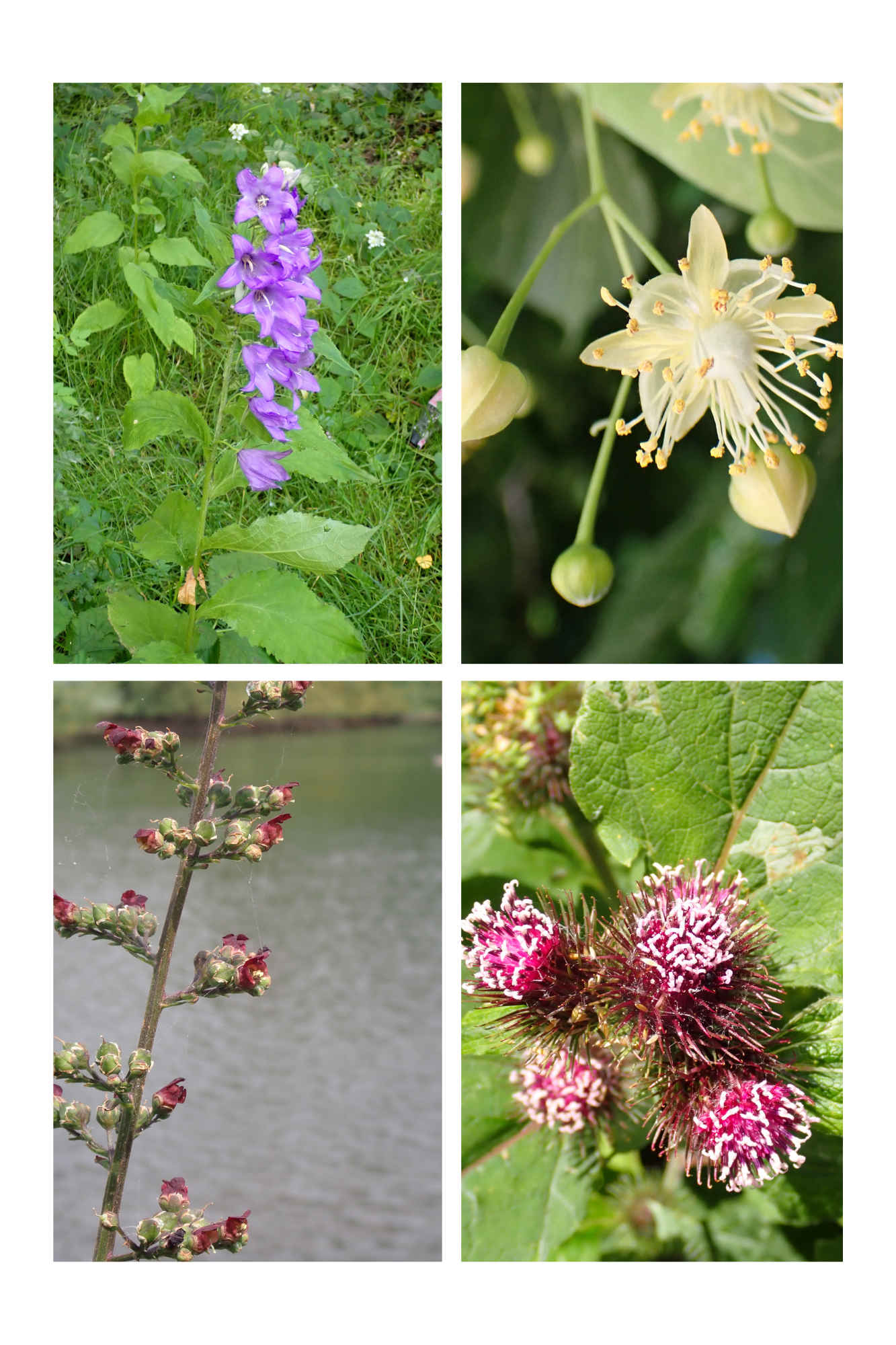
My walk back to the station on a very hot Tuesday afternoon gave me a chance to enjoy Lime trees in flower and poppies, bellflowers and Water figwort by the river. Water Figwort looks rather different to the common version I saw at Leighton Moss, last week, with brighter red flowers and broad white edges to each sepal, which are easier to see when the flowers have set seed. There were lots of Canada Geese feeding at the base of the weirs in the centre of the city too.
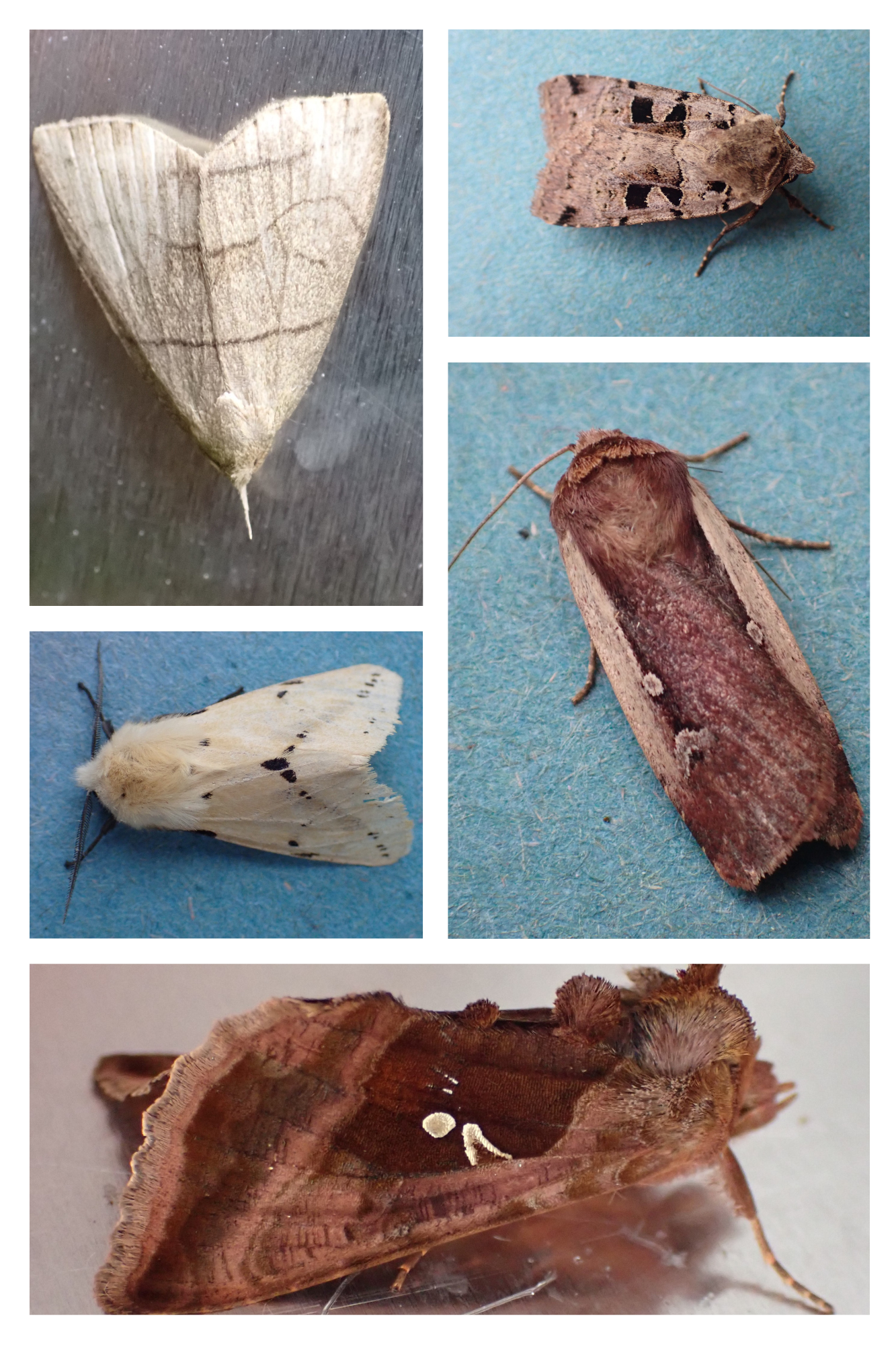
Reassuringly, I had more success with my moth trap this week after some hot weather, with at least 13 species of moth one night including Brown House and Small Fan-foot moths, which I’d not seen in my trap before, as well as some familiar friends.
The less-mown grass around the department is now sporting lots of Self-heal and some Lesser Stitchwort, which is lovely to see. These are faring much better than the native wildflowers grown from seed and carefully transplanted around the building, I’m glad to say – they are obviously less interesting to the local rabbits!

Now that term is over I was lucky enough to have an early Friday/Saturday weekend at two of Northumberland’s lovely estates at Wallington and Belsay with Sue. The highlight at Wallington was undoubtedly the walled garden, which I’ve not visited in years, though the wild parkland with a lovely children’s play area was enough to make me think another visit with Kate, Ed and Casper this summer would be a good thing. We didn’t see any of the resident Red Squirrels and our chances of that are probably no higher with Casper in tow!

At Belsay the highlights were the woodland walk and the quarry garden. The slope facing the house is a mass of different coloured Rhododendrons and Azaleas earlier in the year but the woodland behind it is a beautiful wild space with a path which loops round the hilltop above the lake.

Closer to home, it’s starting to feel like mid-summer now, with Upright Hedge-parsley, Hedge and Ladies Bedstraw, and lots of Common Knapweed flowering on my regular run up to Quarrington Hill.
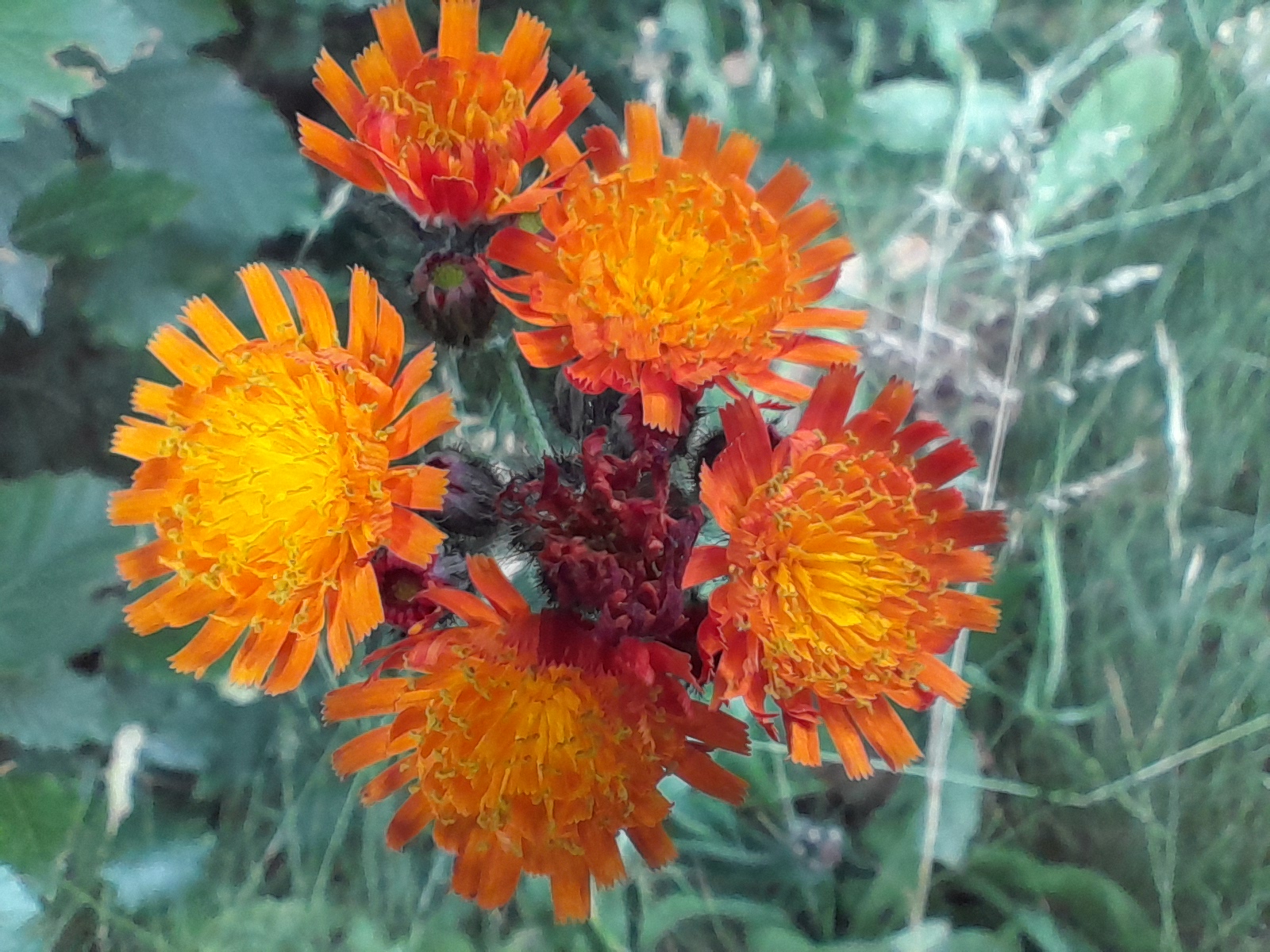
In the garden I finally have Fox-and-cubs flowering in the front garden along with Small Scabious. I trimmed the hedge to let a little more light in but I think some of the seedlings I transplanted have succumbed. I know Fox-and-cubs is introduced but I love the pop of colour it produces!
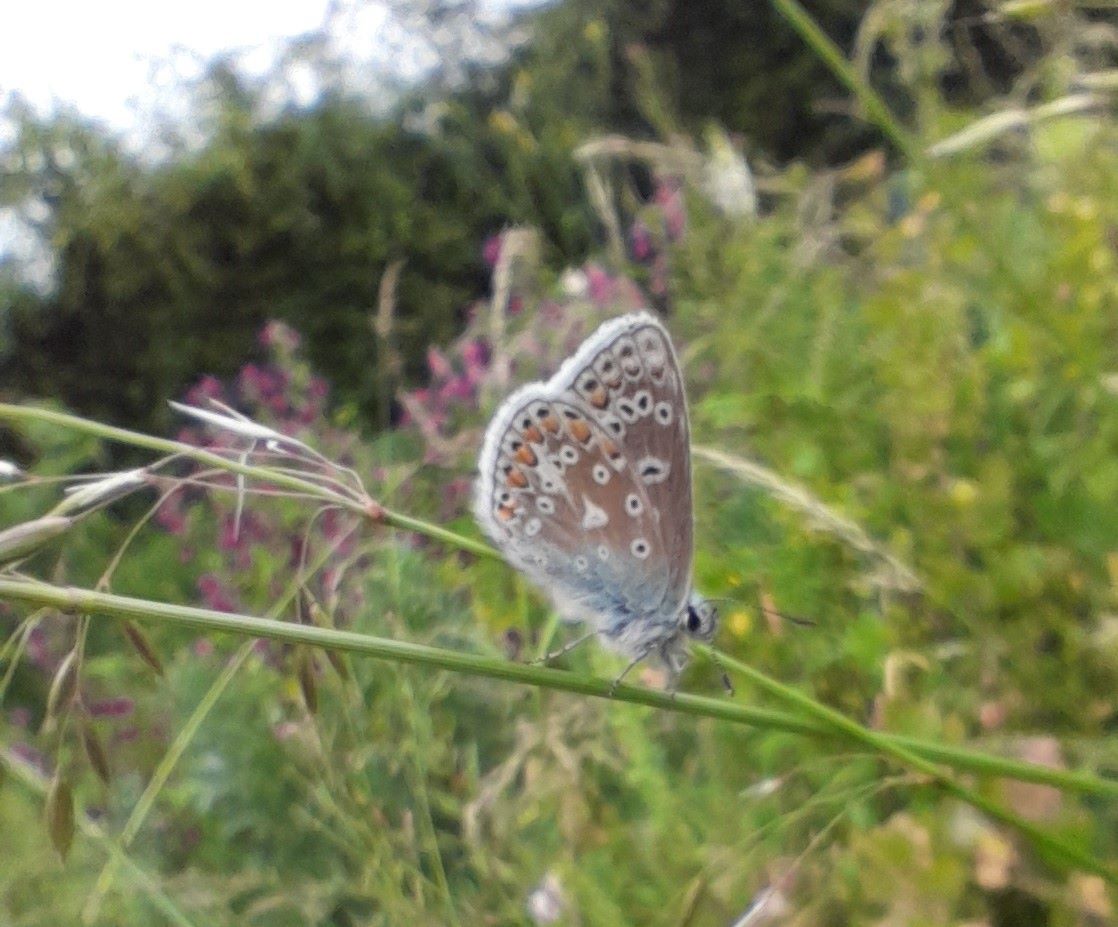
In the allotment the Oat grass is flowering far too freely for comfort but there are Red- and Blackcurrants to pick, along with some summer raspberries, though my main crop is an autumn one. I’ve also enjoyed seeing an Emerald moth and Common Blue butterfly there this week, which may be the upside of the amount of long grass in the garden this year!
This week I’ve been reading The Magic of Mushrooms, by Sandra Lawrence, which has some fascinating titbits about the role of fungi in folklore, superstition and traditional medicine.
 heatherkellyblog - travel with me and wonder at what you see!
Gorgeous galleries
Thank you 😊
beautiful!!
Thank you!