Our next two nights in Tunisia were spent in a delightful apartment built in the traditional style on the edge of Chebba forest, just north of the village of Chebba. The village was a bit of a disappointment, and the beach too, initially, but the beautiful, peaceful location of our studio apartment and the amazing breakfasts produced by Adem left us wishing we’d booked it for an additional night.

Our journey from Hergla to Chebba involved a detour to the airport to swop our hire car for one which didn’t make a constant electronic whining noise. This did mean we got to see half a dozen White storks (Ciconia ciconia) flying over the large salt lake by the motorway, maybe already heading to their over-wintering grounds south of the Sahara, as well as three camels hitching a lift in a truck!
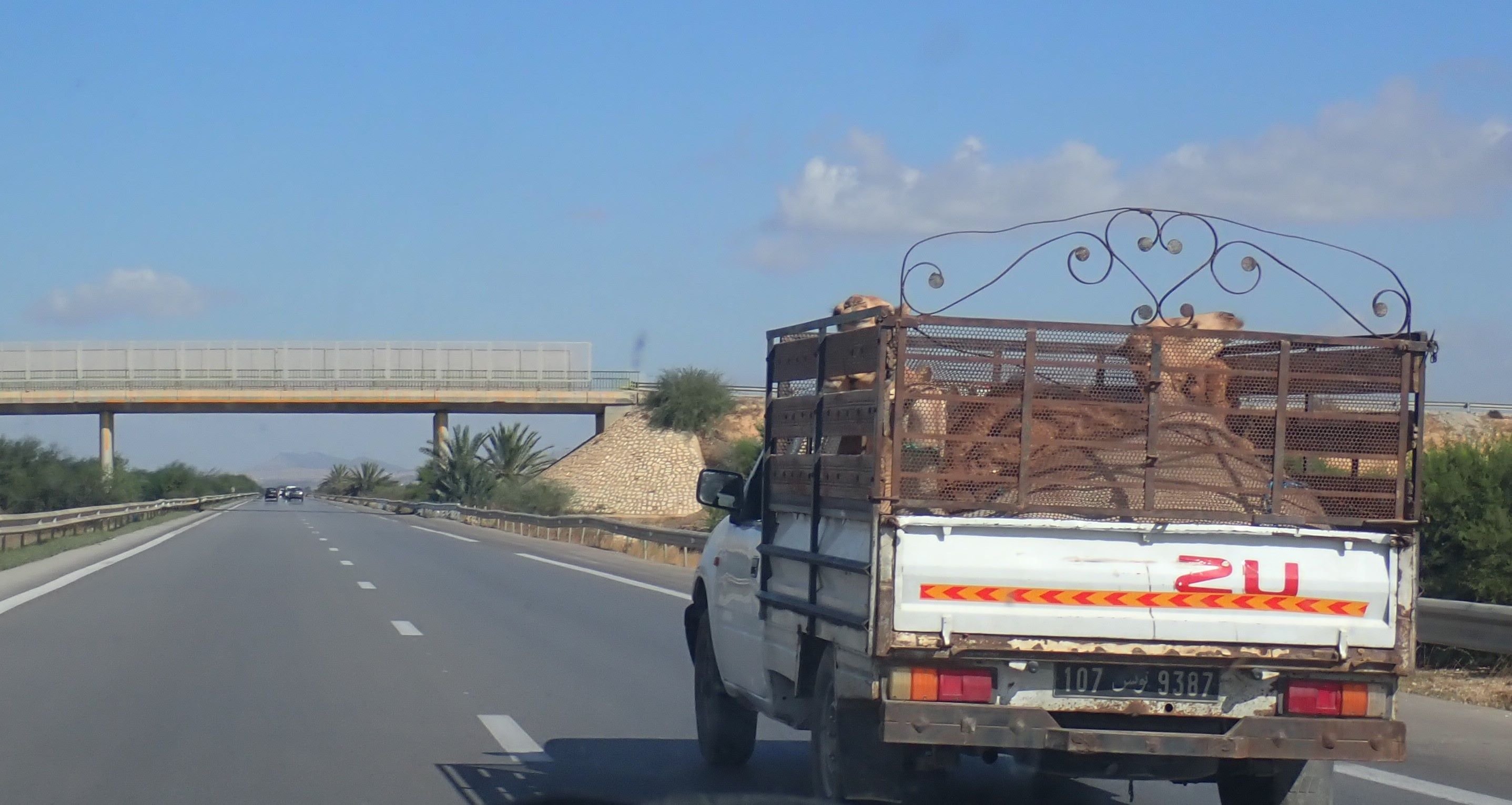
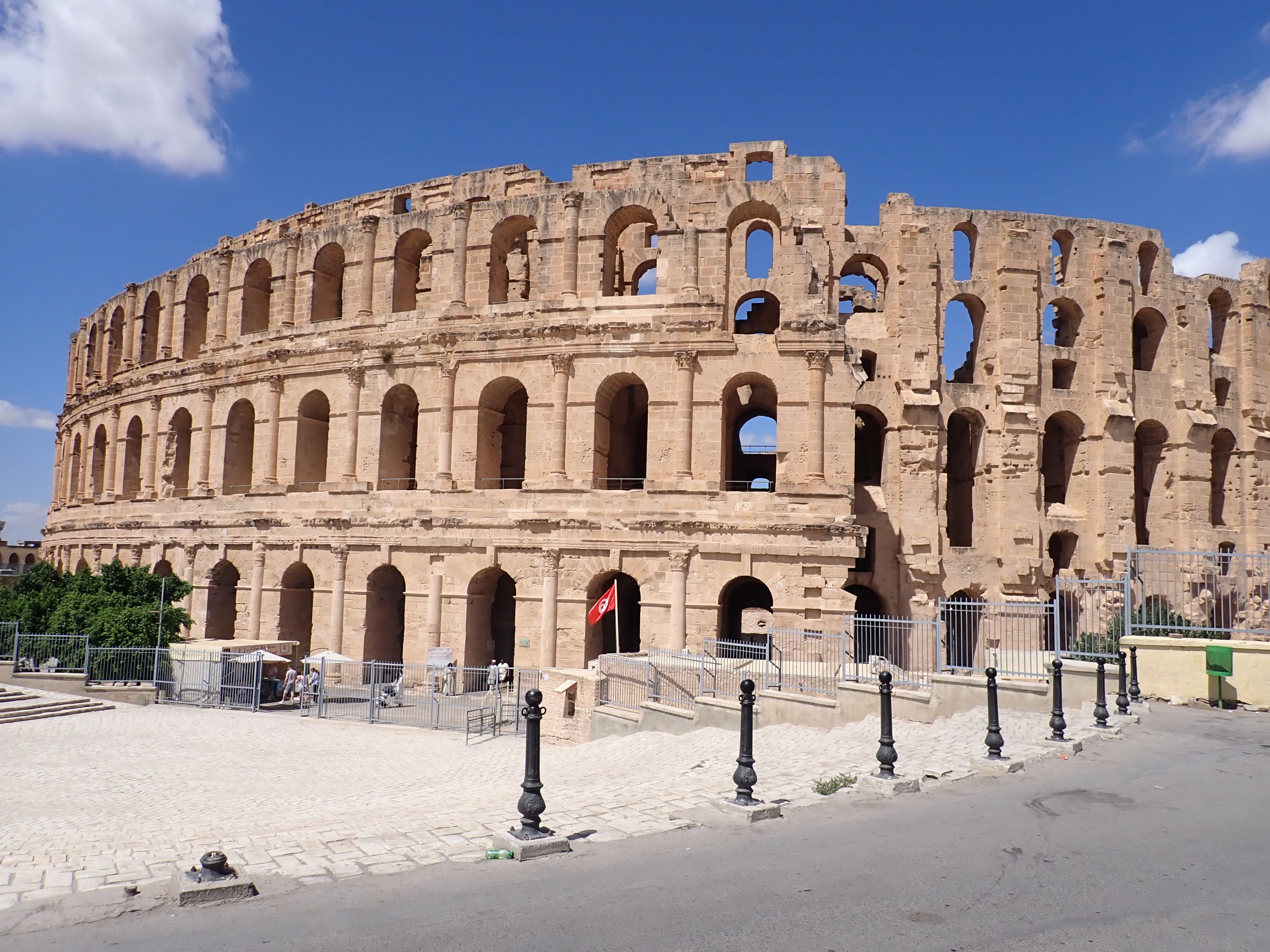
We drove to Chebba via the city of El Jem, known as Thysdrus to the Romans and the site of an 1800 year old colosseum, holding 30 000 people in its heyday – think half the size of St James’ Park, in Newcastle. It dominates the town as you drive in, from any direction. Impressive as the stadium is, though, I find its history as the setting for gladiatorial contests unsettling.
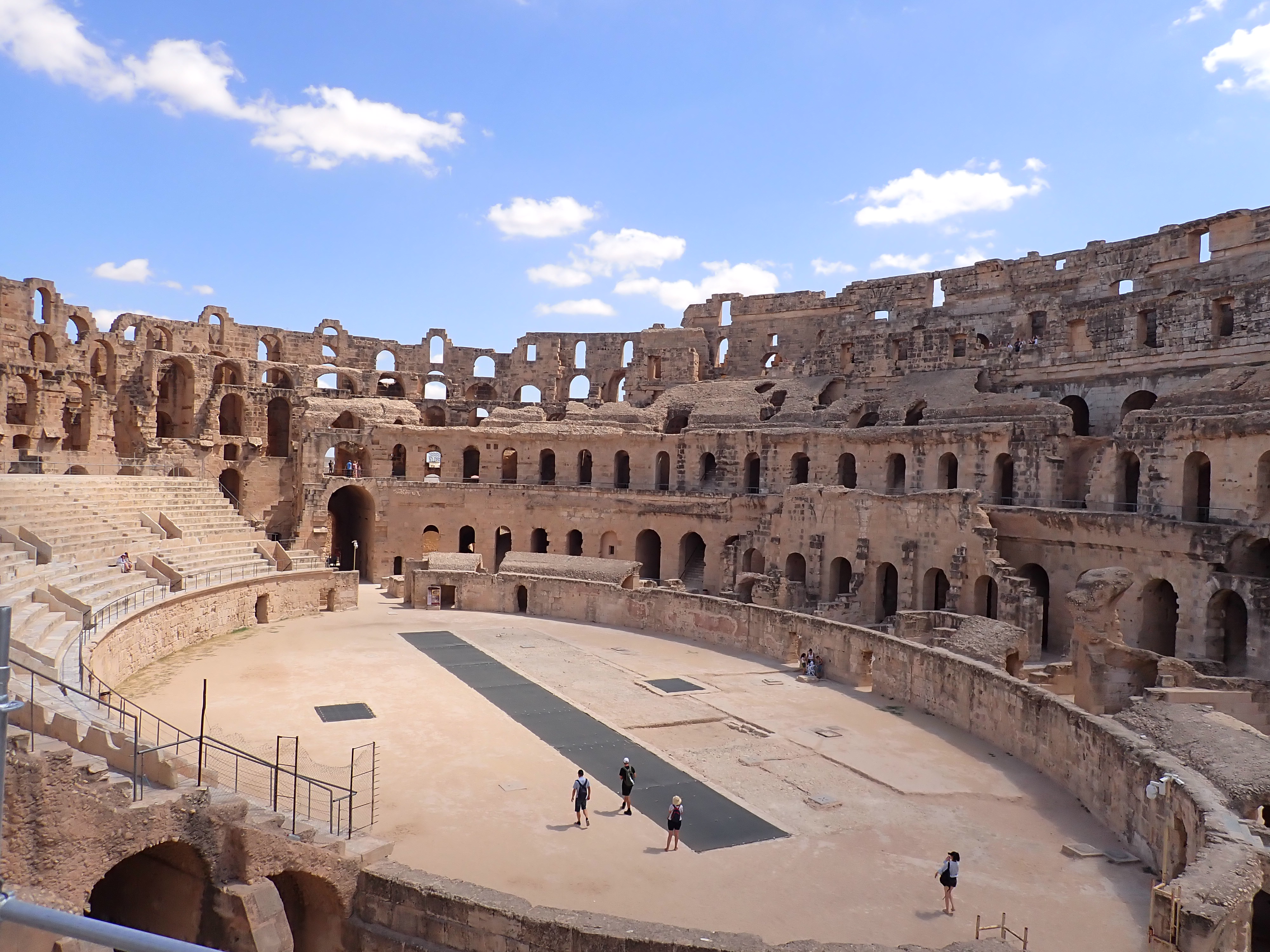
The collection of 2nd and 3rd Century mosaics in the nearby archaeological museum, taken from Roman villas in the area, was much more to my taste. They are often both huge and exquisitely detailed, looking incredibly like tapestries displayed on the walls. Where detail is required, the individual tiles are no more than three or four mm across. Some are stunningly modern in their design, the sort of thing you can imagine Bridget Riley having produced. The image of Apollo, which forms the centrepiece of one large mosaic, is startlingly like an early depiction of Christ. The detail of many of the plants and animals is amazing.


From our base at Chebba we drove the 30 km or so to the village of Madhia on Thursday. The oldest part of the town and the Bhorj el Kebir (the big fort or tower) which dominates it are on a rocky peninsula jutting out into the Mediterranean and were once cut off from the mainland by a channel with defensive drawbridges. There are great views from the fort but it was too hot to walk to the lighthouse at Cap Afrique, right at the end of the peninsula, so we dropped back down into the streets of the old medina and wandered till lunchtime. Although a medina was originally a walled city (named after the city in present day Saudi Arabia to which the prophet Mohammed fled from Mecca), the word is now used for any town or city but particularly for the older parts of towns. Even when the sun is beating down, in the hottest part of the say, these old streets remain shaded and pleasantly cool, and a lovely place to amble.


We were lucky enough to stumble on a canteen-style restaurant, Namia’s, serving grilled fish or chicken plus Djerbian rice (very like West African Jollof rice) and a variation on mechouia for lunch. We needed to rely on my Arabic to order and a friendly older couple offered to share their table with us. Afterwards we sat under the shade of four large fig trees in the Place du Caire for coffee, then visited the museum and climbed up the Skifa el Khala tower in the medina wall, for its great views. The mosaics on display were much more limited than in El Jem but they have lovely display of fifth to seventh Century oil lamps, along with the moulds used to produce them; many carried Christian symbols, to my surprise.


We finally found a lovely beach which tempted us into the water on the north side of the peninsula in Madhia but, although the temperature of the water was lovely, a strong onshore wind made actual swimming difficult. This beach appealed much more to our tourist sensibilities than the one at Chebba with its lack of litter, both man made and natural, but a second trip to Chebba beach, walking through the forest, made me re-evaluate things.

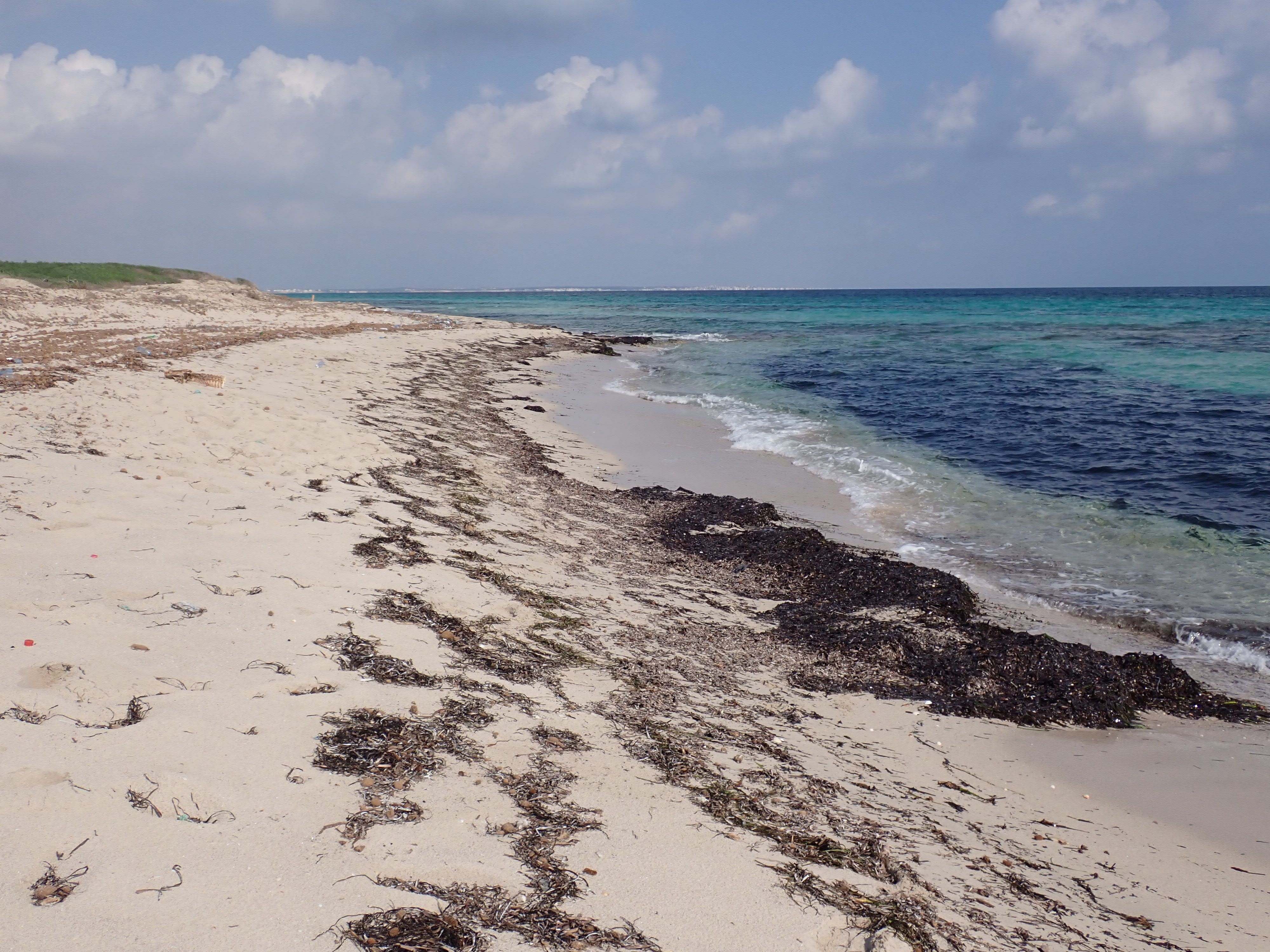
With a little hunting, I found Sea Daffodils, Sea Holly and other small plants on the beach at Chebba nestling in the algal balls mentioned in my last post. They may well be providing a sort of organic mulch, trapping moisture such as the heavy rain we had last night, and making it easier for plants to establish themselves. Maybe they act like the nurse plants, you see in the hostile environment of the high Himalaya?


The culinary highlight of our time based in Chebba was undoubtedly lunch at Namia’s in Madhia – the tastiest fish and chips so far, our first taste of Djerbian rice and the most convivial atmosphere!
 heatherkellyblog - travel with me and wonder at what you see!
I love picking out the Arabic place names in Andalucia – the river that flows from the hills behind, through the centre of Malaga for example is the Guadalmedina
[…] diocese in the 4th and 5th Centuries AD. We’ve been spoiled by the quality of the mosaics at El Jem! The remains of the colosseum, or amphitheatre, behind the museum, suffer the same fate – the […]