One thing you realise in this part of the world is just how widely Rome spread its influence in North Africa, after routing first the Phoenicians and then the Numidians, just before the birth of Christ. African resources were very important to Rome, with the Tell Mountains around Le Kef, where we are staying now, supposed to have supplied 60% of the Roman empire’s wheat requirements in the first Century AD, something which is hard to imagine looking at today’s semi-arid landscape.

As a result, Tunisia is stacked with the remains of Roman settlements, be that trading towns such as El Jem and Makthar (Mactaris), which we visited on the way to El Kef, or the functioning Roman bathhouse at Hammam Mellegue.
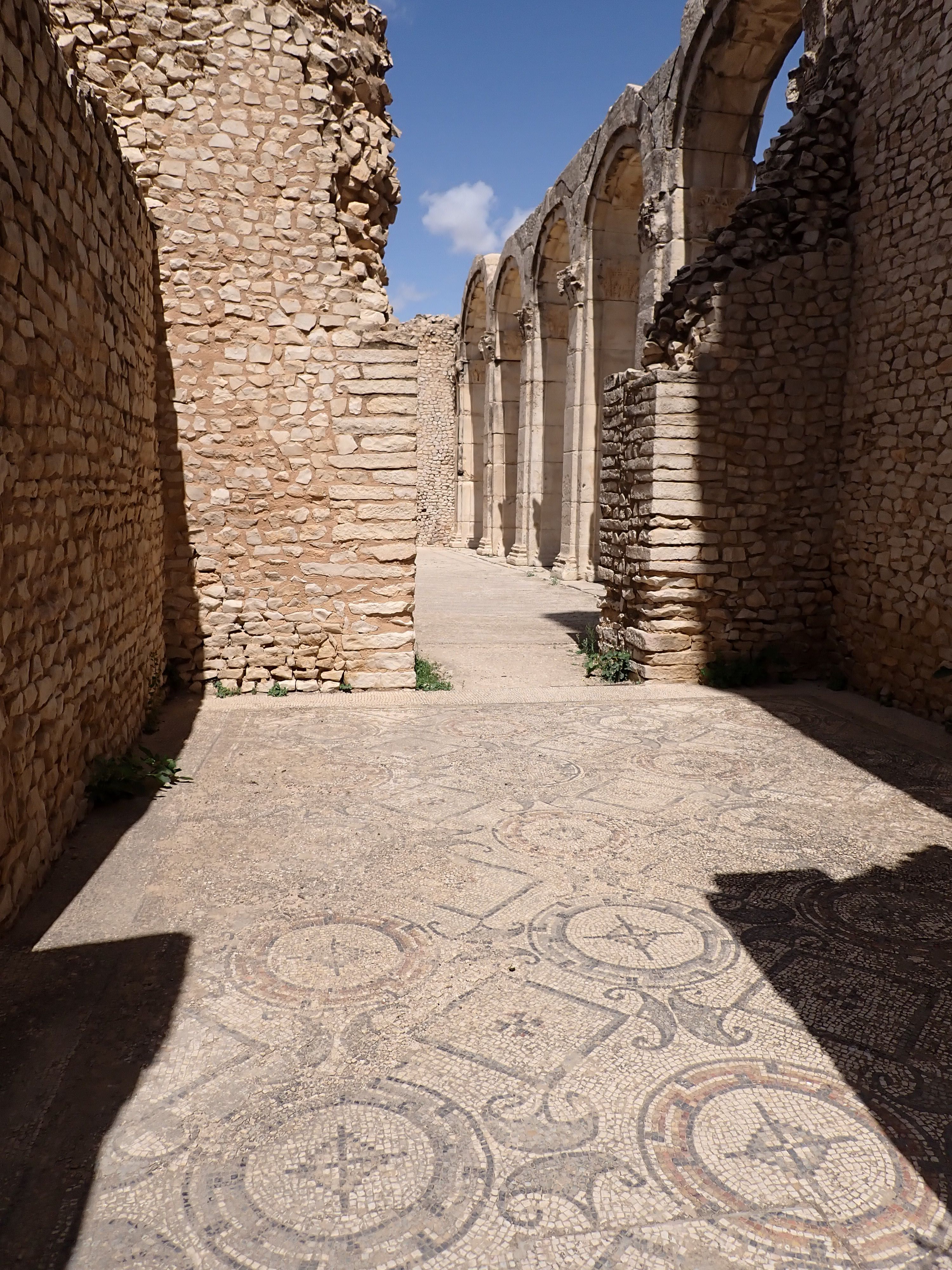
Entering the site at Makthar through the museum is initially a little disappointing – there are a couple of mosaics and some inscribed burial stones, many from the period when Mactaris was a Christian diocese in the 4th and 5th Centuries AD. We’ve been spoiled by the quality of the mosaics at El Jem! The remains of the colosseum, or amphitheatre, behind the museum, suffer the same fate – the stadium is a fraction of the size of the one at El Jem. However, as you climb the hill, you start to see the scale of the town, dominated by the forum and a Triumphal Arch dedicated to Trajan, who granted Roman citizenship to local elites in 116 AD.


The large baths are equally impressive, with some of the 15 m high walls around the cold room (frigidarium) still standing and patches of the mosaic-tiled floor still visible. There is something special about seeing these in situ and thinking about all the feet which have walked over them in the last 2000 years.

Our latest Roman encounter was even more evocative. After breakfast yesterday morning we drove around 15km south west of Le Kef to Hammam Melleg, the site of an 1800 year old Roman public baths which still functions today. We fully expected to be walking the final three km of the route as our out-of-date guide book said the last part of the road was more or less impassible without a four wheel drive vehicle, but it turns out there is a new road all the way. It was well worth putting up with the discombobulation of Google Maps thinking we were driving cross country through the semi-arid landscape to avoid having to hike! When we arrived, there was noisy chatter in Arabic coming from the men’s bath in the caldarium – the baths really are still used by local people and the water is prized for alleged therapeutic properties. Half an hour later, after Martyn had finished sampling the cyanobacteria in the outflow from the baths (a true busman’s holiday!) we were lucky enough to have the place to ourselves.
Of course, I can’t complain about Martyn’s geeky behaviour without admitting I was having a good look the plants around the wadi or river valley into which the springs drain. It was the first time I’ve seen Oleander growing wild, but more surprisingly, there were several species I’d normally associate with coastal habitats, including Sea Lavender and Glasswort. It’s not so surprising, perhaps, when you know that the water in the spring contains 2.6 g of Sodium and 4.8 g of Chlorine ions per litre – about one fifth of the amount in seawater.
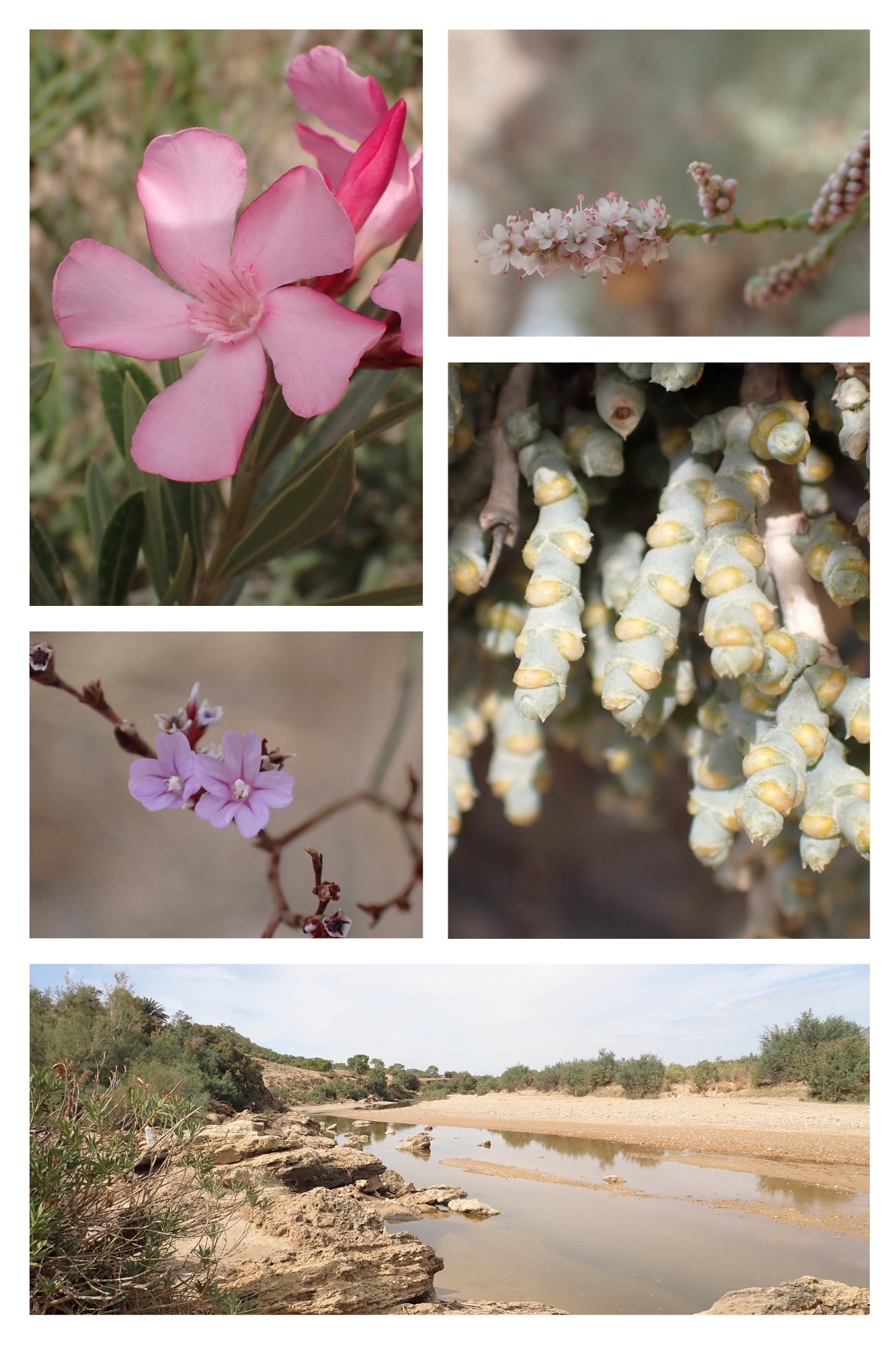
Wadi Mellegue, Limonium echioides
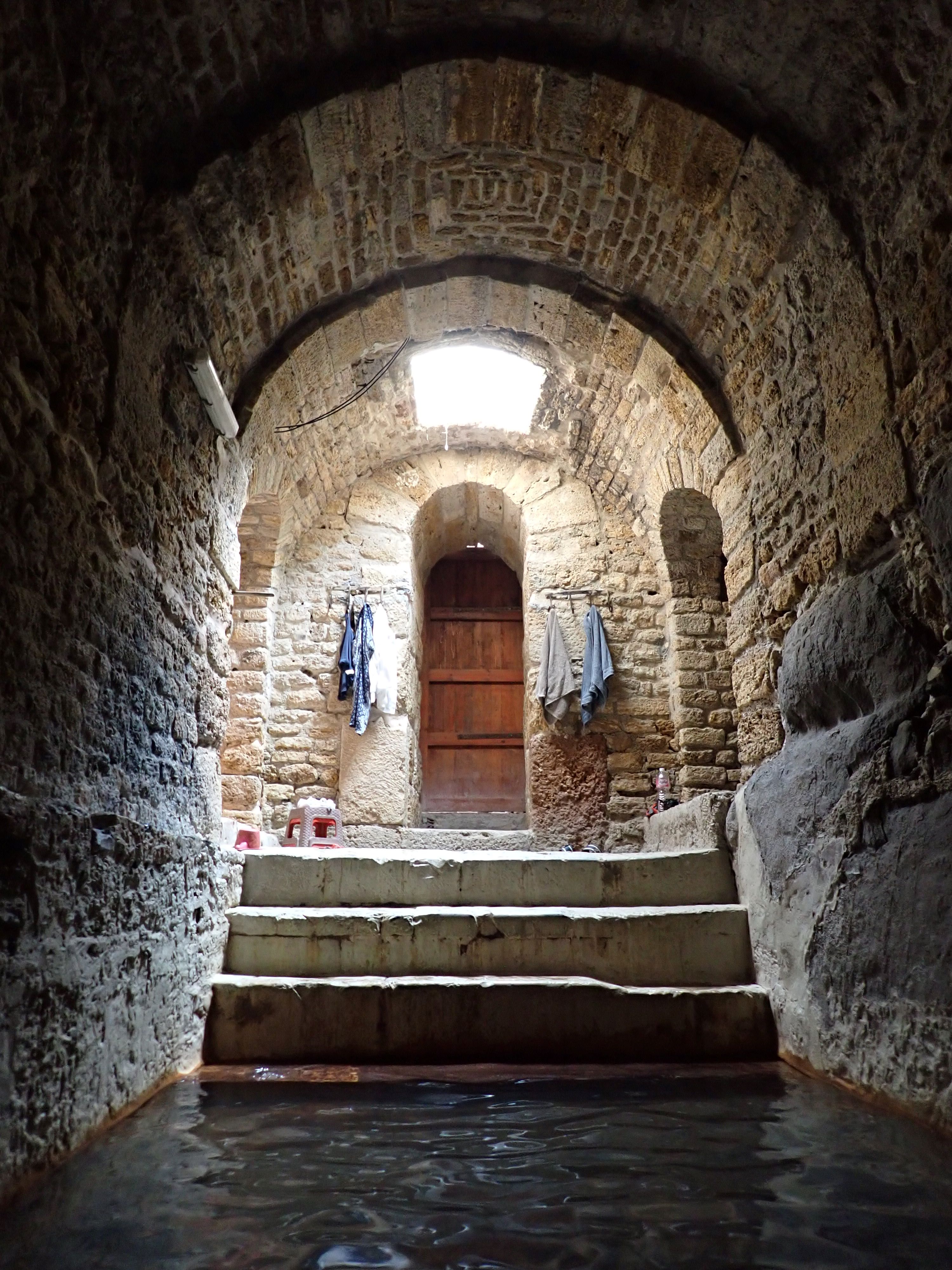
The caldarium itself is a magical spot – light seeps into the domed chamber through a skylight and hot salty water is piped into the pool from a thermal spring on the hill above the baths. You can immerse yourself completely or, if that’s too much, sit on the worn stone steps and pour water over yourself. The female ‘guardian’ came in and gave us both exfoliating back scrubs – I’ve not been so clean in weeks!

Just one word of warning for anyone thinking of visiting the site. Unusually, for Tunisia, there was no clearly displayed entrance fee and, when we asked how much it cost, the guardian just waved us in. After our bath, I’d enjoyed being able to chat to her a little in Arabic about our families and sharing some photos, so was very surprised when the price she quoted us was around 30 times what it said in our old guidebook (we’ve generally found the entrance prices to be around double what it says in the book). That is still not a lot of money (around £7.50 each) but it rather took the edge off a lovely experience for me. It must be said, though, that it is only noteworthy because, in every other interaction we’ve had with Tunisians, they’ve been scrupulously honest with us and insisted on giving us money back when we’ve misunderstood prices and tried to pay too much for something.
 heatherkellyblog - travel with me and wonder at what you see!
Those Romans went everywhere
Maybe the backscrub was extra!
I wonder if, like Spain, Tunisia was also much koor wooded 2000 years ago?
Possibly – it wasn’t really optional!
I’m sure parts of Tunisia were more wooded – there is some lovely pine woodland where we are now, in Le Kef
[…] (and pre-Roman) city of Dougga, so it would have been rude not to stop! If we were impressed by Makthar, this was on a whole different level. Its UNESCO World Heritage Site citation says that Dougga […]