The town of El Kef, in the Tell Atlas, where we’ve spent the last few days, is not somewhere which sees a lot of European tourists judging by the reaction we get from local school children! They turn out to be the one group of people who might engage in a bit of chat in Arabic with me, on their way to school – at least to the extent of working out each other’s names, where I come from, and where else we are visiting in Tunisia. We’ve seen no other Europeans at all. Our guest house here is in a beautiful spot above the medina, with great views over the mountains to the south and west, most of which are sadly no-go areas for us on the basis of FCO advice – they are too close to the Algerian border.

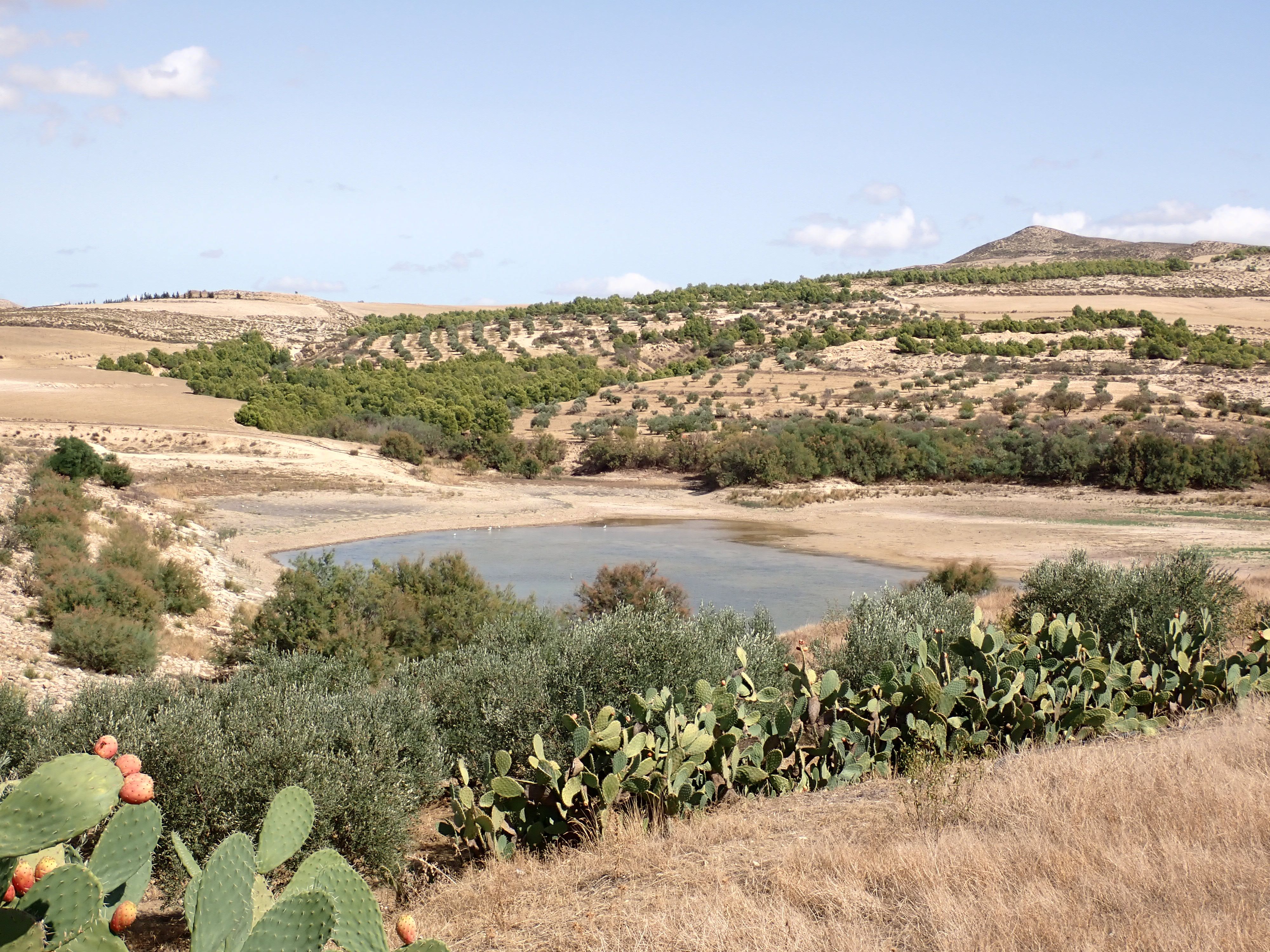
The latter part of the drive here from Kairouan was interesting, with the endless olive groves of the lowlands first of all broken up by huge wheat fields then, as we climbed into the mountains, being interspersed with patches of natural looking pine and cedar forest. We had a quick stop at Bi’r al Khalifa (Bi’r is a well, in Arabic) for a mooch – it must have been a welcome watering hole in a parched landscape when everyone was travelling on foot or by donkey.

The town, named for the rocky outcrop of Jebel Dyr on which it perches, may feel like a bit of a backwater today but has a rich and long history. Founded by Carthage in 500 BC to defend the western part of their empire, it was taken over in turn by the Romans, Numidians, Vandals, Arabs, Byzantines and ultimately the Ottomans, who rebuilt the Kasbah which is probably the town’s star attraction. It occupies a stunning defensive position which has apparently had some sort of fortification since Carthaginian times, with the Grand Fort started by Pasha Mohammed in 1679 acting as a Tunisian army base until the 1990s. There is no entrance fee for the Kasbah but the ‘guardian’ did his best to give us a potted history in French, for a small tip.
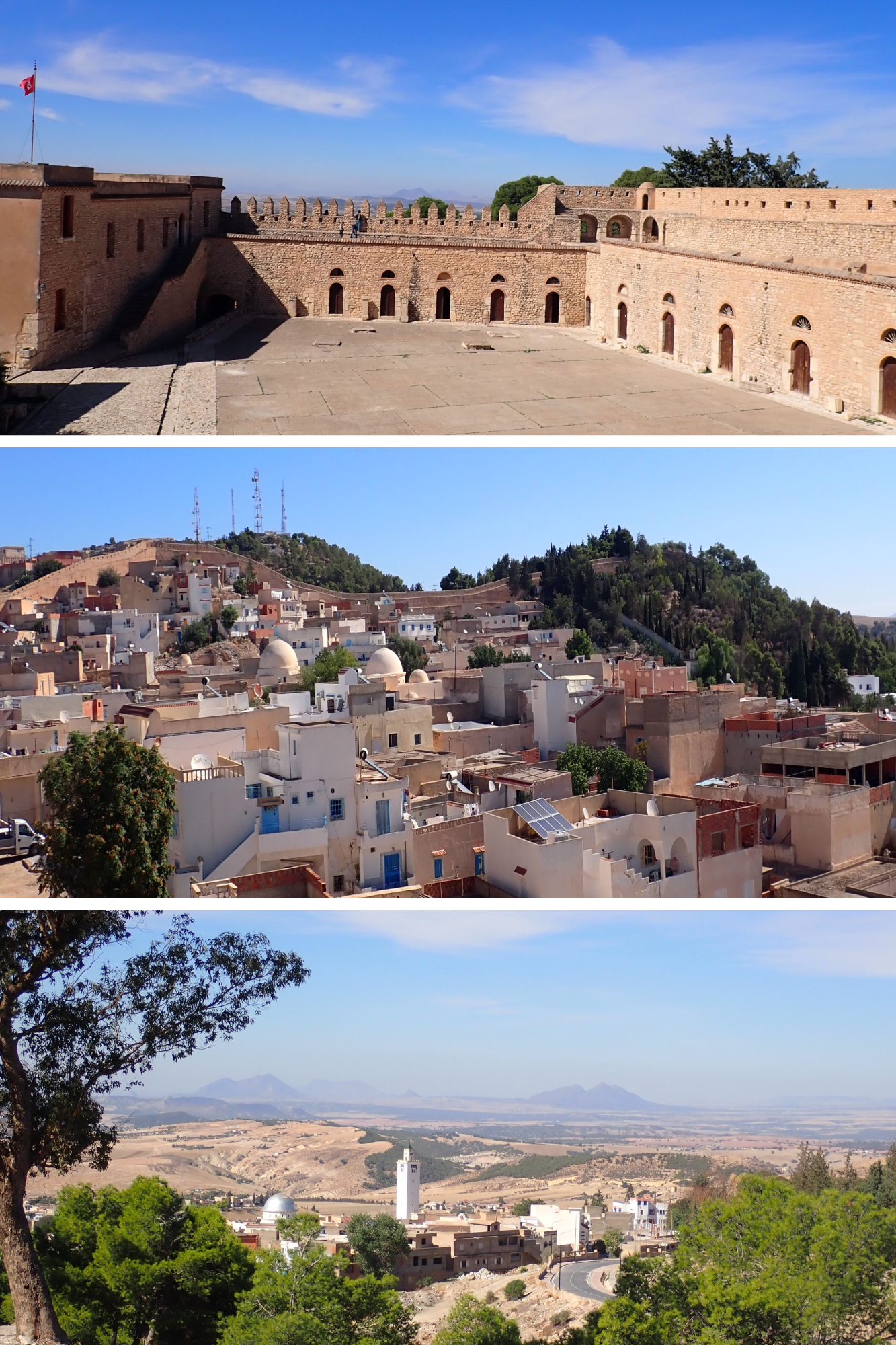
We tried and failed to find a way up onto the medina walls as it looked like these should be walkable, but all the potential access points seem to be blocked. Le Kef is a very hilly medina compared with others we’ve visited and we’ve spent a lot of time climbing up and down steps which end at people’s doors! Sadly, the city’s museum of traditional arts is currently closed for restoration but its history means the city is packed with interesting remains, though these are not always easy to find. To access the Ras el-Ain spring, on which the first settlement here depended, you have to negotiate your way through a café courtyard, past furniture being repainted, and can only see the Roman bathhouse from the outside. Lots of the oldest buildings here have, inevitably, been repurposed many times. We were lucky enough to find the 5th Century Église St Pierre open; apparently this was built on the site of an older temple and carvings on some of the stones evidence their history. It was used as a Roman Catholic church, again, during the time of the French Protectorate and only stopped being used as a place of worship in 1964.


We had less luck getting into the Basilique, the tiny Al-Ghriba Synagogue or the shrine of Sidi Abdullah Boumakhlouf, unfortunately.
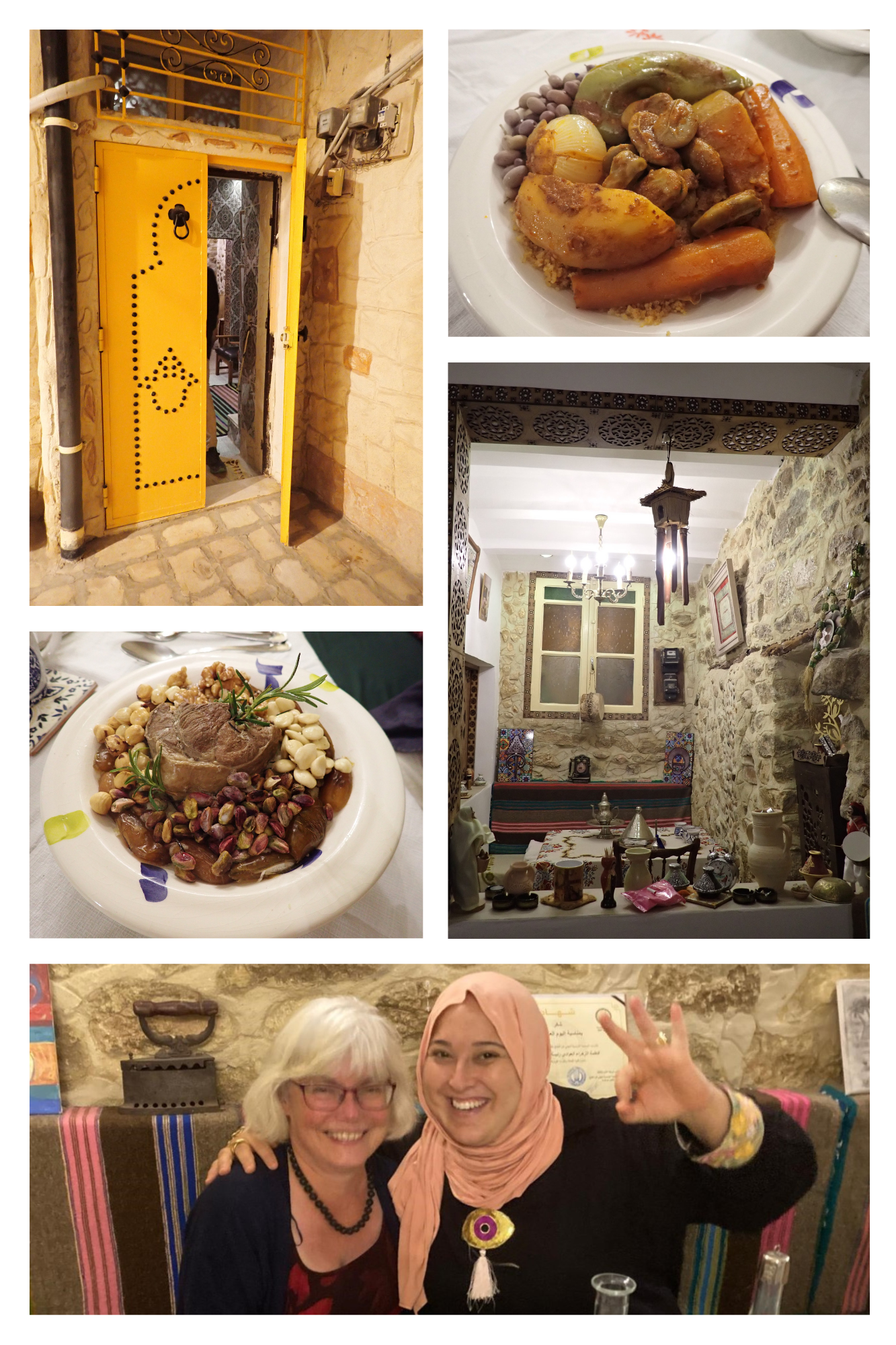
The culinary and cultural highlight of our time in El Kef was undoubtedly a meal at the tiny restaurant which forms the bottom floor of Chef Fatma’s house. She is open for reservations only, and these need to be made a couple of days in advance. We started with a traditional Berber soup (Shorba), Mechouia salad and Tabouna bread. I then had couscous with braised vegetables, while Martyn had the more traditional Borzgane – couscous with lamb served with dates and a variety of nuts. Both were delicious, as were the homemade lemonade and pastries which followed, but the meal was really made by Fatma’s infectious love of her traditional food heritage and her wish to share it with others. A lovely evening.
 heatherkellyblog - travel with me and wonder at what you see!
I wonder why North African olive oil isn’t in the shops here?
I’ve wondered that too – not sure where it does go!