One of the big appeals for us of Sidi Bou Saïd as a destination was its proximity to the ancient city of Carthage (from Qart Hadasht, or ‘new city’ in Phoenician). In fact, the clifftops of Sidi Bou Saïd were used to site first a Carthaginian, then Roman and Berber watchtowers. Coming originally from Tyre, in modern day Lebanon and too much in the news at the moment, the Phoenicians were, like their modern-day counterparts, famous as traders and businesspeople. They founded Carthage nearly three millennia ago to consolidate their foothold in Africa and control shipping around the Mediterranean and, when Tyre was threatened by the Assyrians, the city became their main power base (a spare Tyre, as Martyn’s would have it). The story in Virgil’s Aeneid that Carthage was founded by princess Dido, fleeing from the King of Tyre, Pygmalion, is probably just that, unfortunately. It hasn’t stopped ‘Dido’s Lament’ from Purcell’s opera taking up residence in my head, though. True or not, I love the story about Dido landing on the hilly promontory where Carthage was eventually built and bargaining with the local Berbers for, ‘as much land as could be covered in an ox-hide’. The story goes that she cut the hide into such thin strips that it could surround what became Byrsa Hill at the heart of the city, now dominated by the former French cathedral seminary which hosts the Musée de Carthage. Sadly, in a pattern which seems to repeat itself everywhere we go in Tunisia, the museum is currently closed for refurbishment.
After Dougga I’m afraid the ruins of Carthage are a little underwhelming, though Byrsa Hill offers amazing views across the Gulf of Tunis. The Romans didn’t much like the competition offered by Carthage and fought three fierce ‘Punic wars’ against the city, finally defeating the Carthaginians in 146 BC. They razed the city to the ground and didn’t actually establish it as a Roman base until a hundred years later. They then built their own walls and arches on top of the old city, facing in a completely different direction – some of the older walls have been uncovered on Byrsa Hill today, though. In its heyday, in the third Century BC, Carthage had a population of a third of a million and was the third largest Roman imperial city but, in the usual way, it was eventually abandoned when the Hafsid dynasty chose to rule from Tunis instead.

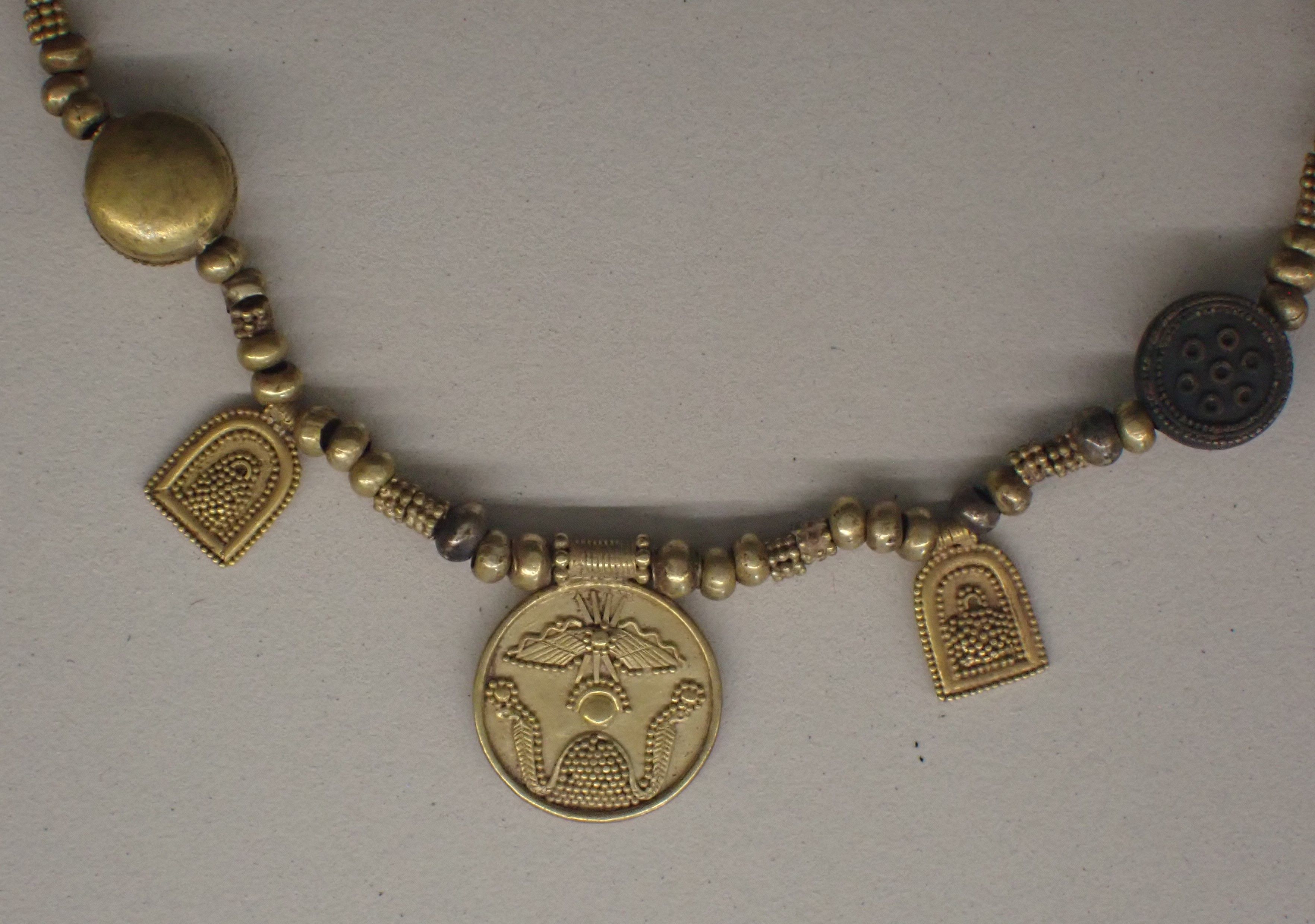
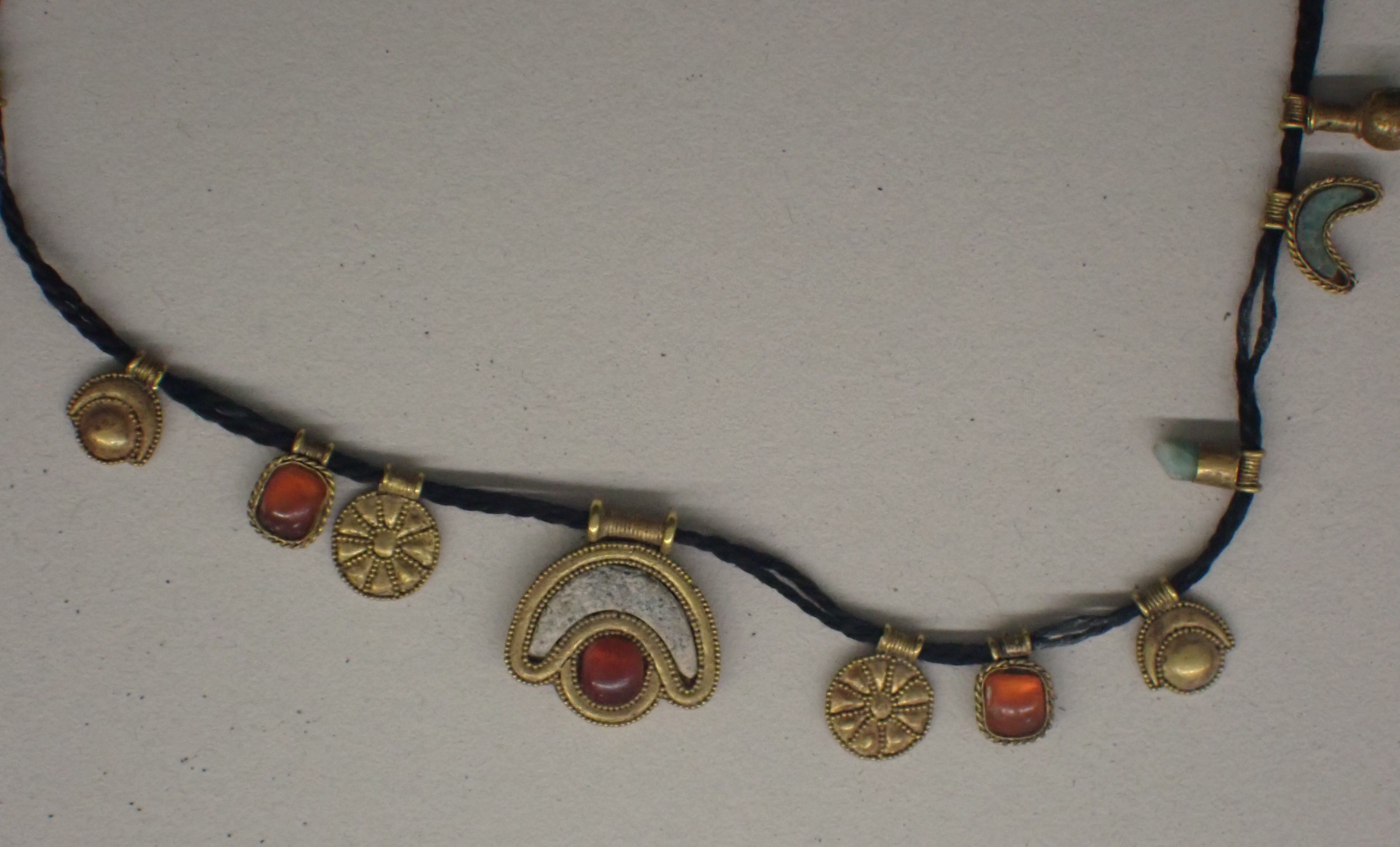
The items which struck me most from the early days of Carthage, now on display in the Bardo museum in Tunis, were pieces of exquisite gold jewelry from 700 – 600 BC which would not look out of place worn today. A far cry from anything northern Europeans were making at the time.
The Bardo also houses some spectacular Roman mosaics taken from villas in Carthage and these help shine a little more light on what life would have been like here, around 400 AD. The huge mosaic from the ‘La Voliere house’, with its detailed depictions of local foods, must surely have graced the floor of the dining area. In most parts of the world, mosaic of this quality would be roped off but here we are lucky enough to be able to walk over it, as a Roman family would have done some 1800 years ago.

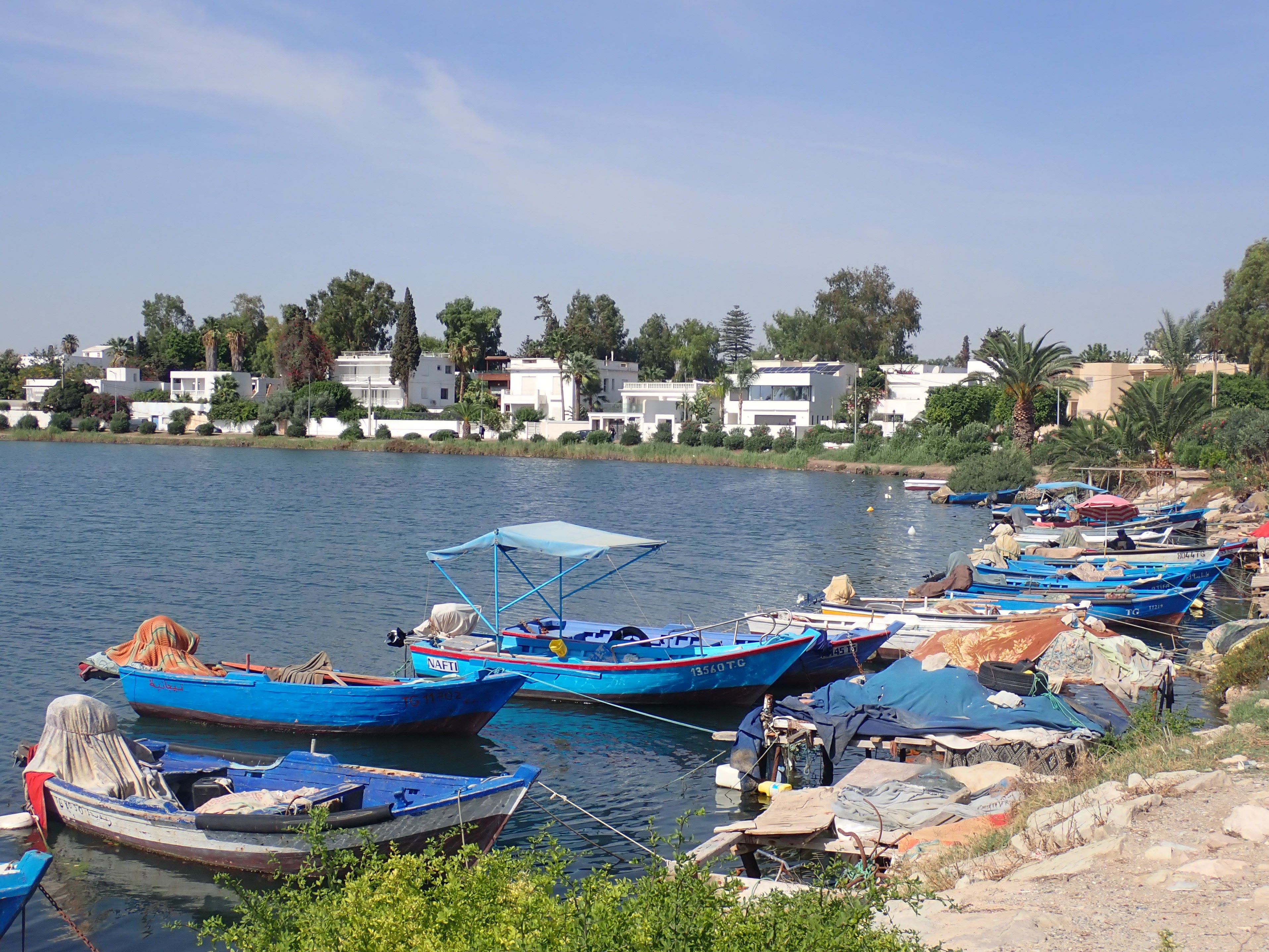
From Byrsa Hill we drove to the old Punic Ports and walked from there to the Sanctuary of Tophet. The two joined lagoons, the circular ‘military’ and the oblong ‘commercial’ one, which make up the Punic Ports today are much too small to have harboured a fleet of ships large enough to make the Carthaginians a serious threat to Rome, although they do date back to the second century BC. One theory is that a canal or canals linked the ports to Lake Tunis, with naval dockyards and trading posts along their length(s). Others think the ports may have been further along the coast, in Le Kram or in Sidi Bou Said itself. All that remains of the ports now is a safe harbour for small, local fishing boats.
From the ports we walked to the altogether more sombre Salammbo Tophet, a burial ground and possible sacrificial site first formally excavated in 1921. A stone monument, now in the Bardo, shows a Punic priest carrying a child and the suggestion is that Carthaginian children were sacrificed to the gods Baal Hammon and Tanit here, between the 8th and 2nd Centuries BC. We didn’t get to see this monument when we visited the museum as (you guessed it) that section of the museum was closed prior to the opening of a special exhibition on Flaubert and Salammbo Tophet, which opens in two days time.
A mass of small stelae engraved with geometric markings sit under the trees at Salammbo Tophet and more than 20 000 urns were found here, each containing the ashes of a baby or small child and sometimes also lambs or baby goats. Excavations under the auspices of UNESCO between 1976 and 1979 showed that the urns and stelae lay in three distinct layers, each with their own style, and dated from as long ago as 800 BC when Carthage was founded. The most recent ones, made of limestone, often feature intricate carvings.

Like everywhere in Carthage, the Romans built on top of Punic remains, making it difficult to work out what happened here. As sworn enemies of Carthage the Romans liked to paint a picture of their opponents as barbarians, and it is far from clear whether these were really sacrifices of live children or whether stillborn babies or children who died of natural causes might have been offered to the gods. Flaubert may actually have been responsible, in large part, for perpetuating the idea of child sacrifices; the research he carried out for his novel, Salammbo, published in 1860 and set in Carthage at the height of its powers depended on Greek and Roman sources, so he would have acquired all their biases. Using a novelist’s poetic licence, he went on to invent the ‘Tophet of Carthage’ and the ceremony of child sacrifice to the god Moloch, based on events recorded in the Bible 400 years before Salammbo’s time, near Jerusalem. As the Phoenicians who founded Carthage were also from the Biblical ‘land of Canaan’, by his logic they must have indulged in the same brutal practices…
I can’t help but think of the spin campaign against ‘foreigners’ being run by Donald Trump’s Republican running mate, J.D. Vance, who recently spoke about, “Haitian illegal immigrants draining social services and generally causing chaos all over Springfield, Ohio,” stating that, “Reports now show that people have had their pets abducted and eaten by people who shouldn’t be in this country”. Both claims have been firmly rebutted by the Springfield authorities. Plus ca change!
 heatherkellyblog - travel with me and wonder at what you see!
One comment