We’re just back from my fourth visit to China in two years and what once seemed a very alien place is starting to feel strangely familiar, despite my minimal grasp of the language. Of course it helps that we are staying with family, who translate for us much of the time. Our grandson is now nearly three years old and chats constantly; in English to us and his dad and in Chinese to his mum and her family. Holding conversations in both languages at the same time seems to cause him very few problems. We’re both thinking it might be time to start some formal Mandarin lessons – I’d like to be able to say a few words to the other grandmothers out and about with their grandchildren and to know the basic numbers and shopping words so I can use the lively fruit and vegetable markets. I’m also resolved to have a phone which can take an e-sim card by my next visit; Martyn and Harry had Alipay and working on their phones this time, which made life much easier. UK bank cards are not accepted anywhere and relying entirely on cash is a nuisance, not to mention only being able to use my phone when I have access to private WiFi.
The main highlight of the trip, of course, was spending time with the Chinese contingent of our family but other themes emerged too. A love of good food brings us all together and sharing the ‘Farm-to-Table’ tasting menu at the Michelin-starred Mi Xun teahouse, near Daci Temple in Chengdu, was an unexpected treat. The restaurant has a green star alongside its conventional one, for the sustainable sourcing of its ingredients, and is a beautiful, calm space in the centre of the bustling city. I can’t imagine taking a nearly-three year old to a restaurant with a Michelin star in the UK, but Casper coped very well with his first experience of fine-dining, sharing bits of everyone’s food. There is very little he won’t eat. He did neck Kate’s amuse bouché cakes without her getting a look in, but mostly shared well!


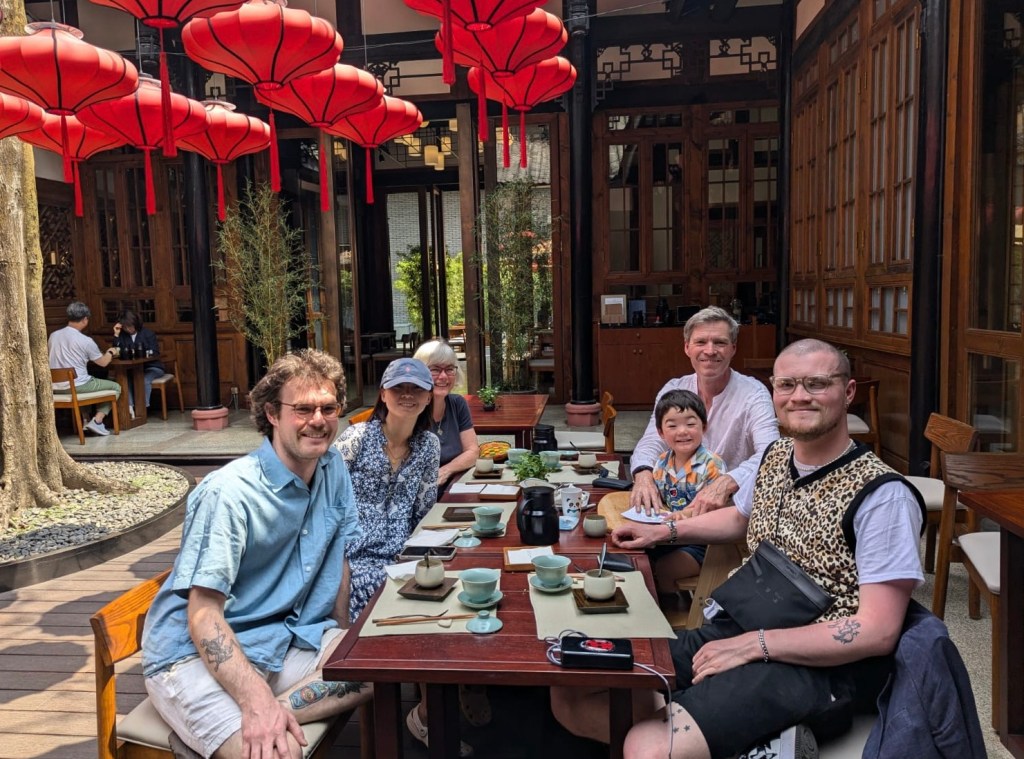

Every course was full of flavour but Casper and I particularly liked the mushroom soup, though I was less convinced by the inclusion of Dendrobium (orchid) roots, which apparently have some sort of traditional medicinal role but have a very woody texture. The stuffed cabbage rolls and black sesame encrusted tofu were also personal highlights. Those in the west who think tofu has no taste or texture should experience it fermented, marinated or cooked in one of the multitude of Chinese styles. For all this, I would be lying if I didn’t admit that the most exciting part of the meal for Casper was when acrid smoke started pouring through a vent in the restaurant floor. We were speedily relocated to an outside table but there was lots to watch as the staff sorted the problem out!
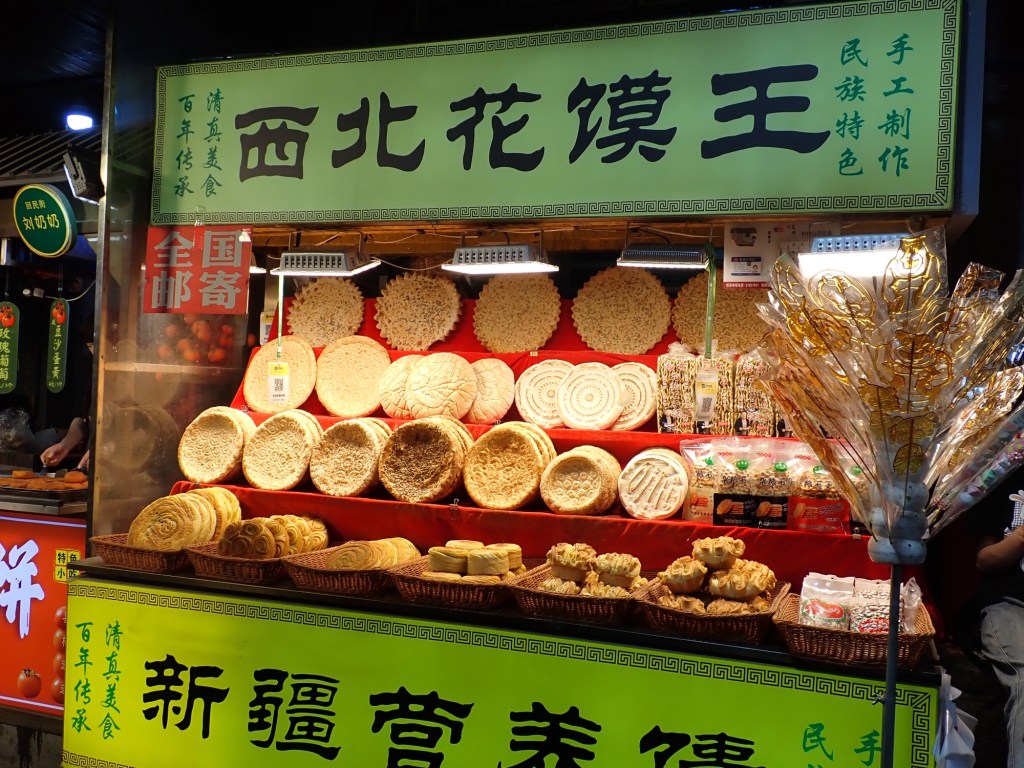
Every part of our trip seemed to have its own culinary highlights, from the tableful of dishes made from local produce and cooked in a single wok over a wood-burning stove at Kate’s father’s village near Shi Yang Zhen, to the mutton skewers (for the meat eaters) and cumin-encrusted flatbreads in Xi’an and the barbecued skewers of tofu and vegetables we ate near Tazishan park.

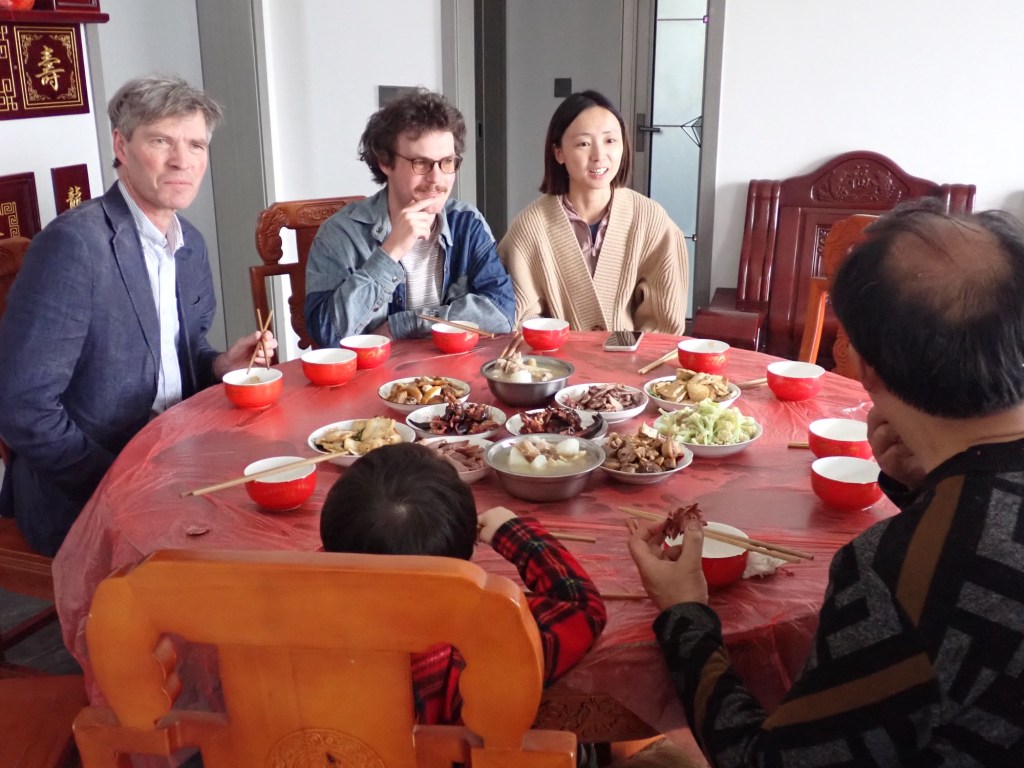

Harry and I had decided to be pragmatic as-near-as-possible vegetarians for the trip, eating around meat when necessary, as it’s almost impossible to avoid it altogether without being really rude, especially when with extended family with whom we don’t share a common language. There were a lot of meat-based dishes in the meal we shared at Ye-Ye’s family home but also delicious smoky cauliflower and beans and mangetout from the vegetable plots around the houses. What surprised us about this meal was that most of the dishes lacked the fieryness we associate with Sichuan food. The same could not be said of the Hot-pot we shared with Casper’s uncles in the restaurant across the road from their house but Kate pointed out that the rich, oily food served in restaurants is not what people eat every day.
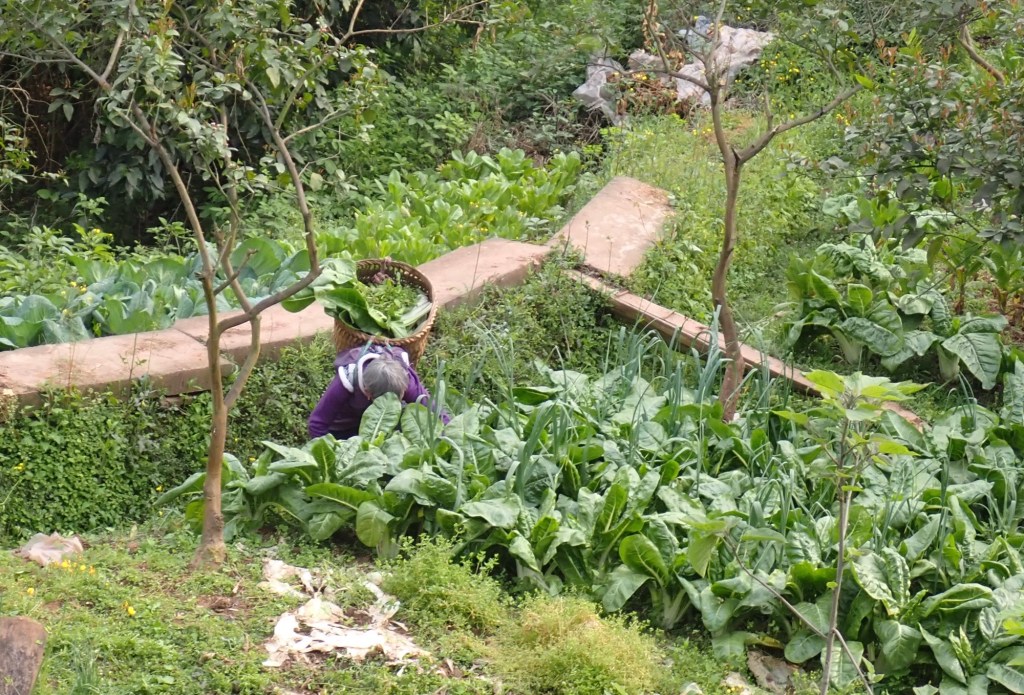
We travelled around quite a lot by train this time, and one thing that struck me was the lack of really large scale monoculture, though I suspect things are very different the flatter, delta regions of eastern China. In the Sichuan and Shaanxi at least, the rural landscape is a patchwork of small fields, often terraced, planted with a wide variety of crops. Even winter oilseed rape, grown in vast fields across swathes of the UK, is grown here on a scale more usually associated with subsistence level agriculture. Kate’s grandmother, in her late 80s, still grows a lot of the family’s vegetables on the land around their family home but I don’t know how much that will be affected by the new motorway currently being built through the area. Some land must have been lost, at least temporarily, in the construction process but, as we walked through the underpass on our way up the hill to Kate’s grandfather’s tomb, the sides of the road were still covered in a lush blanket of chives, peas and beans. There are none of the issues here around their compulsory purchase of land which have beset projects such as HS2 in the UK, as all land belongs to the state anyway and the government can do what it likes with it. The use of every available space for kitchen garden produce feels a bit like guerrilla gardening! I wonder how much of the produce we saw for sale in the street markets of Xi’an comes from these sort of places.



While we were away we both read The Tea Girl of Hummingbird Lane, by Lisa See. It’s a fascinating novel, set largely in Yunnan amongst the people of the Akha ethnic minority group and telling the story of the origins and commercialism of the region’s famous fermented Pu’er tea. Bricks of the best tea sell for hundreds of pounds in Chengdu malls, so I’m afraid we limited ourselves to a tin of younger leaves.
 heatherkellyblog - travel with me and wonder at what you see!
A fascinating look at a different cilture. Thankyou
Linda M H Fowler
On Fri, 18 Apr 2025, 17:35 heatherkellyblog – travel with me and wonder