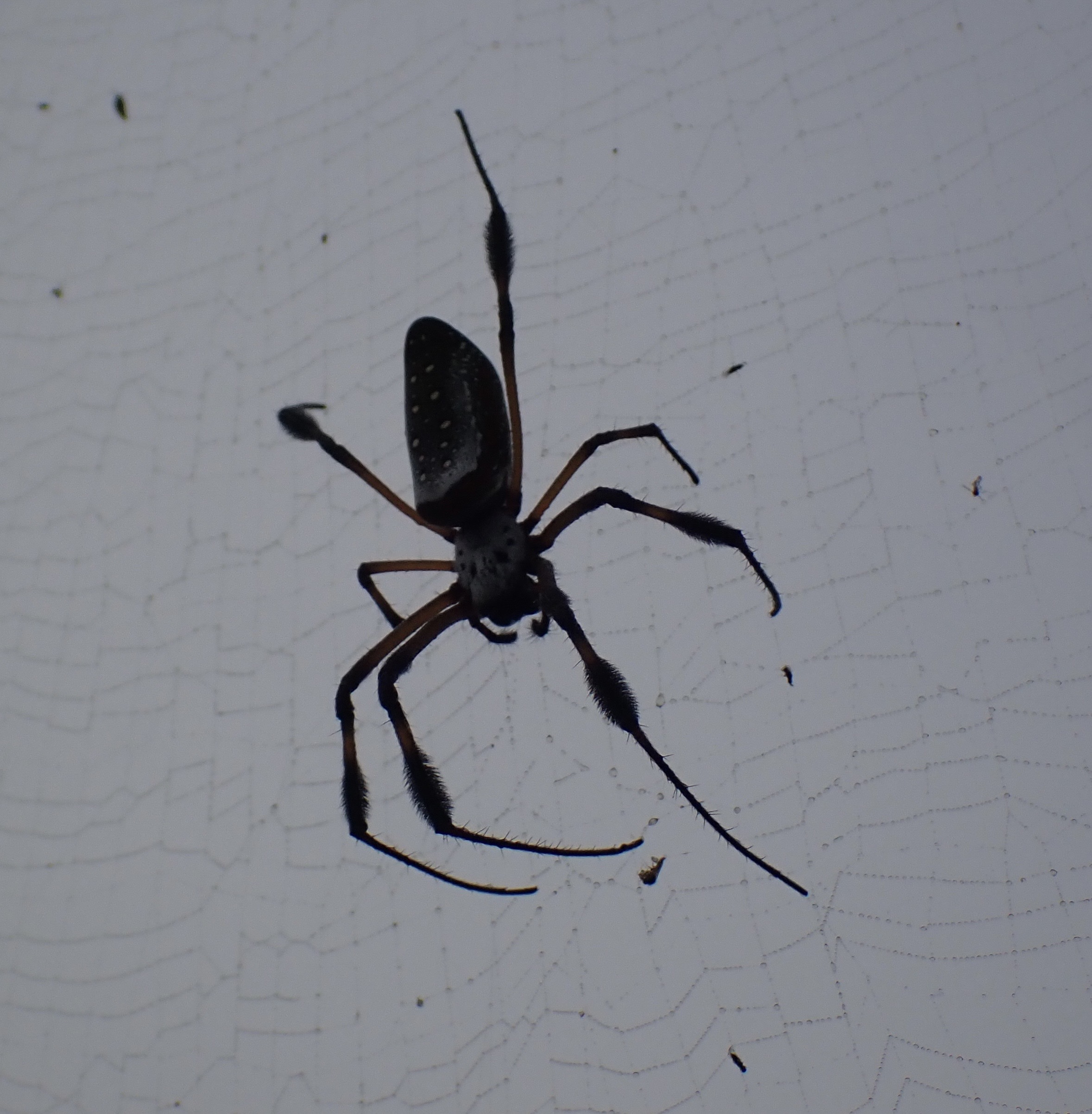
We made a 5 am start this morning, as we were both awake early, for a dawn walk to the bird tower in an attempt to see the sun rise over the forest. Several Tarantulas scuttled into holes in the grass as we walked across the clearing and hundreds of Wolf spider eyes glinted in our head torches, all along the road verges. A Nightjar sat on the road and waited till we were almost on it before flying off. Sadly, when we got to the tower we found angry wasps nesting in the ladder, so couldn’t climb to the top. We did get an excellent view of Golden orb—weavers sitting in their webs on the frame though; it must be an excellent place to set up a trap for unwary insects. We circled back down through the forest in time for breakfast, seeing Heliconian and huge, iridescent blue Morpho butterflies, and plenty of bird life. Leaf-cutter ants scurried busily along one of the trails, which look rather like mountain bike tracks through the woods. It was good to have done some exercise to earn our breakfast of fresh tortillas, refried beans and squash.
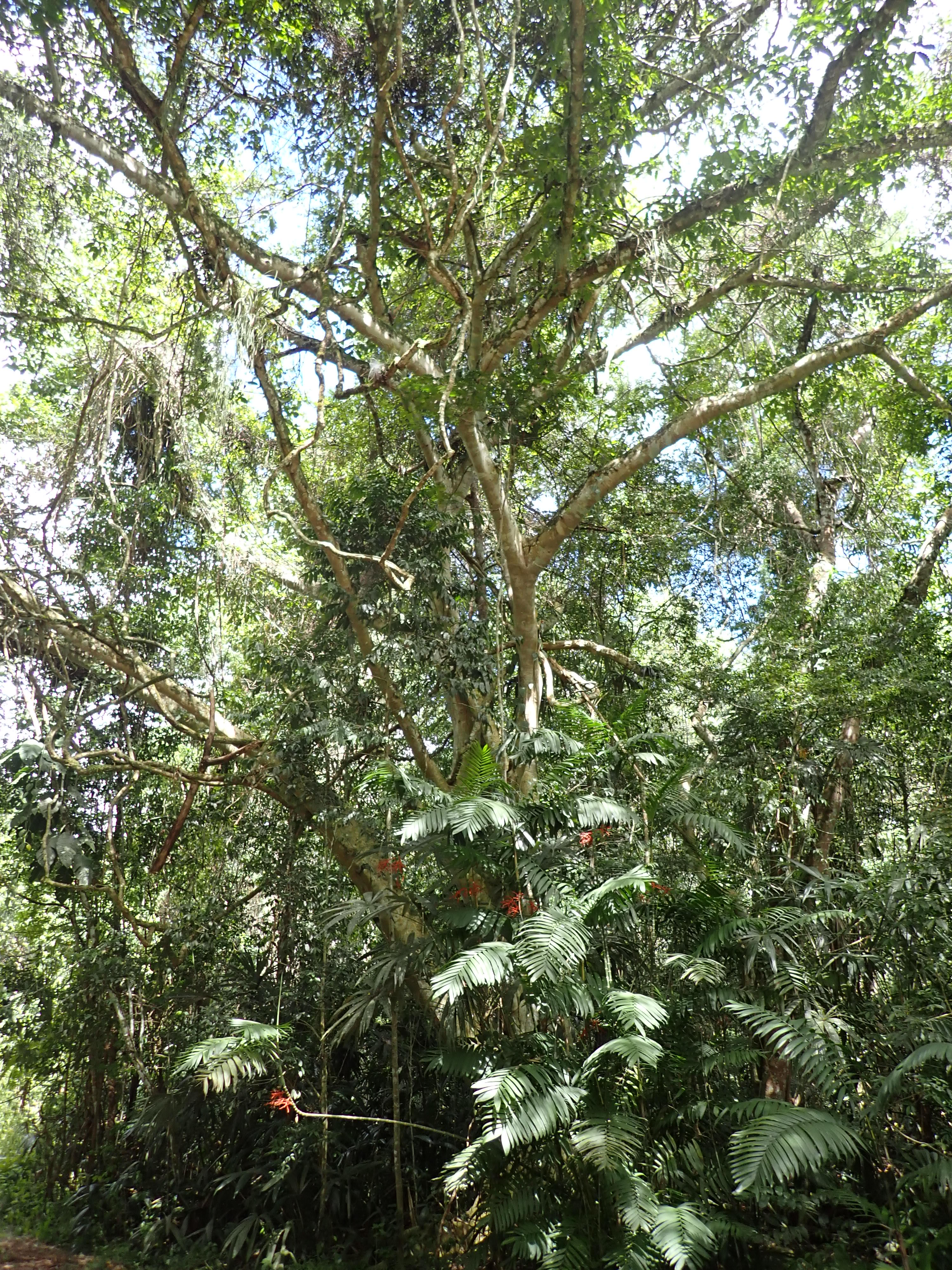
There are three main trails around the station and, after breakfast, we walked the Maya trail, which has quite a few trees with labels to help me learn names. Afterwards, I spent some time back at the station trying to sort out the key species in my head using books. Palms are surprisingly abundant and, as understory trees, are a bit easier to see up close than the large canopy trees. Some, canopy trees, such as Cecropia, have leaves which are big and distinctive enough to be identified from the ground but, for many species, it’s hard to untangle which leaves belong to which plant when you’re looking up from the ground. Climbers and vines with their own, different, leaves, which scramble upwards through everything, further confuse the picture. And many of the trees are also dripping with epiphytes such as Tillandsia, hitching a lift towards the light. Rainforests are not tidy places! It was exciting for me to see some Bromeliad epiphytes flowering in situ but, sadly, the only orchid we saw was in seed.


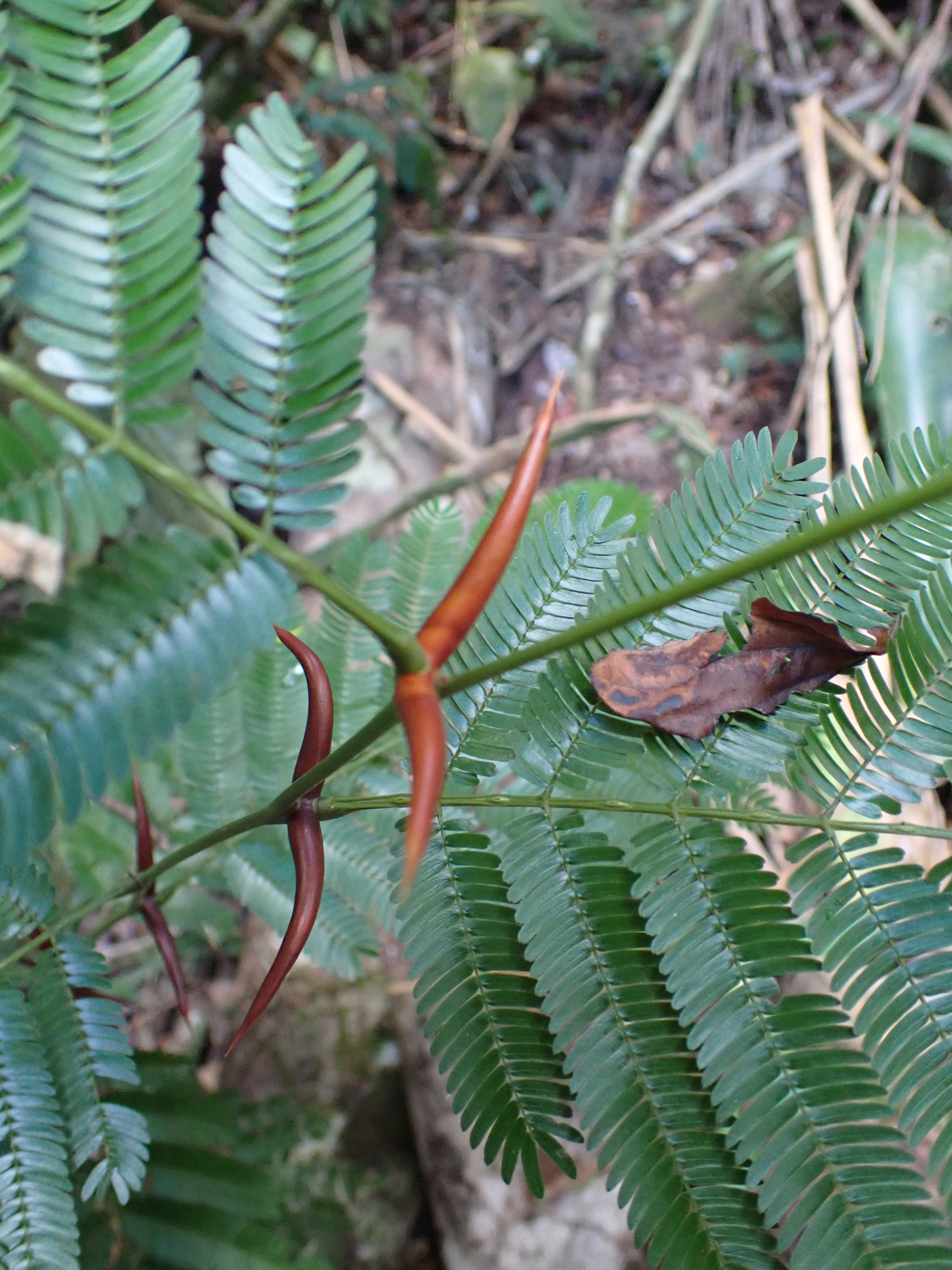
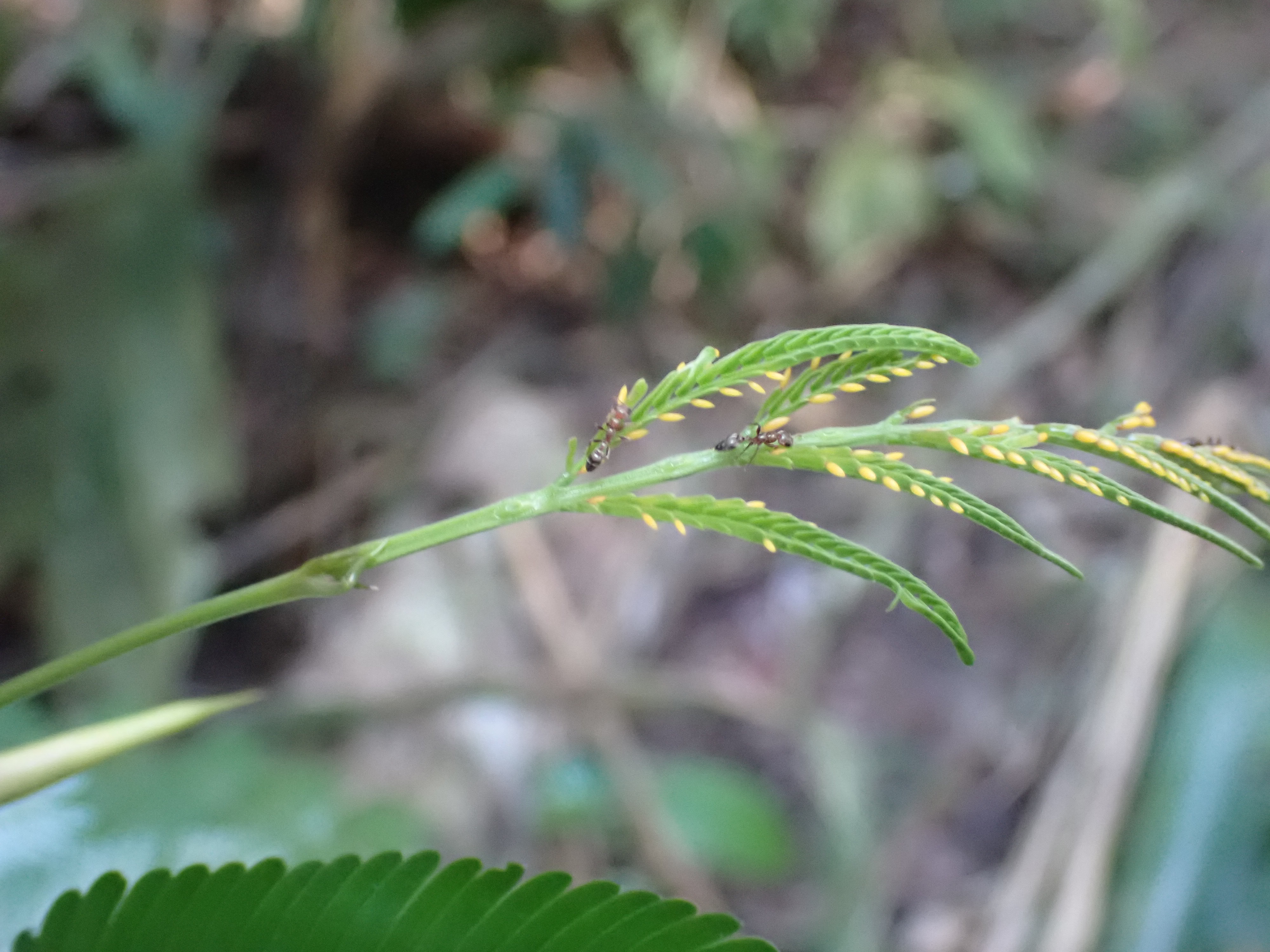
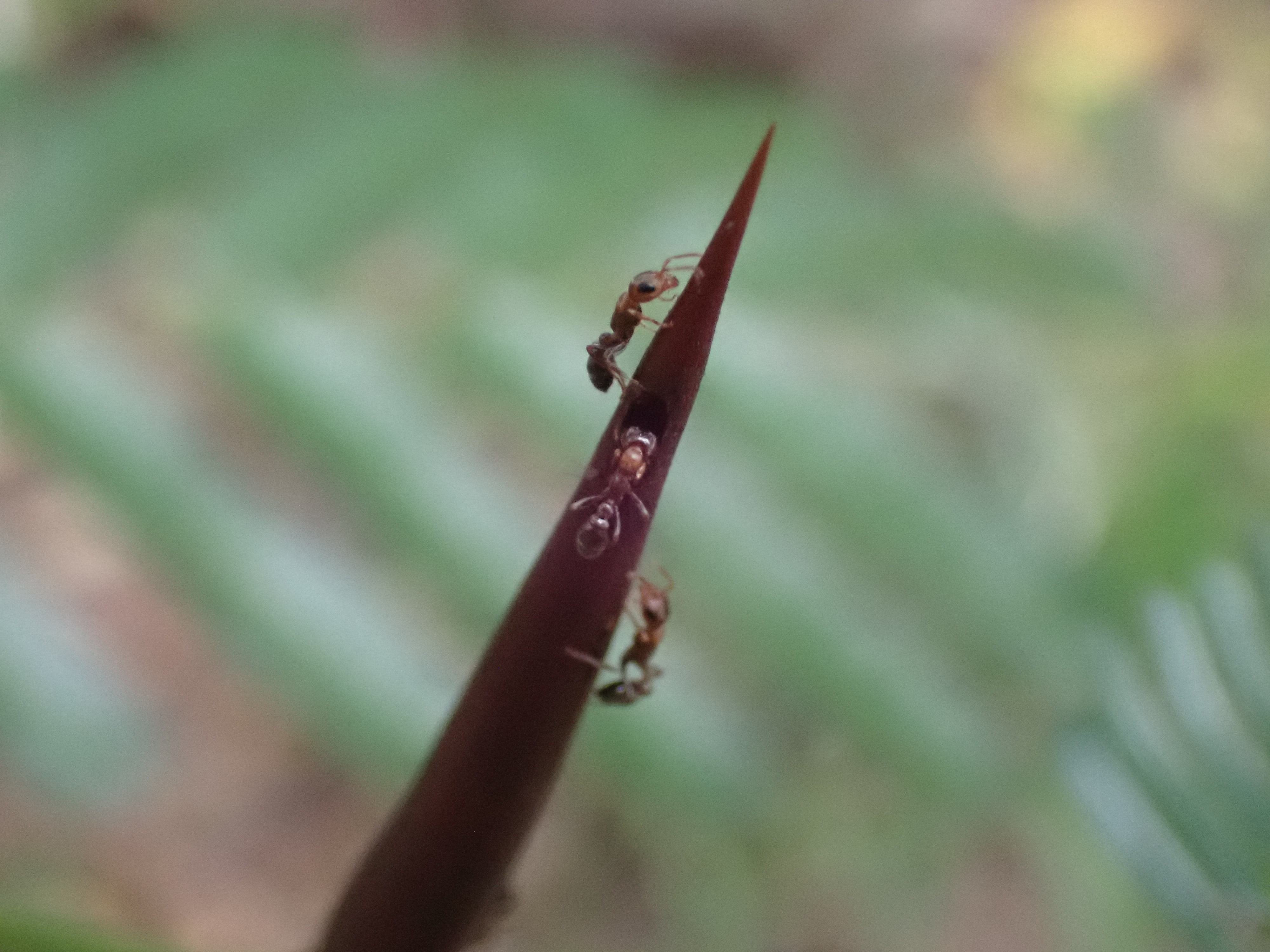
Lunch was rice and beans with fried plantain and avocado, after which we definitely needed a bit of a siesta in the hammocks! Thunder rumbled around and it threatened rain but it didn’t come to much, so we headed out onto the Saffron trail mid-afternoon, and found yet more new things . The prize for best names goes to a shrub in the coffee family known as Hot lips, for its scarlet bracts which attract hummingbird pollinators. Another highlight was seeing Bullhorn acacia (Vachellia cornigera) with its ant guards. The ‘bullhorns’ are leaf stipules modified to form hollow thorns, which act as domatia or homes for Pseudomyrmex ferruginea ants. At the first sign of trouble the plant releases volatile organic compounds to signal to the ants, who stream out from their domatia and attack any hapless herbivores trying to eat the leaves. The plant has to make a big investment in its bodyguards, providing nectar from nectaries on the midrib of each leaf and protein and lipids in the form of Beltian bodies on the leaflet edges. It doesn’t have to invest in the deterrent alkaloids produced by many other acacias, though. A fascinating symbiosis.

We were back in time to shower before dinner; spaghetti with veg and garlic rolls. All very tasty, but rather carb heavy for someone who is supposed to be cutting back on carbs! A little Mexican tree frog was sitting in the flower pot by the dining room door when we left….

 heatherkellyblog - travel with me and wonder at what you see!