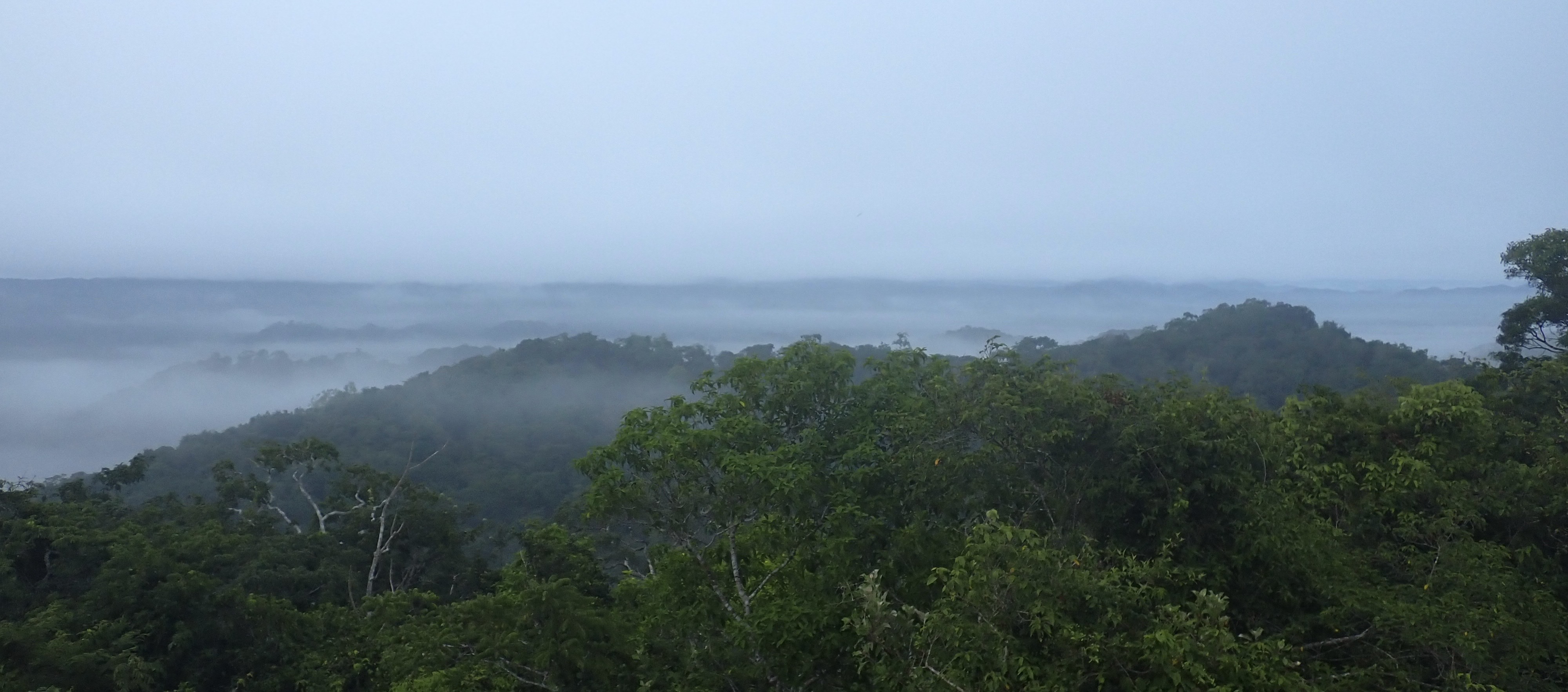
Another excellent day of wildlife spotting. I woke at 4.45 am to hike up to the Bird Tower before breakfast – just Dan, Jonathan, me and one student, which was lovely. I appear to be the jinx as it was misty again, though very beautiful as the mist came and went, revealing forest-covered hills as far as the border with Guatemala. Two groups of Howler monkeys were giving it their all and we rooted for a beautiful Blue Bunting, normally a grain-eater, repeatedly trying to fly up and catch an Orbweaver spider.
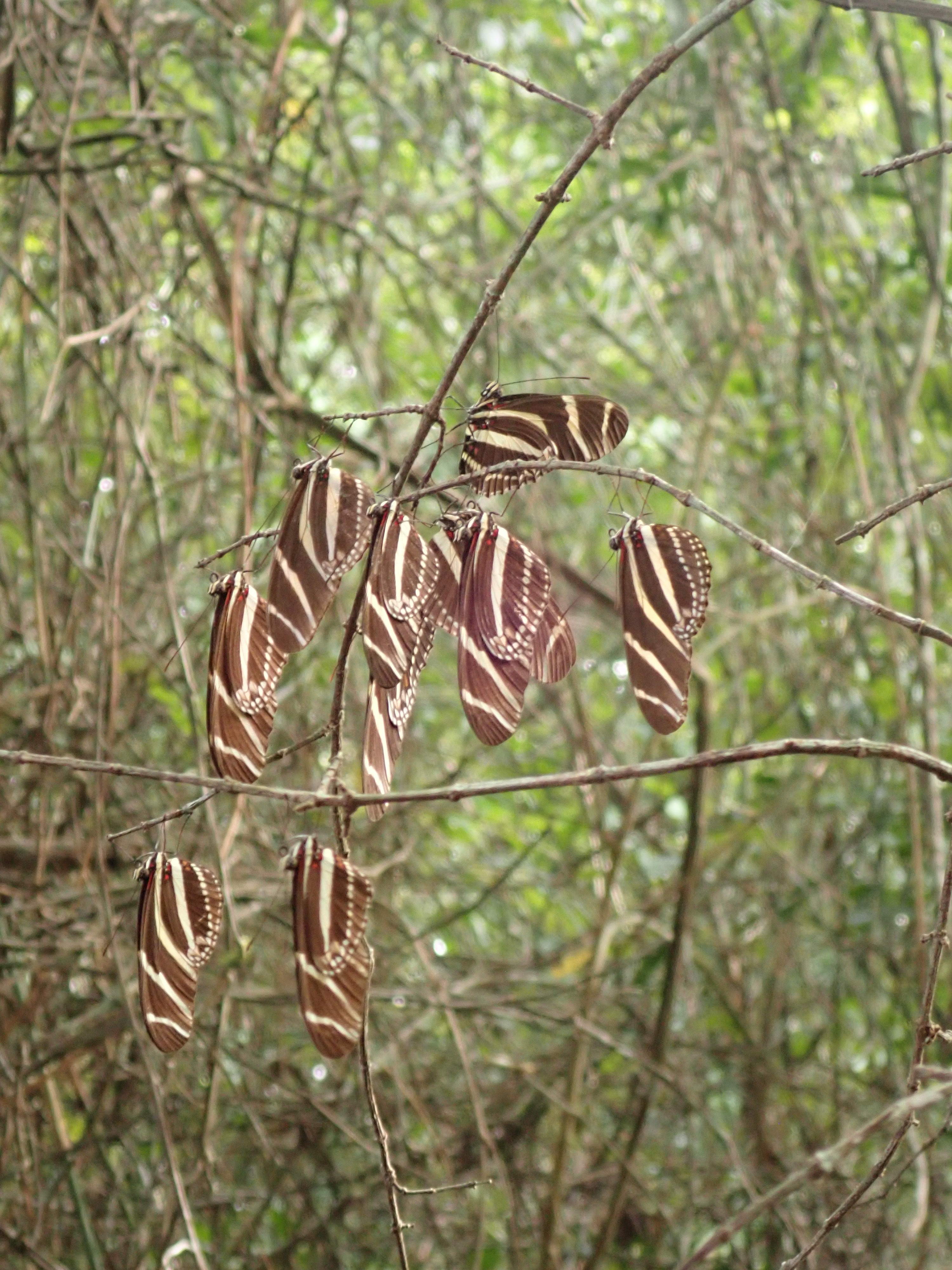
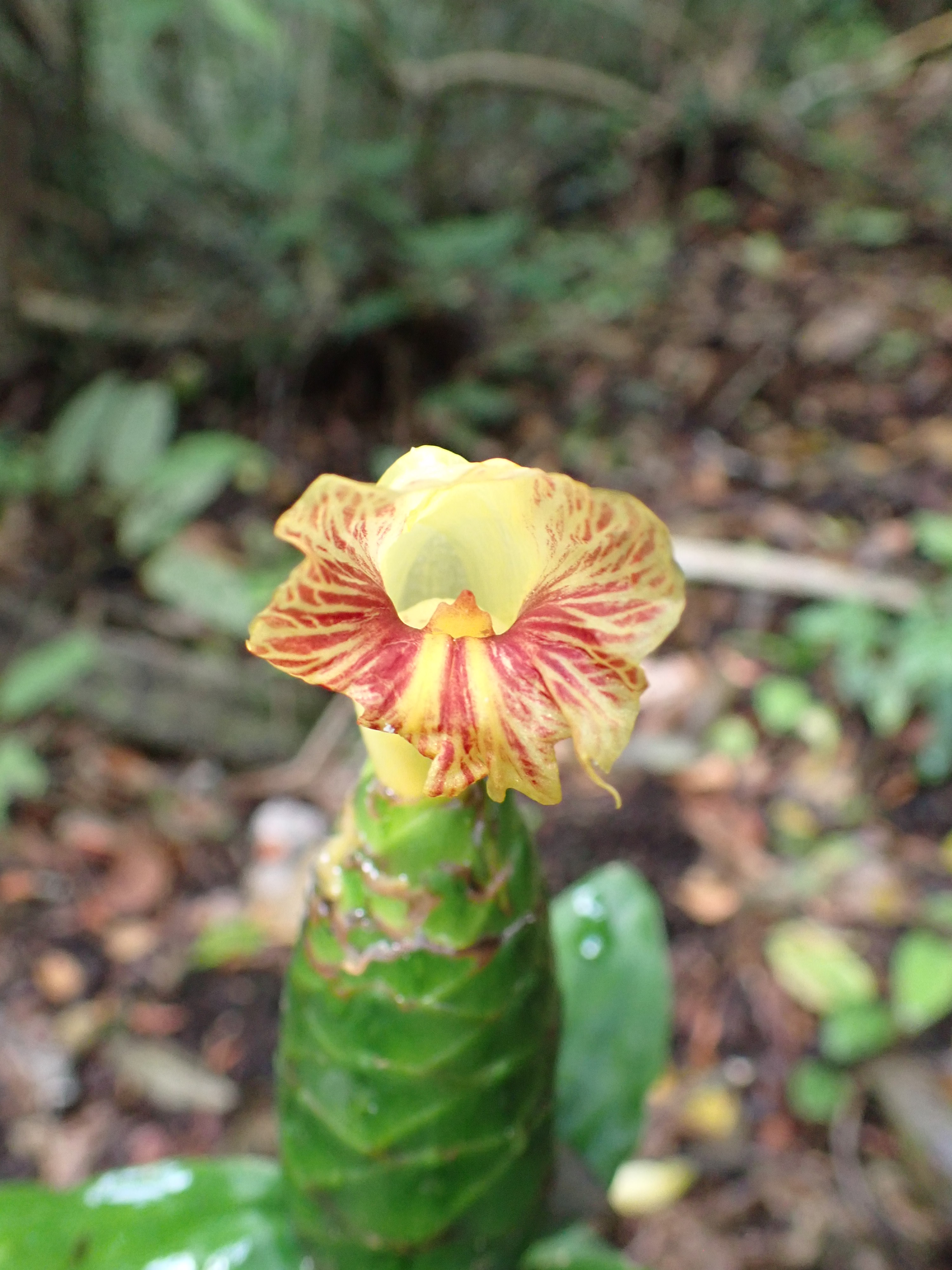
On the way down we disturbed the same roost of Heliconius butterflies as before and the flowers on the Costus (spiral ginger) were fully open. The best thing of all, though, was checking the camera trap on the trail and finding a stunning video of an Ocelot, walking along the trail straight in front of the camera. We were back more or less in time for breakfast and the students were almost equally excited to discover it was pancakes!
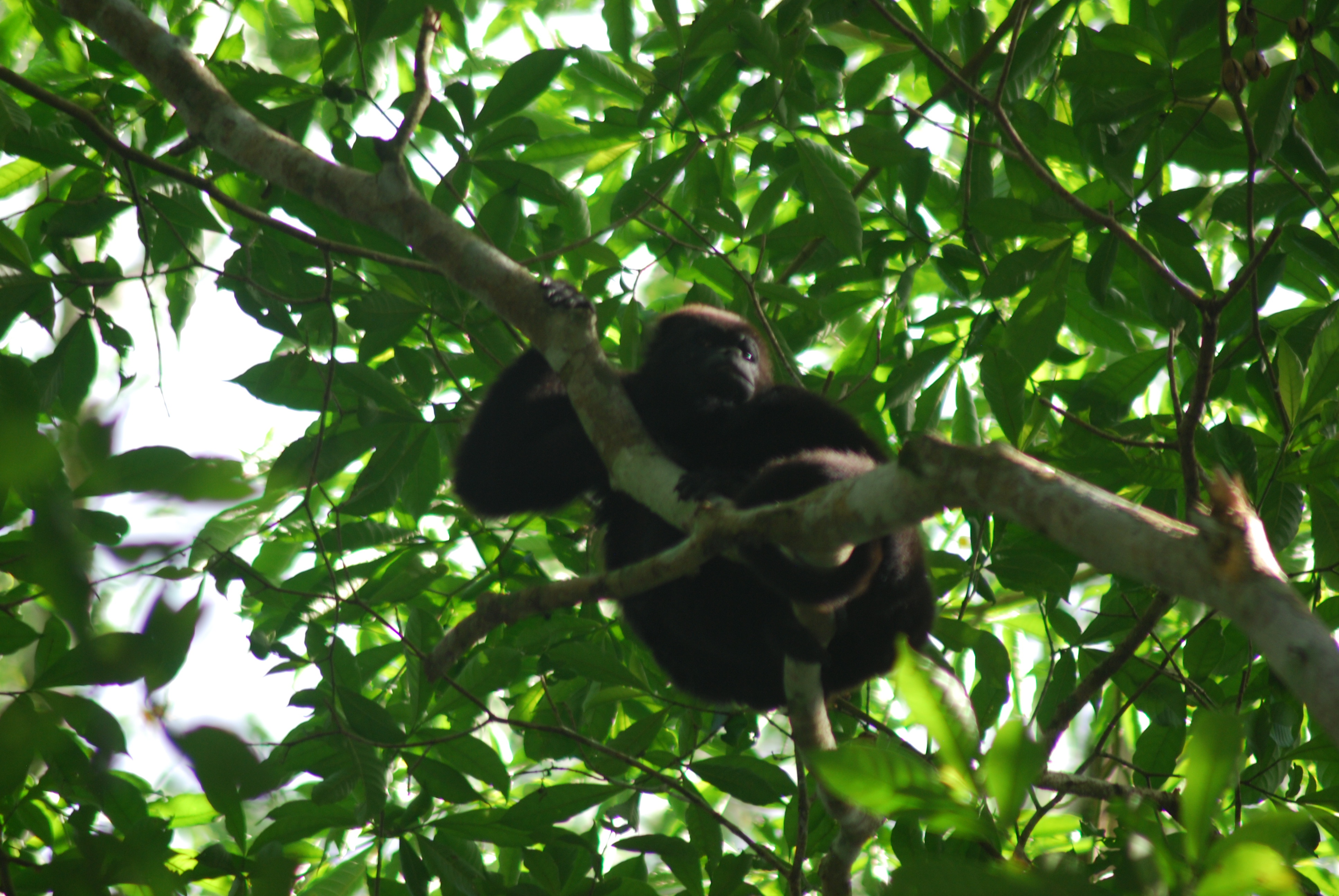
After that it was time for our chance for a close-up look at Howler monkey behaviour. Jane, who runs Las Cuevas, is a primatologist by training with vast knowledge of the monkeys in this area. She’d been following the most local group of Howlers most of yesterday and early this morning and we were lucky enough to get a great view of a group of four – an adult male and female plus their nearly adult daughter and juvenile son. She explained to us how the groups are structured – this is not a family unit as such as the adults are not monogamous and the nearly-mature daughter will soon be forced out of the group and will spend some time on her own before she joins another group as a breeding female. It was amazing to watch the monkeys scrambling effortlessly through the trees, using their tails and opposable toes on the front legs to grip. They were aware of us below them but not much bothered and the young female gave us a great view as she clung upside down to a tree and drank the rainwater collected in a hole – obviously a regular drinking spot for this group. One of the students made an excellent poster with a drawing of this monkey for their evening presentation.
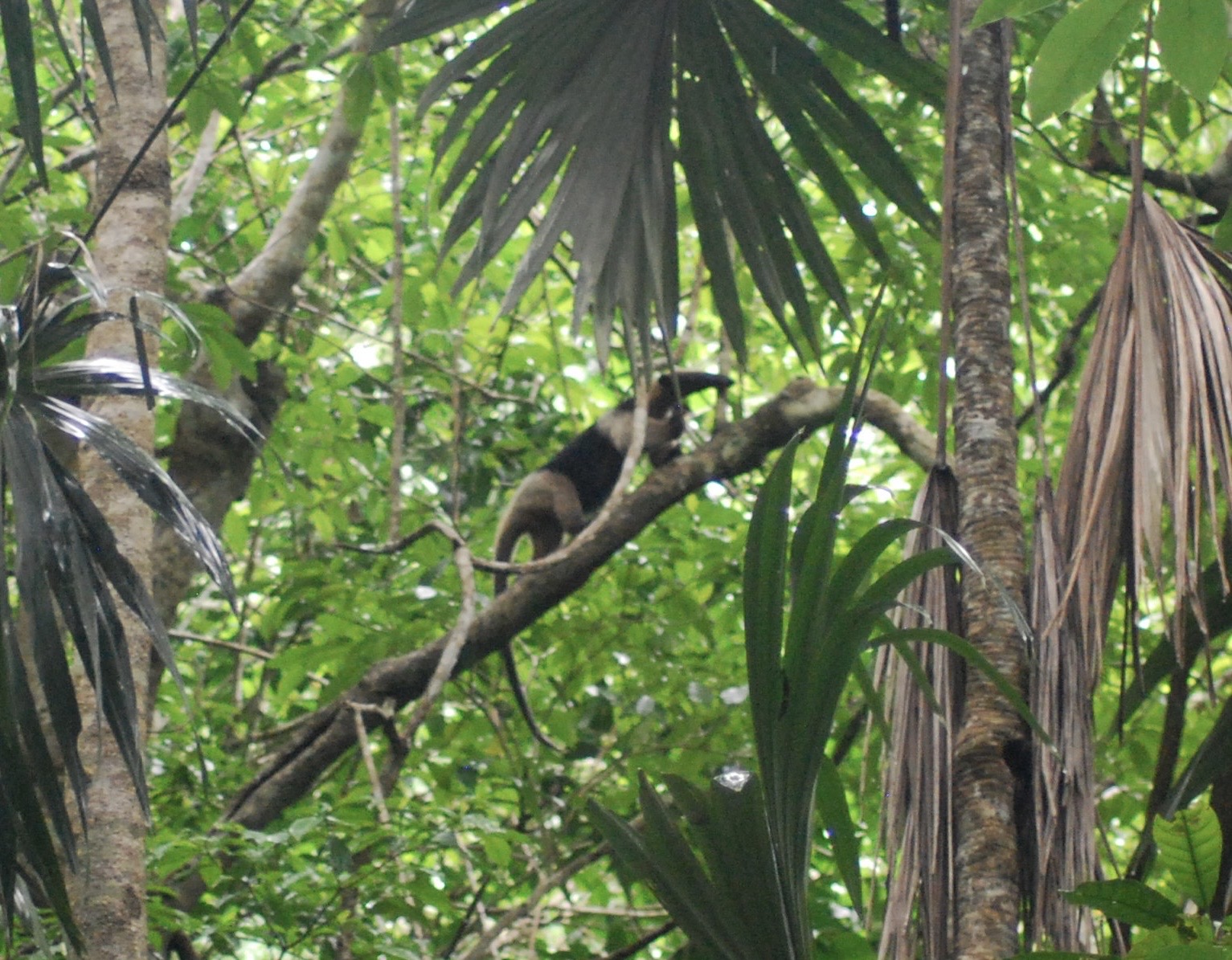
That was exciting enough, but then a Collared anteater or Tamandua appeared above us in the trees too, foraging along the branches. I had no idea anteaters could climb trees but these have a prehensile tail and can climb high in the canopy in their search for ants, termites, and larvae. Jane has only ever seen three here, so we were privileged indeed.
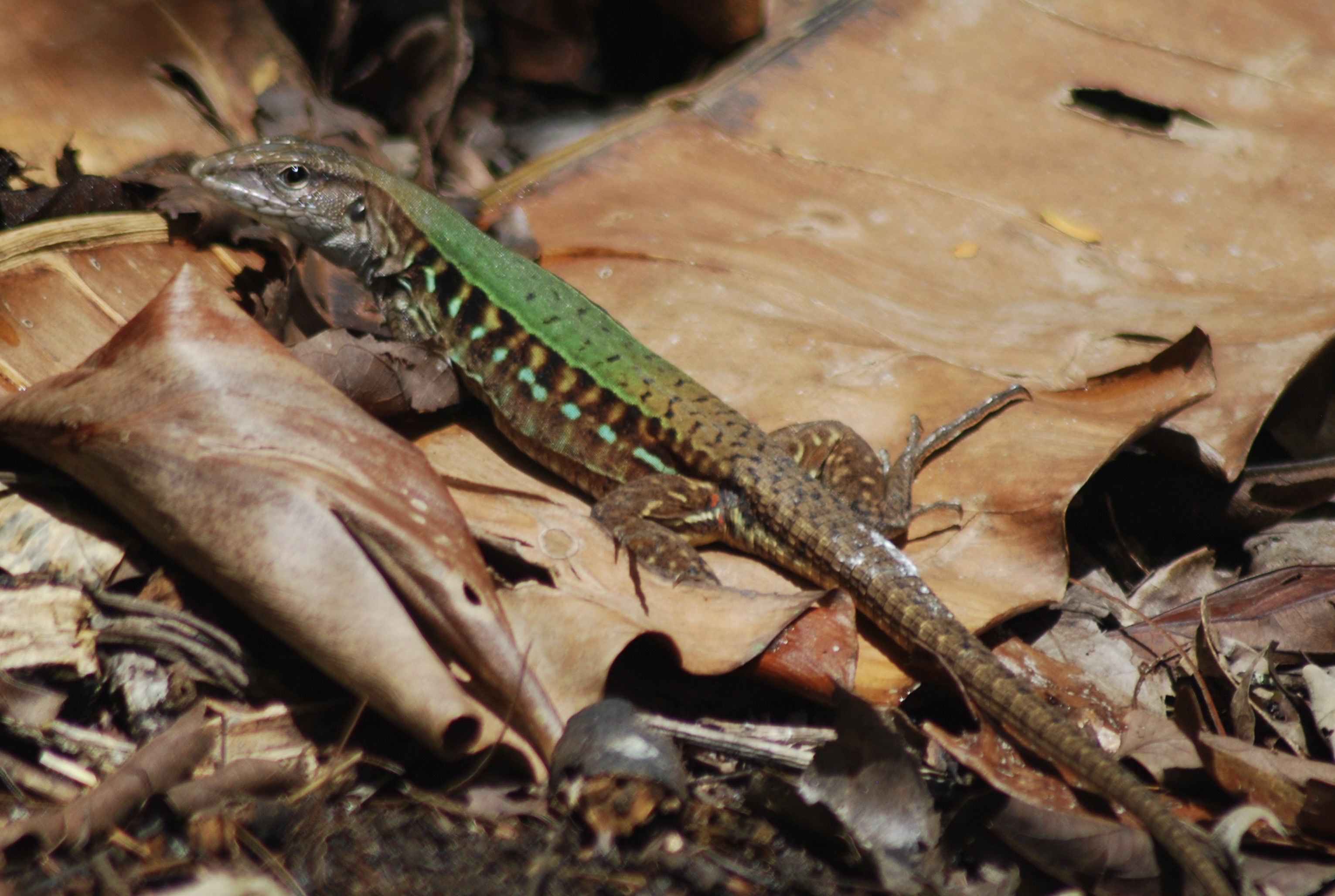
When the monkeys settled for a prolonged sleep we headed back to the centre, though I mooched around first and found a beautiful Rainbow ameiva lizard in the leaf litter on the way.
Today has been rather more relaxed than earlier ones and lots of people took the opportunity to do some washing – the perfect cue for a full on tropical downpour, the most spectacular we’ve seen so far. It was a good time for none of us to be out in the forest! The afternoon’s activities were two lectures from members of the FCD (Friends for Conservation and Development) team, Salvador and Wilmer, who arrived on foot after a wheel came off their vehicle several km down the road. Despite that, they managed to give us some great context about conservation in Belize and, in particular about the Scarlet Macaw project which is yielding such great results.
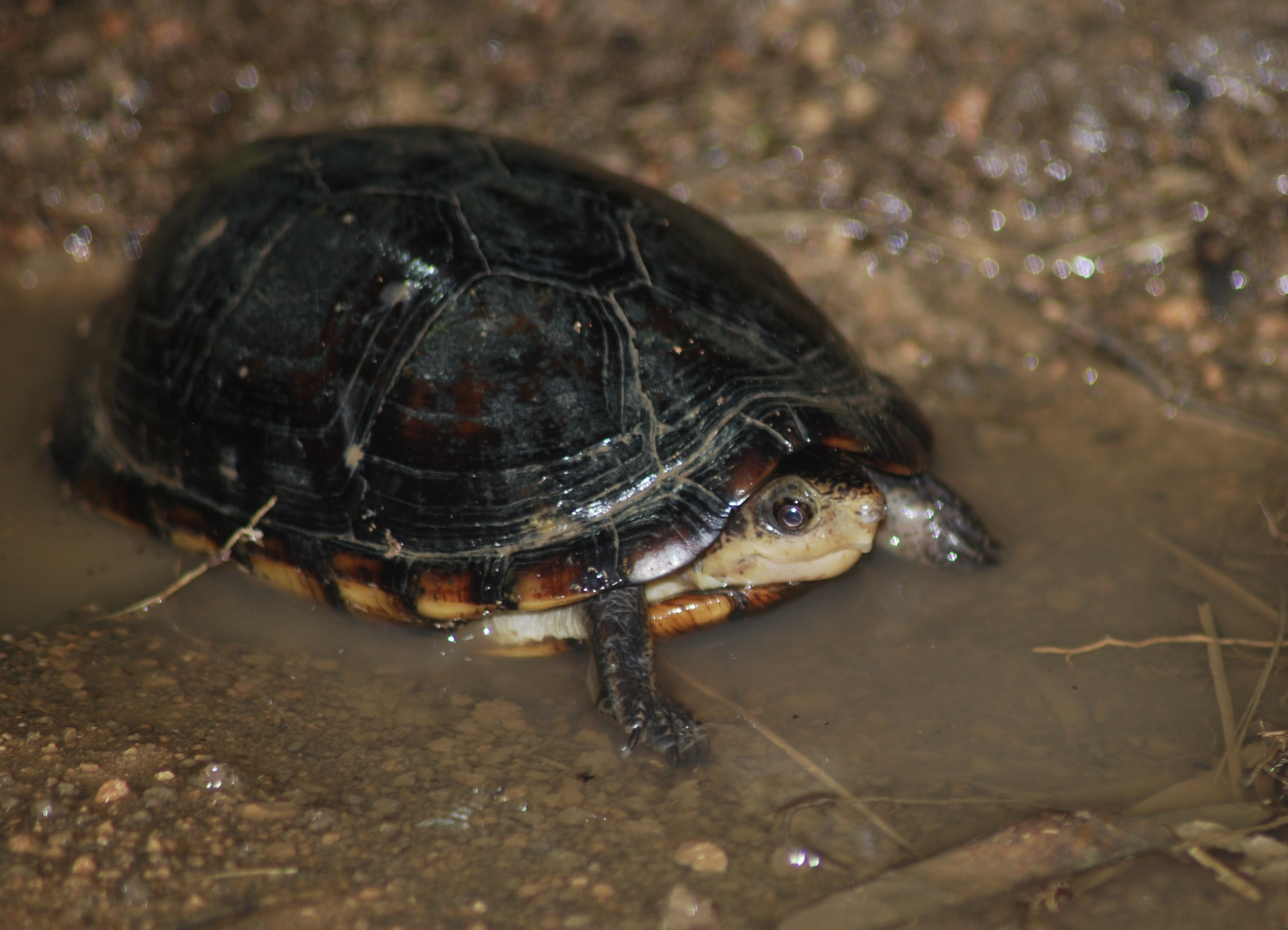
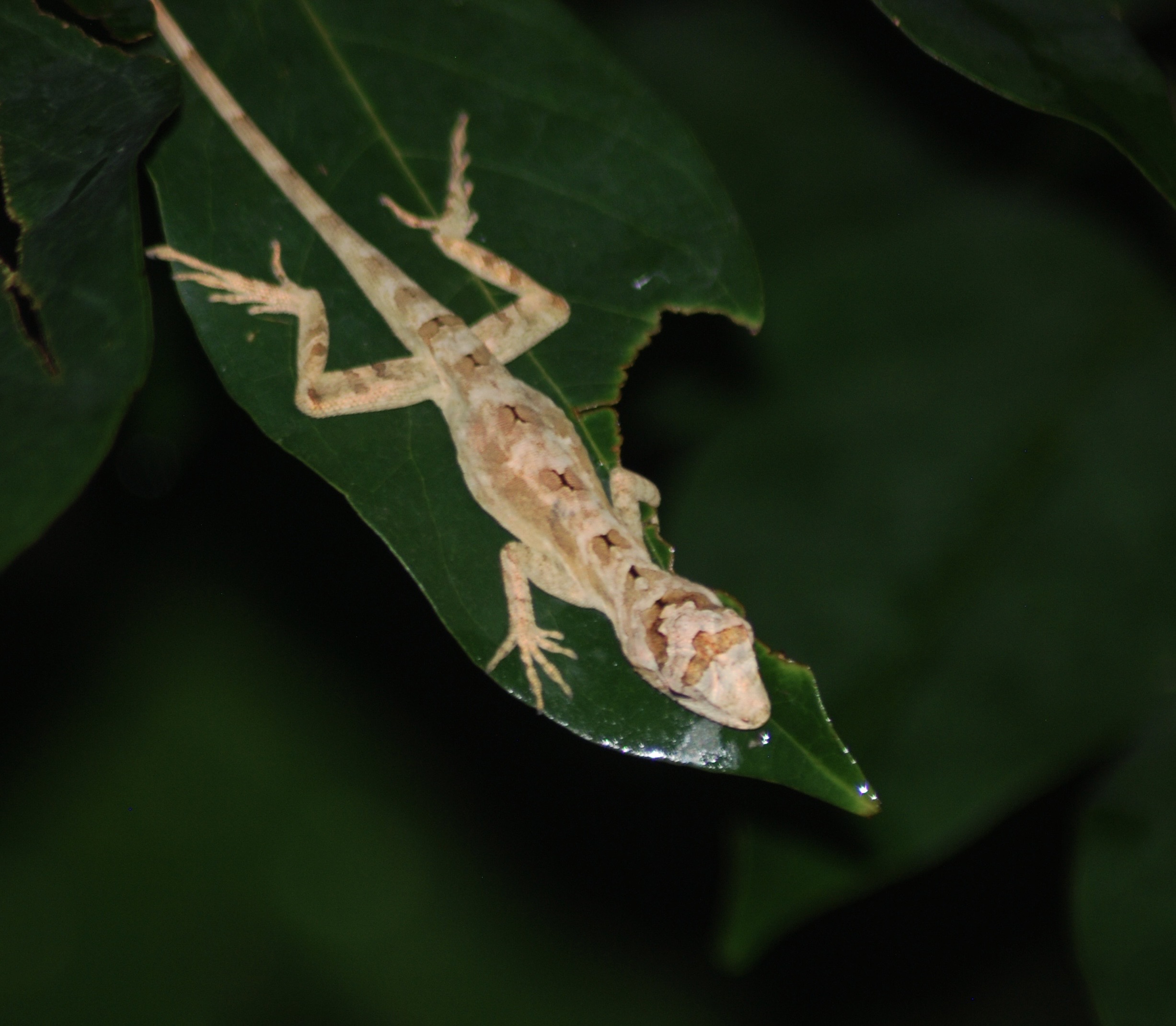
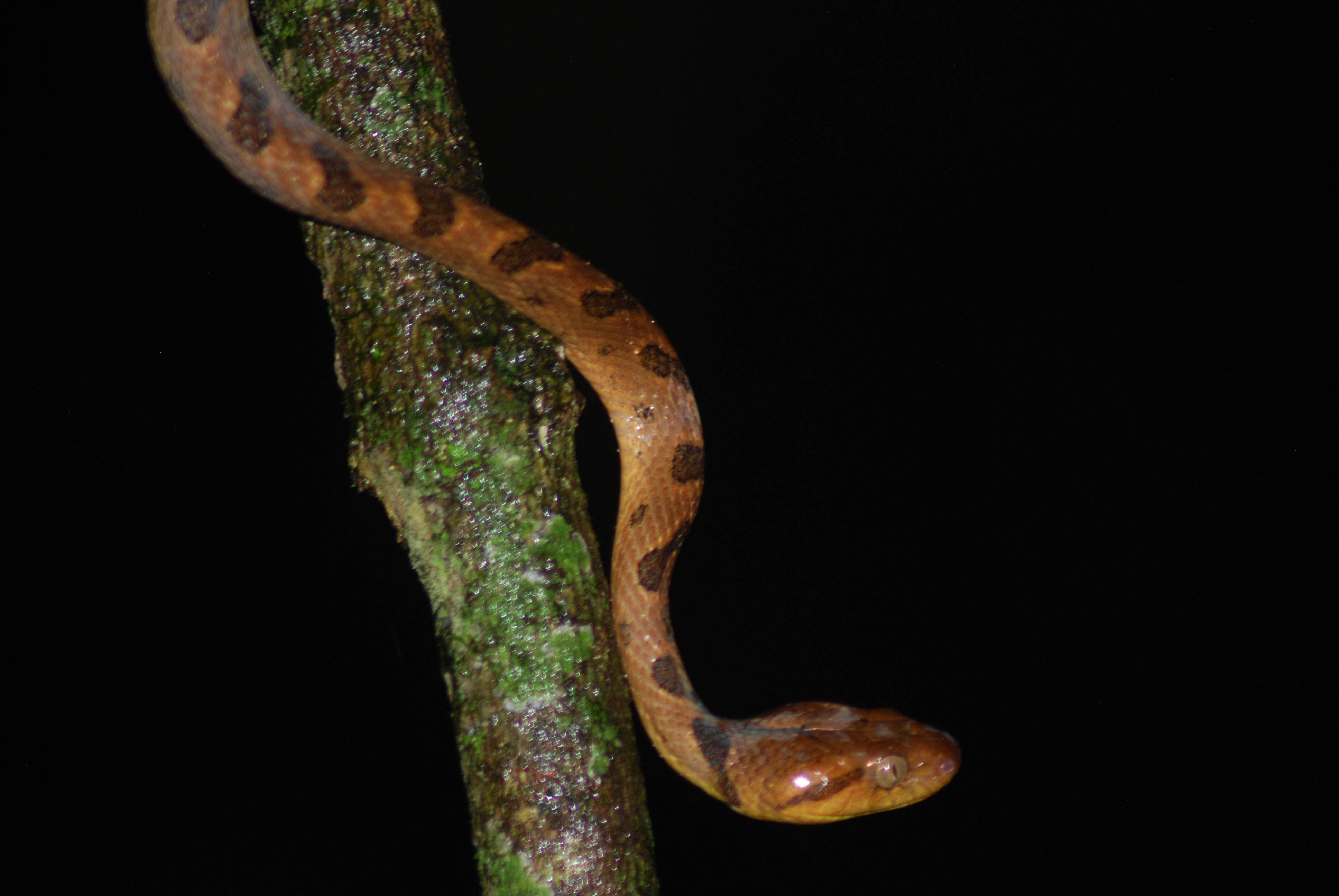
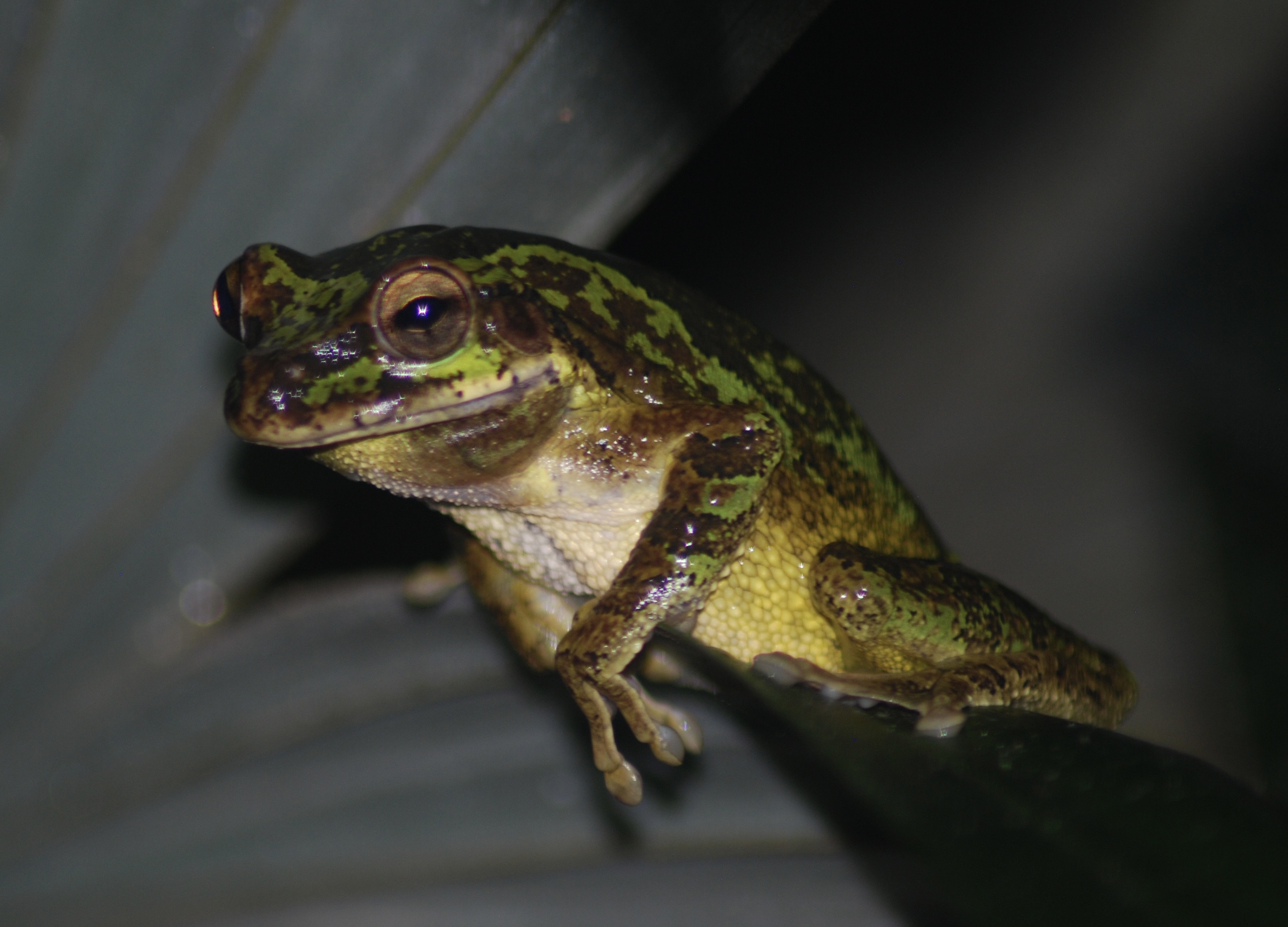
While we were having the lectures there was a very loud bang which we didn’t think much about but when I went to set out the light trap one more time, we found a large tree fallen across the path to the pond and the Maya trail. It was covered in termite tunnels so has presumably been eaten away from the inside out! For fear of missing out, I went on the night walk with Pedro again. This time there were two cat-eye snakes by the pond and very little frogspawn remaining but we saw plenty of frogs, mainly Mexican tree frogs, especially when we walked out along the road, as well as an almost translucent Ghost anole. The heavy rain this afternoon meant lots of mud but also lots of puddles so many of the frogs were on the ground around these. We also spotted a White lipped mud turtle foraging in one of the bigger puddles – they burrow into the mud to escape predators but can also retract their whole bodies inside the shell, not just the head like a tortoise – so are very well protected. Something I didn’t know is that the shells evolved from the rib cage.
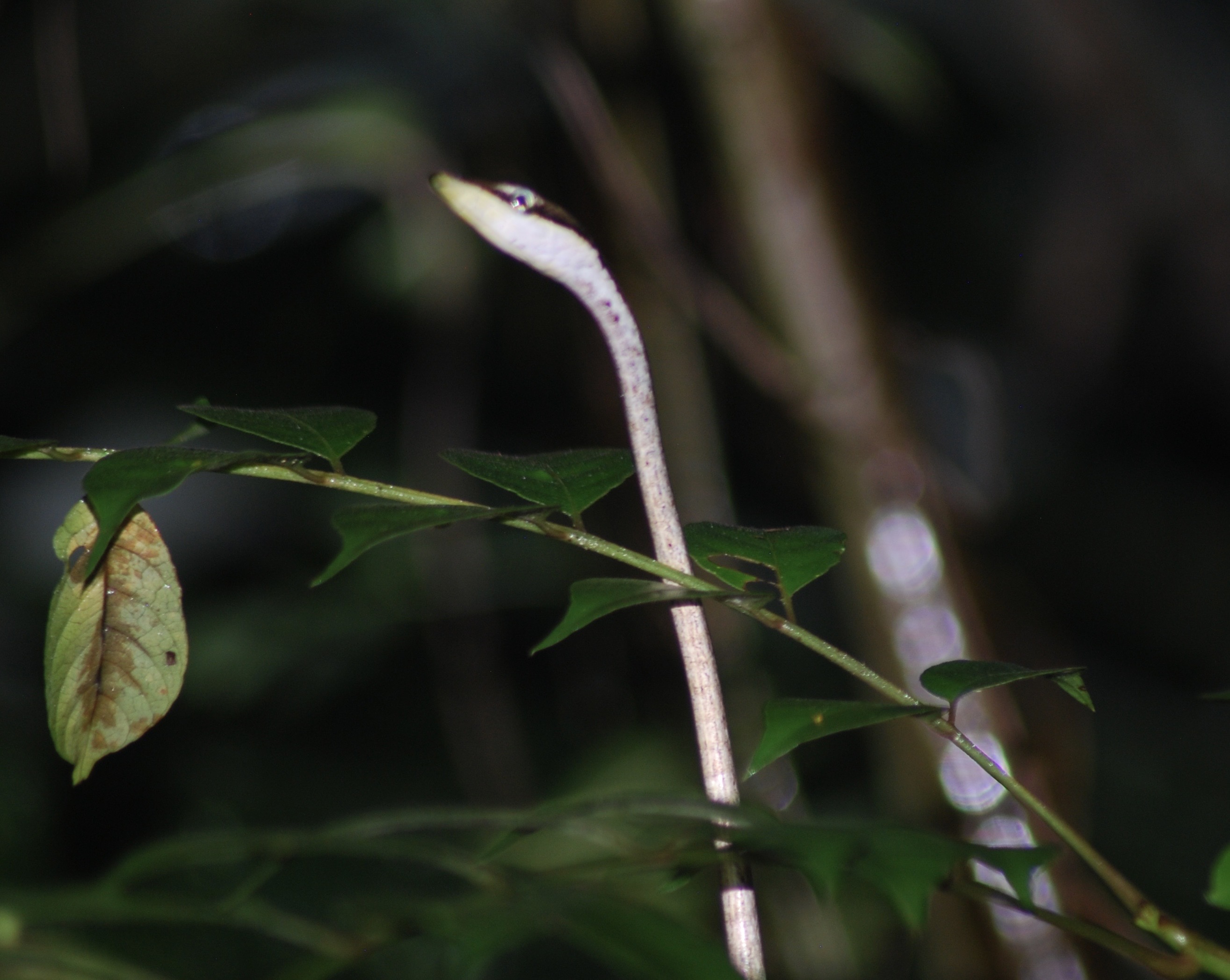
The other cool find of the night was a Brown vine snake, Oxybelis aeneus – a very thin, flat snake with a tiny pointed head which looks just like a dry, white vine winding around other plants. It feeds mainly on lizards, like the Anoles we saw, but also eats frogs and small birds and rodents, apparently. That seems quite a stretch, given that the snake’s head is probably little more than a centimetre in depth! We did once watch a snake swallowing a frog much bigger than its head in Nigeria, and it was quite a sight. Snakes can open their mouths especially wide because their lower jaw bones (mandibles) are not connected directly to each other as in mammals, but are joined by stretchy ligament, allowing them to spread apart sideways and move independently of one another. They are also relatively loosely connected to the back of the skull so can rotate more in situ. The snake is able to slowly walk its mouth forward over the prey item, while its backward pointing teeth hold the animal firmly in place.
I was a little nervous of the snakes here but it turns out most we’ve seen, although venomous, would do no more than make a human a bit uncomfortable. That’s arguably better than can be said for the vast number of chigger bites I’ve collected so far, but I’ll spare you a picture of those!
 heatherkellyblog - travel with me and wonder at what you see!
Fabulous photos
Thank you!