For anyone who thinks that ‘Elf and Safety’ has gone mad around managing risk on school trips, I bring you a kindergarten trip in China by way of contrast. The children, aged between about three and seven, roasted tea leaves they’d picked themselves and then learned how to prepare and drink green tea!
We spent well over an hour on the bus with a lot of excited children driving northwest out of Chengdu to Dujiang Yanchuanxi Tea Valley. At first we were on major roads, out past the Panda Breeding Centre we visited in 2019 and last year, where the most interesting thing to talk about with Casper was what is meant by a flyover. After an hour or so, though, the road started to wind upwards into the forested foothills of the Tibetan plateau around Qingcheng Mountain, which we visited in April 2024.
Once we arrived at the tea valley, we were given a surprisingly detailed introduction to the history of tea growing in the region, given the audience. Martyn and I, of course, couldn’t follow any of it except one or two specific nuggets which Casper chose to pass on. Then things got more exciting – the children were let loose with some traditional wooden agricultural tools – think millstones and wooden mallets and imagine the possibilities. Casper narrowly avoided having his fingers smashed as he carefully pushed some grains into position under a mallet.
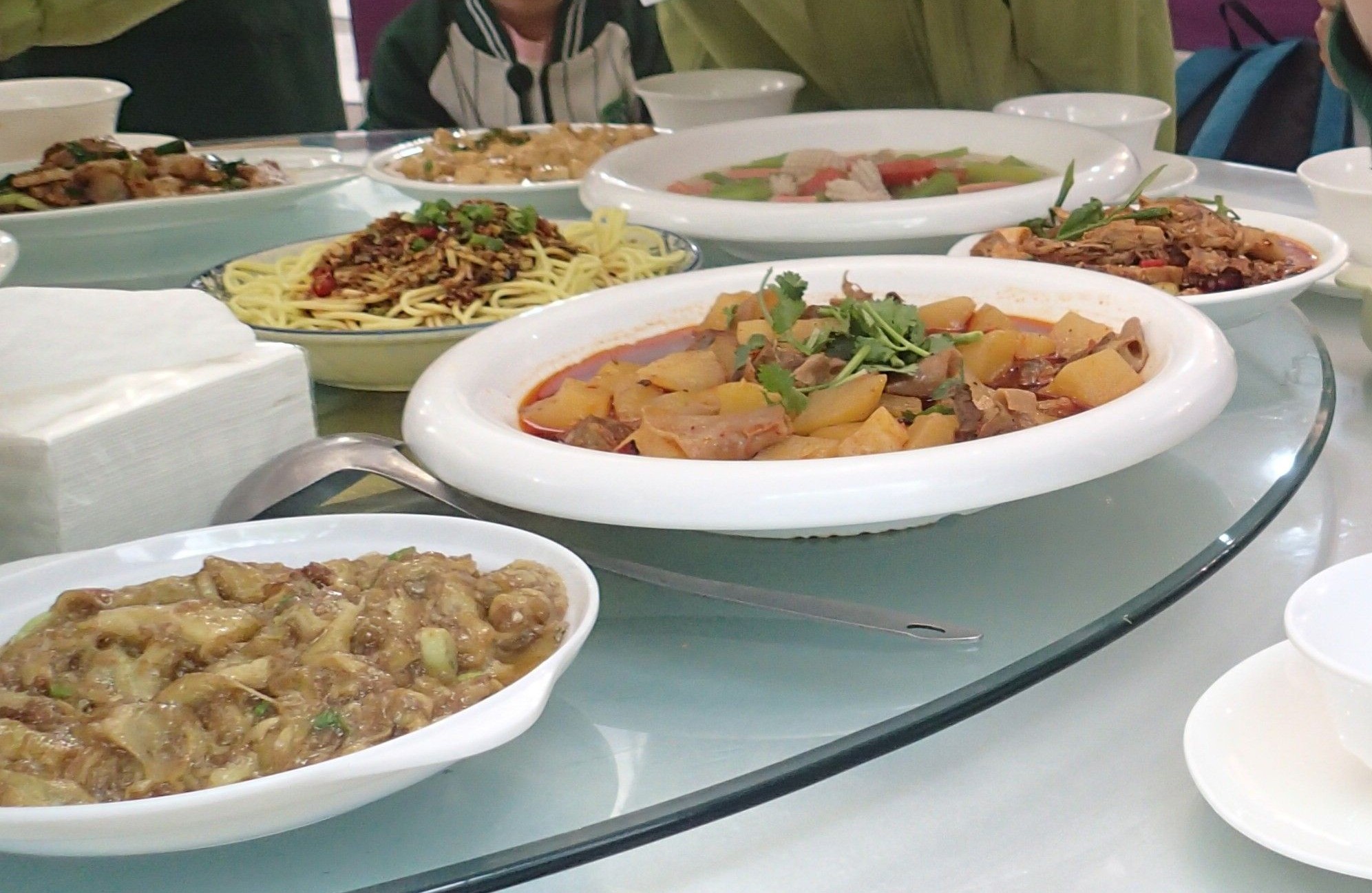
Then it was lunchtime. No school-issue packed lunches here – the children and their adults were seated at round tables, each with a large lazy Susan, for a traditional Sichuan meal of around 15 different dishes. Sweet and savoury dishes were presented together with no labelling to reveal what is what, to the uninitiated. Needless to say, it didn’t take Casper long to work out how to spin the table so the sweet pumpkin dish was always in front of him…. The effect of the sugar on him and his two best friends was predictable and pretty much instantaneous!
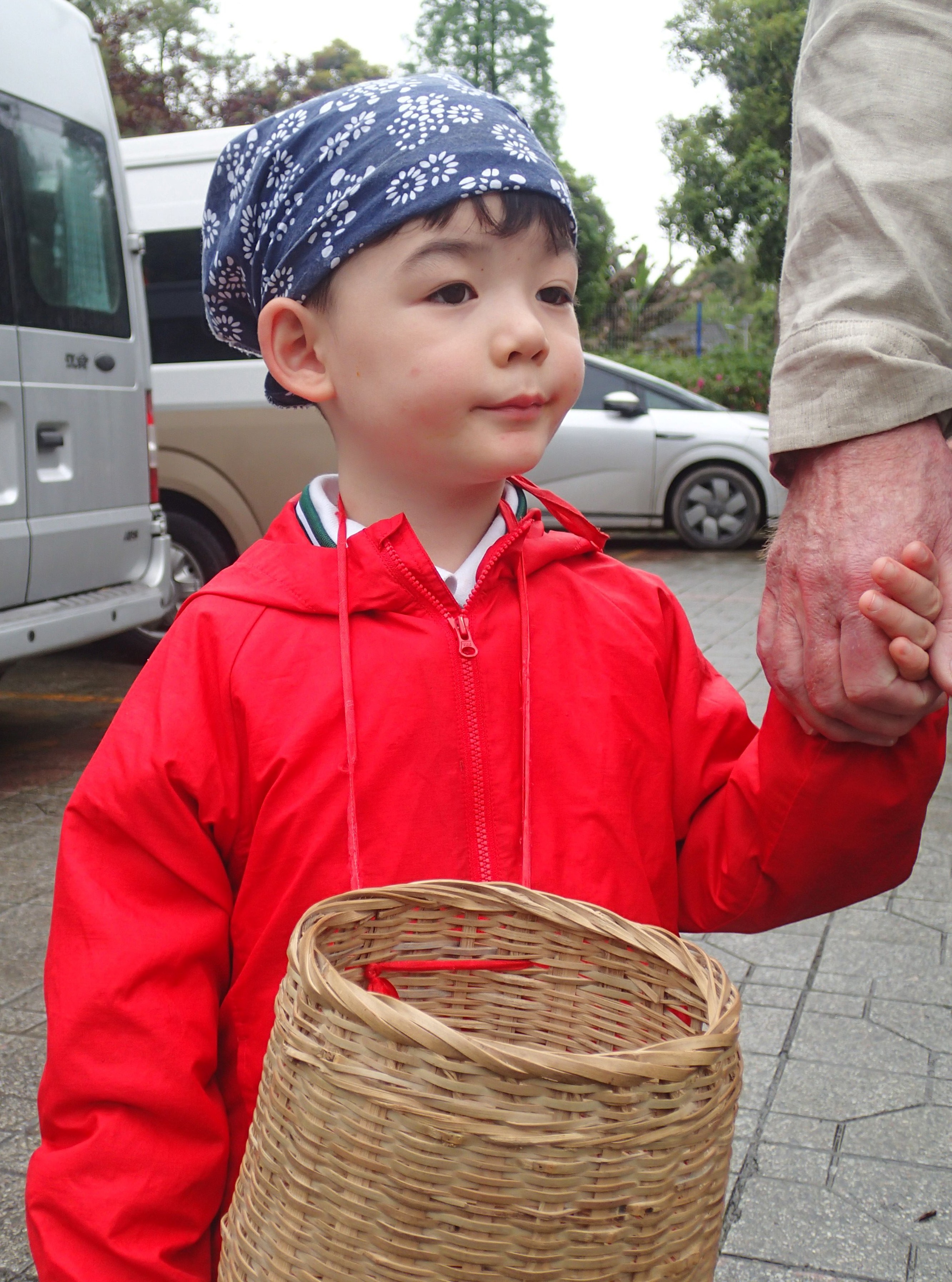
After lunch it was time to get dressed up for tea picking – the children were to wear kerchiefs on their heads and each carried a small basket for their leaves. Casper was not amused about the kerchief – his resigned expression when the teacher finally persuaded him to wear it was pretty much what his dad’s would have been in the circumstances, at that age.
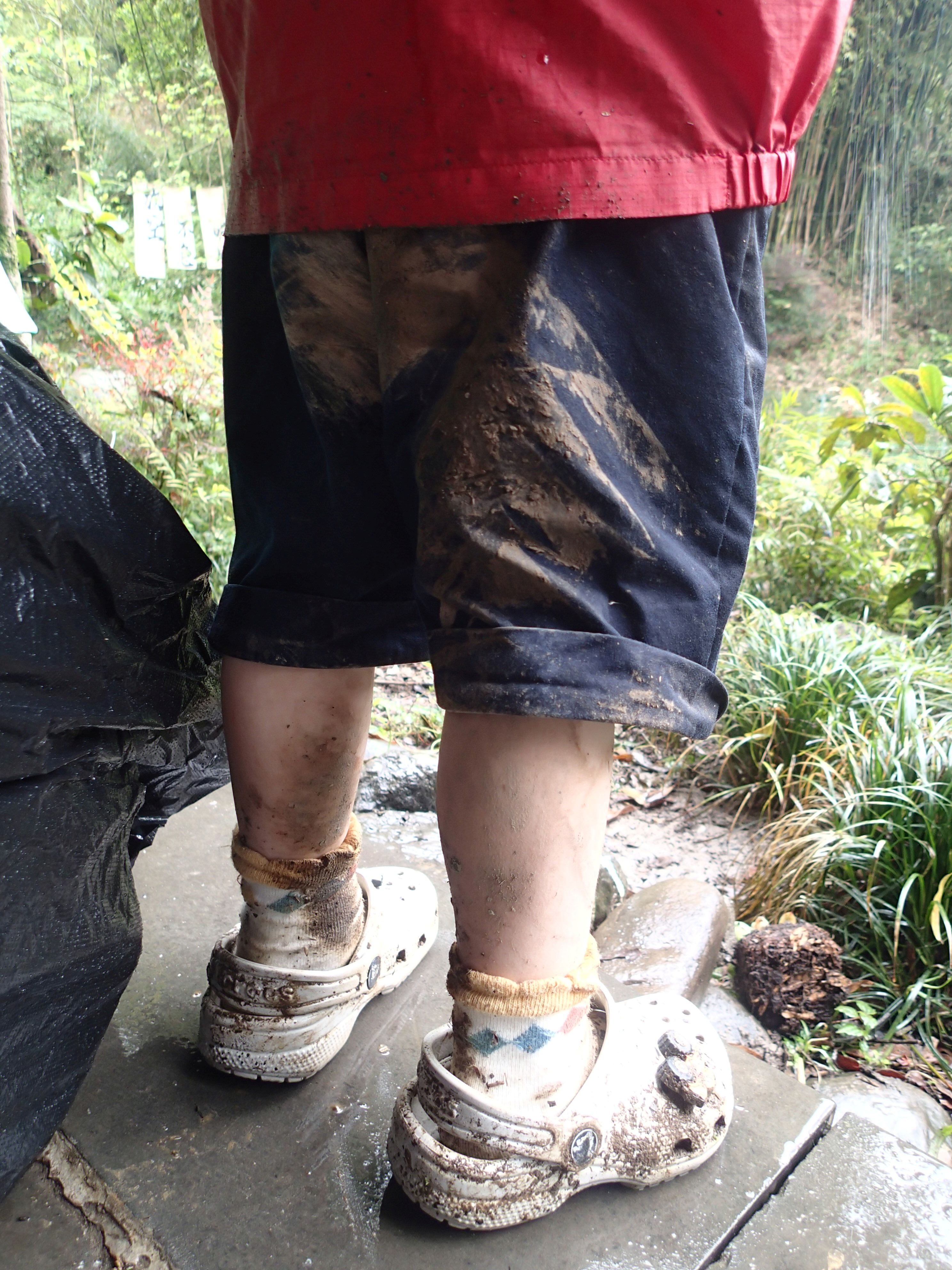
He soon forgot about the kerchief, though, and raced up the steep hill opposite the tea house where tea bushes were growing on narrow terraces. The children were let loose to collect what they could. We’d not understood any instructions, so just went for the youngest few leaves on each shoot and didn’t get told we were doing it wrong, though our grandparenting skills were definitely being questioned – sometimes it’s good not to understand much of what is being said! It started to rain heavily and the red clay soil on which the tea plants were growing soon got very slippery. Having fallen over once, Casper quickly realised that the easiest way to get from one terrace to another was to sit on his bottom and slide. No-one else’s child looked like this….
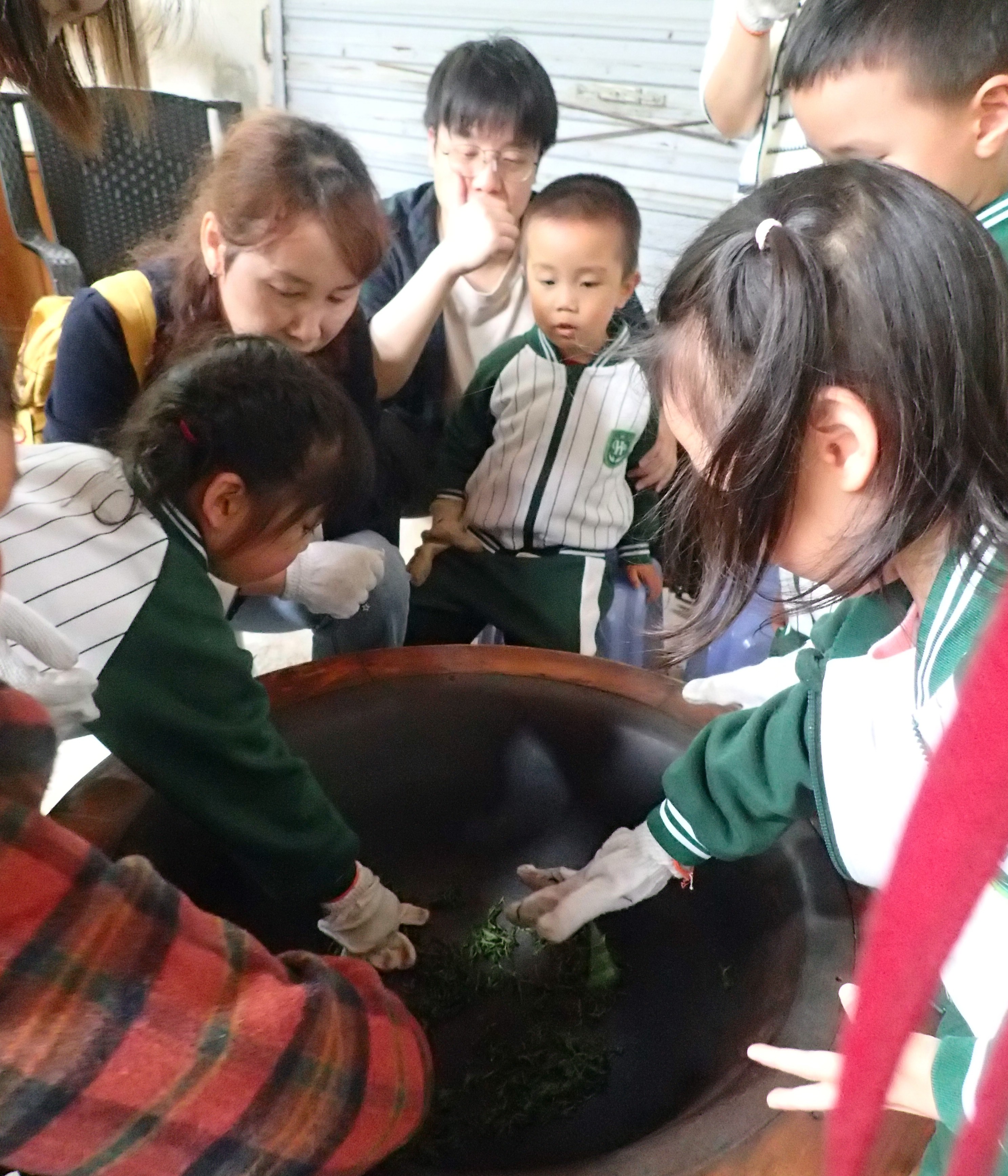
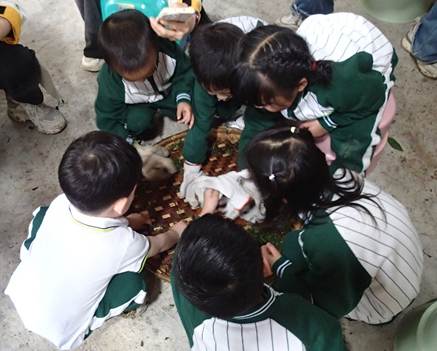
We slithered our way back down the mountain before being led to the tea-drying shed, where the children were given gloves and encouraged to participate in turning the leaves as they dried in a large, hot, metal wok. Miraculously, no-one burned their hands!
Once the leaves were suitably crispy, it was time for the gongfu tea making – a careful process of brewing tea designed to maximise the flavour rather than a ‘tea ceremony’, as such. We were ushered into a room with a porcelain tea set laid out on a wooden tray for each child and a guide talked the children through the process of making a pot of green tea.
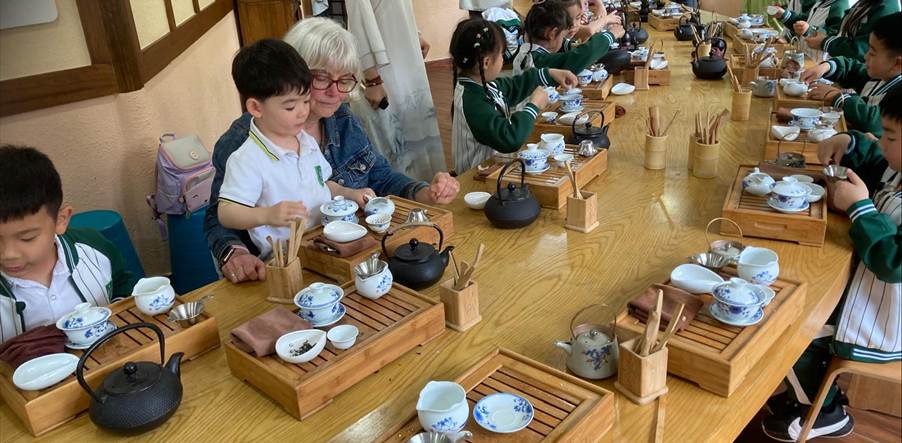
The children were encouraged, first of all, to smell the aroma of the leaves then to carefully warm the lidded cup in which the tea was to be brewed with hot water. Each wooden tea tray has a reservoir beneath, into which waste water is poured, which defintely made the activity more interesting for Casper! The leaves are then added to the brewing cup and this is filled with hot water. Almost immediately the tea is then strained off into a small pitcher, from where it is poured again into tiny, delicate serving cups and the process is repeated. The brevity of the brewing period was a surprise to me and might expain why the green tea we bought on Qingcheng mountain last year tastes a little bitter, the way I’ve been making it. The porcelein on the serving cups is so fine as to be almost translucent. Despite this, and the age of the children, only one was broken! The chlidren were encouraged to pour tiny cups of tea and offer these to their accompanying adults and most of the children also tried the tea – Casper certainly knocked back a few cups.
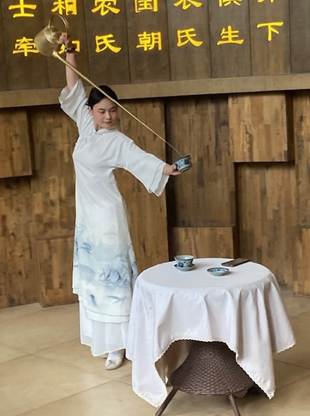
The final part of the day was a demostration of the longspout tea-pouring which Casper enjoyed so much when we saw it at Chens Mapo Tofu restaurant in Chengdu last April. The theory is that the tea is the perfect temperature by the time it arrives in your cup, though it’s really more about the drama. Casper wasn’t brave enough to try pouring but several of his classmates did, with predictably mixed results!
As a parting shot, we were each presented with a small bag of tea from the batch the children had produced – it didn’t taste bad at all but I’m quite glad that very hot water is involved in brewing it, given the nuber of small hands involved in the process!
I’ve been on many school trips over the years, but this was a unique experience – perhaps we have rather low expectations for what children in the UK can undertake and maybe we are a bit too risk averse.

