This is our second year of bringing Durham ecology students to Pontresina, in the beautiful Upper Engadine valley in Switzerland, and it doesn’t disappoint. Within a ten minute walk of the Youth Hostel where we are staying is the bottom of Val Roseg, with wonderful views up towards the glaciers flowing down from Piz Bernina, the highest mountains in this part of the Alps. I’ve written before about the amazing biodiversity in this part of Switzerland. The valley is home to wonderful meadows full of Bistort, Yellow Rattle, Harebells and Great Burnet and the woodland floors are carpeted in Twinflower and Cowberry. Chamois live on the mountainsides of the U-shaped valley and I was lucky enough to see a group of six or seven, with young, cross the river just in front of me when out for a quiet walk at dusk.

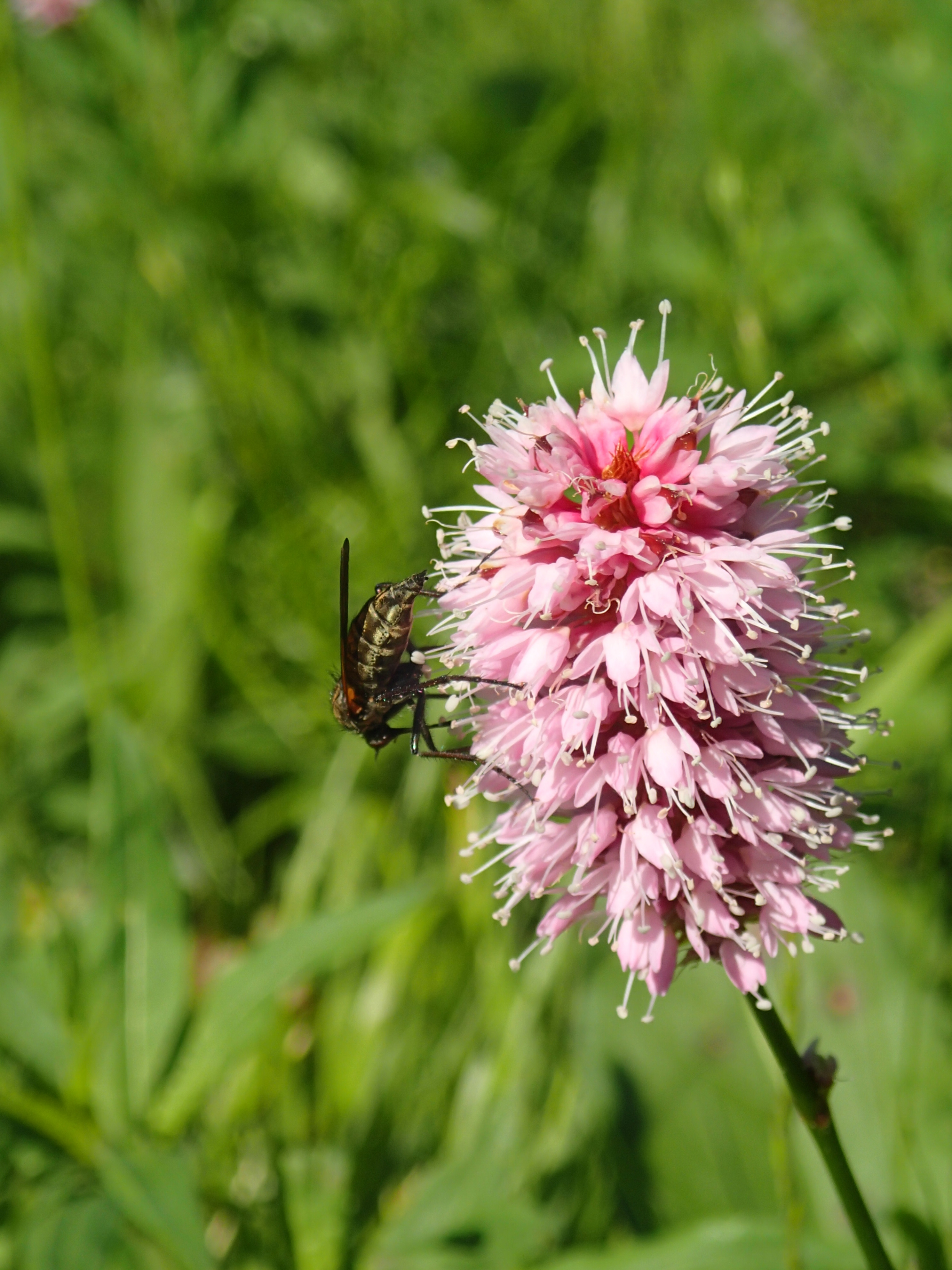
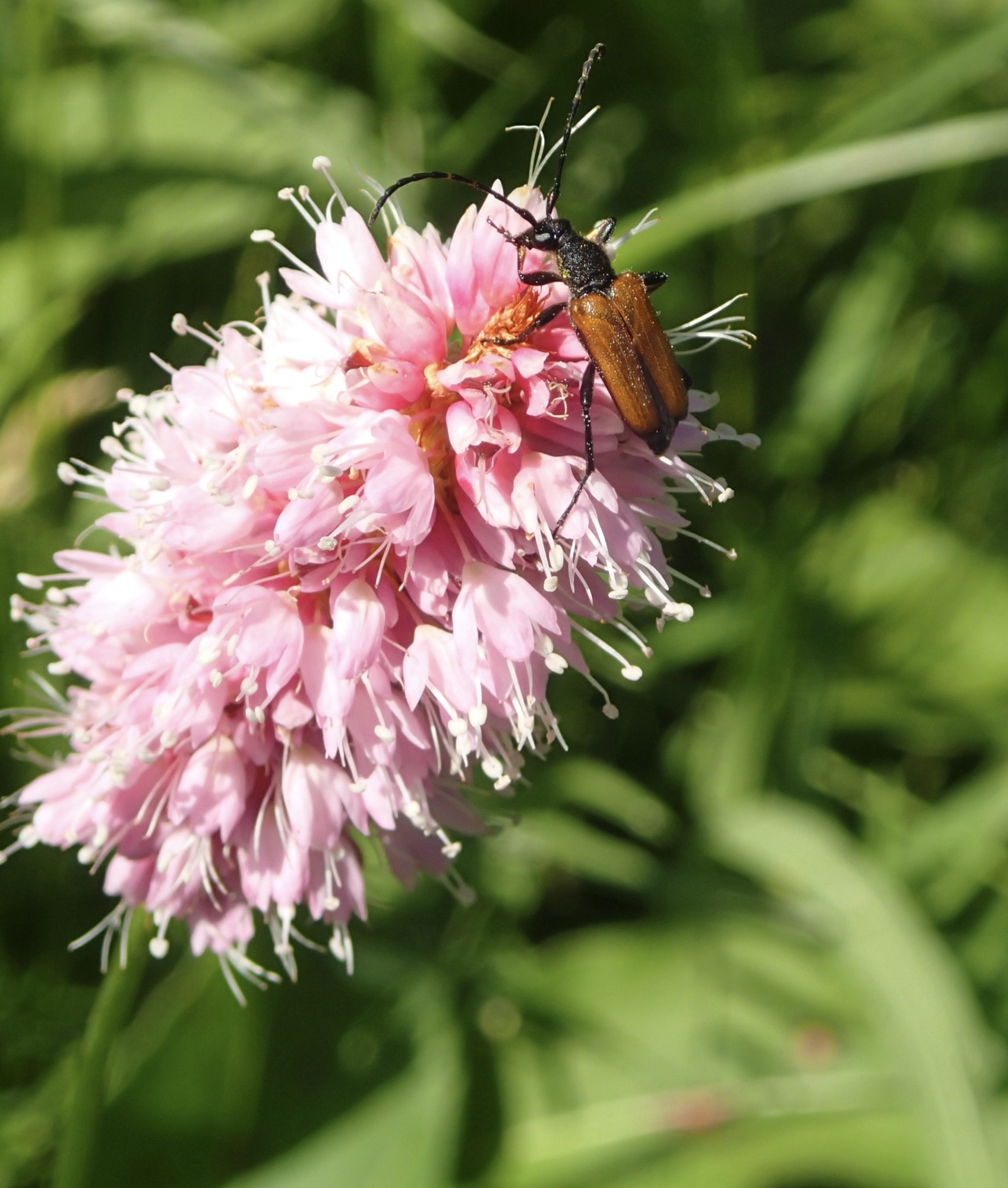
One of the prettiest and most ubiquitous plants flowering in the meadows around Pontresina at the moment is Bistort (Persicaria bistorta). The slender plants, up to a metre or so tall, have the large, pointed, heart-shaped leaves typical of much of the Dock family (Polygonaceae) and are in the same genus as the ‘fleece flowers’ which we saw growing in the Indian Himalayas in 2016. Bistort grows wild in the UK too, but is nowhere near as common.
Bistort’s dense spikes of small, pink flowers are a rich source of nectar and the tiny individual flowers mean most insects can access this tasty reward for carrying pollen between plants. We’re at 1800 m here and there are plenty of pollinating insects around; I’ve watched lots of flies on and around Bistort, but bees, ants, wasps, beetles, moths and butterflies also pollinate this species. It makes a lot of sense for a plant to combine tiny flowers into spikes, both for visibility and to increase the concentration of volatile organic compounds produced to advertise the flowers’ presence. The relatively large size of the spike also allows it to provide a landing surface for bigger moths and butterflies so it’s great for generalist species.
Over the last few days we’ve been doing much of our plant sampling in Val Languard, around 600 m higher than Pontresina. A different species of Persicaria is more common here – P. vivipara. It has a similar growth form to P. bistorta, with a spike of tiny flowers, but the whole plant grows no more than 15 cm tall and the flowers are white. The most interesting thing about this Persicaria is that, despite us finding plenty of insects in Val Languard, it doesn’t rely on them for reproduction, with the flowers rarely producing viable seed. Instead, tiny bulbils form underneath the flower head. These are clonal fragments of the parent plant’s tissue, which develop into tiny embryonic plantlets. They drop off the parent plant when mature and grow into new plants, without the need for pollination and sexual reproduction.
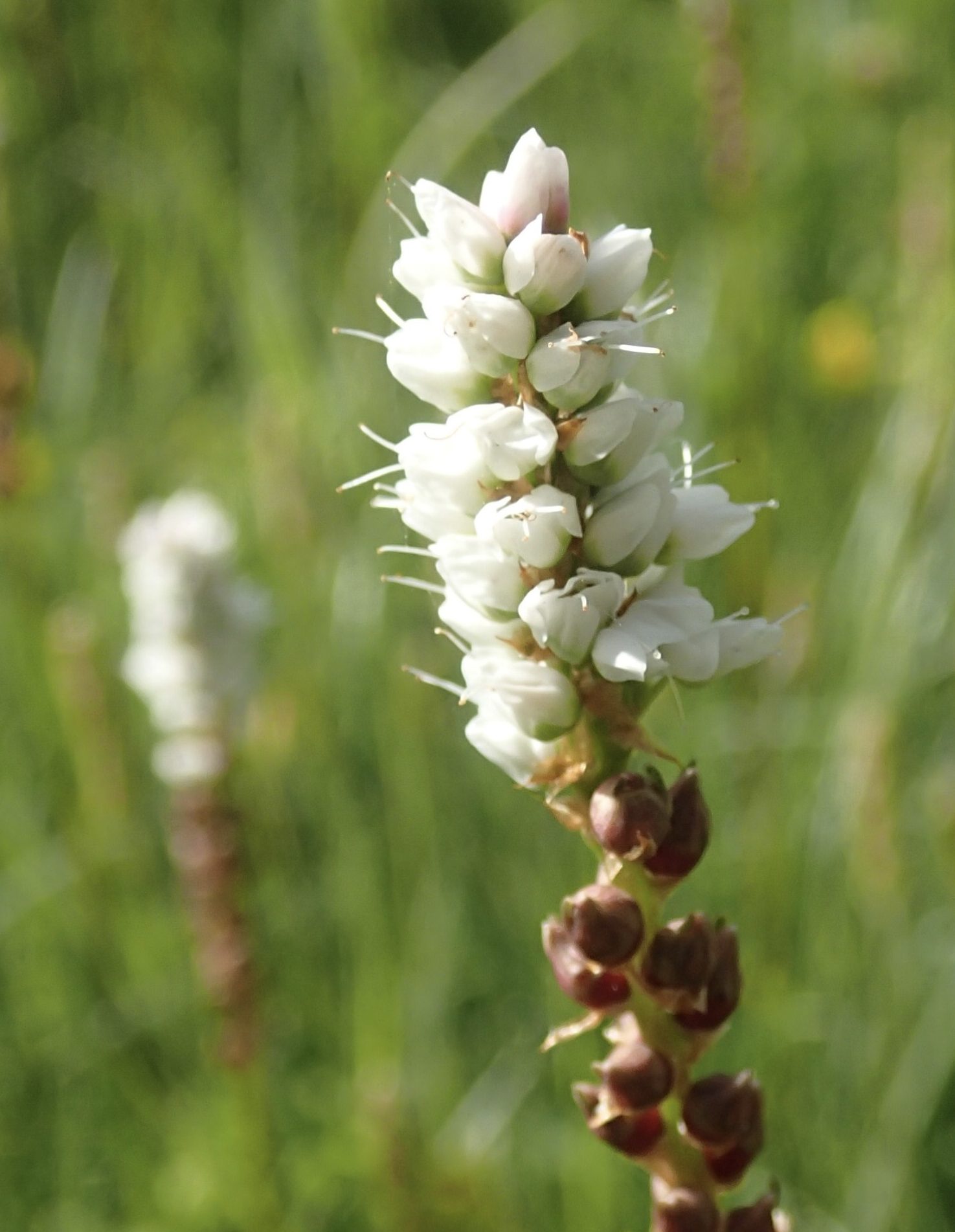
This form of reproduction has advantages and disadvantages. Every new plant will be genetically identical to its parent, with all the same susceptibilities to stress and disease. On the other hand, under favourable conditions a young plant can grow quickly from a bulbil, stealing a march on plants which have to rely on the vagaries of seed germination. The switch in the dominant species of Bistort as the altitude increases is a great example of a biological trade-off – the benefits of asexual reproduction start to outweigh the risks in a more hostile, higher altitude environment, with a shorter growing season.
This week we’ve been eating lots of great Swiss bread and cheese and drinking very potable local Engadine beers. The alcohol-free version is very good, which is a blessing given the temperatures here. I feel better about eating dairy here than at home too, as the cows have a good, outdoor life, especially in summer.
I’ve been reading New Boy by Tracy Chevalier – a heart-wrenching retelling of Othello, where the protagonist is a boy from Ghana, newly arrived at an all-white school in 1970s Washington. He faces a mixture of jealousy and prejudice, and the inevitable tragedy unfolds. Though set 50 years ago the story has all too many resonances in current UK and USA politics.


Spent many a winter and summer holiday in Pontresina, a beautiful place.
Amazed the Yellow Rattle is still blooming – at 600 m ours was 6/8 weeks ago
Linda M H Fowler
On Sun, 12 Jul 2026, 06:27 heatherkellyblog – travel with me and wonder