But of course I’ve been here….
Our new hotel in Tblisi, ‘About Sololaki’, is much further up the hill than our last one, on a tiny, twisty road at the top of the old town. We were just there for one night before heading off again but Rosie and Sam will have to get used to the pull up the hill after dinner, as they are there for the remainder of our time in Georgia.
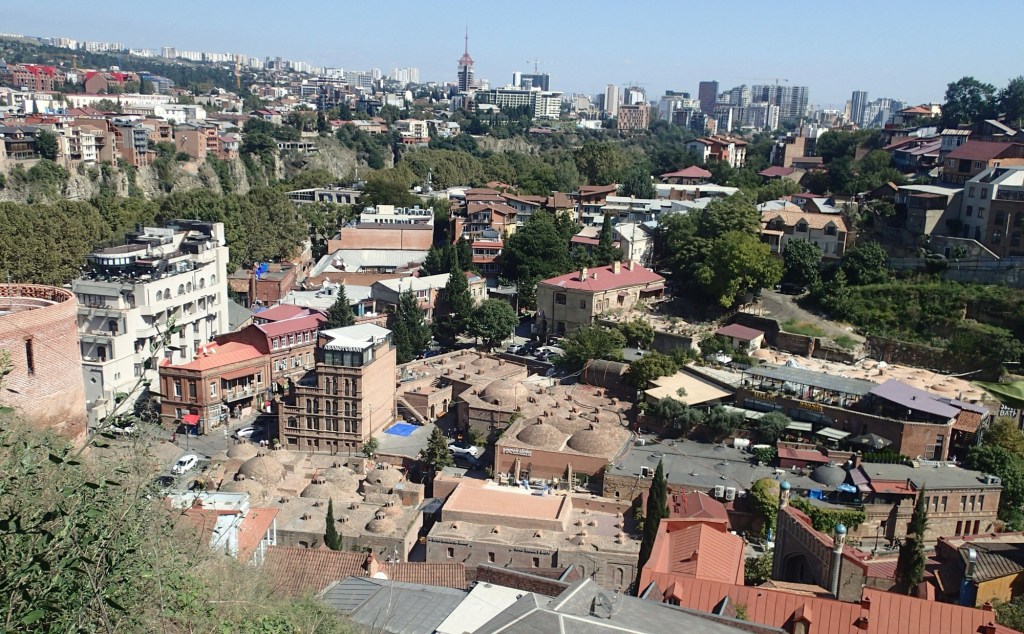
Martyn and I spent Monday afternoon in the Botanical Gardens (aka the National Botanical Garden of Georgia), reaching there by first climbing up to Narikala fortress on the top of the hill known as Mtatsminda, behind the bath houses and the Juma mosque, which wasn’t the easiest or most sensible thing with the temperature hovering around 30 Celsius! The gardens appear in the novel Martyn is currently reading as the place where many of the animals which escaped from the zoo during severe floods in 2015 hid out. Hard by a Great Forest, by Georgian author Leo Vardiashvili, is next on my reading list too.
The gardens occupy 161 hectares of land in the Tsavkisis-Tskali Gorge, behind the hill on which the Mother of Georgia statue stands; that’s 16 times the size of of those in Durham! My student volunteer gardeners will be glad they’re not helping look after something this size! There have been gardens there since at least 1625, though they were destroyed, along with most of Tblisi, when the Persians invaded in 1795. The gardens were eventually revived and established as Tblisi Botanical Garden in 1845.
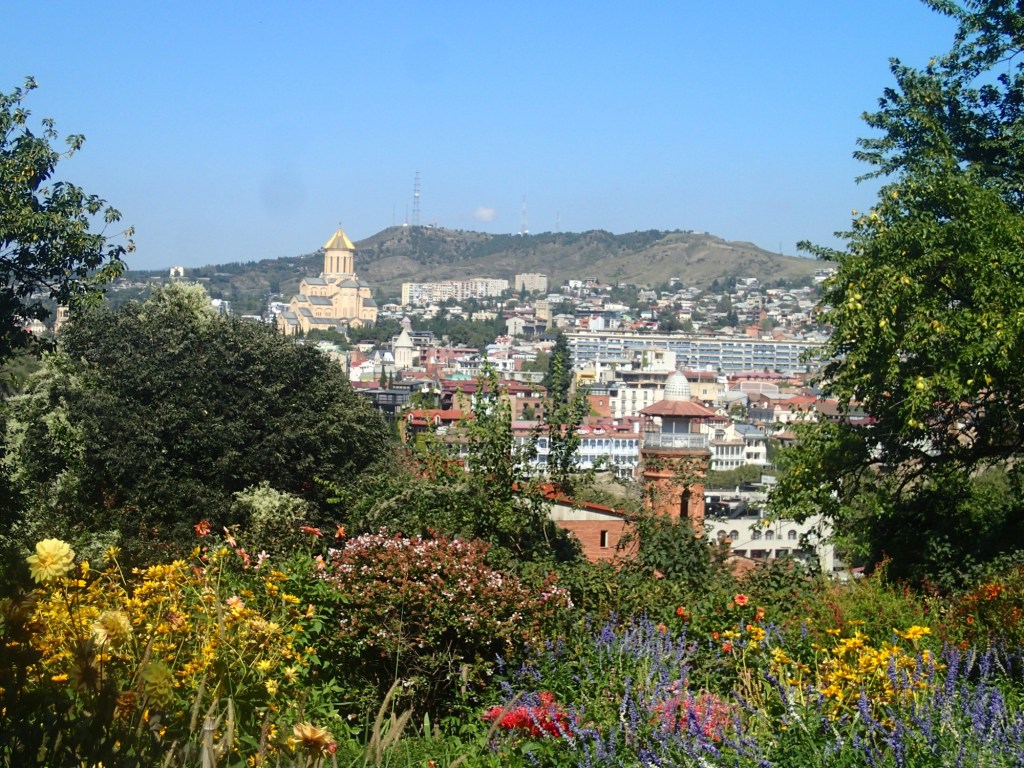
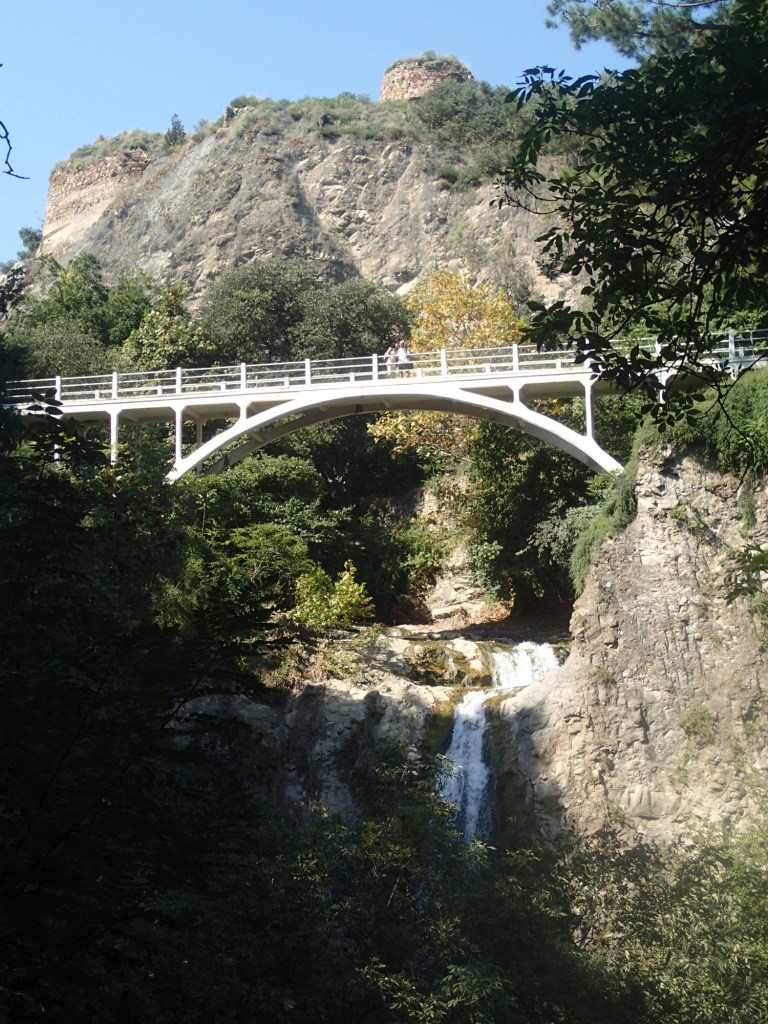
They are not the best labelled gardens I’ve ever seen and it was far too hot to stop much until we climbed the hill into shadier areas. I was excited by the idea of a garden of ‘rare and endangered plants of Georgia’ but disappointed that they were well fenced off and impossible to see. Given the temperature, I was delighted to realise that we could cross the waterfall at the top of the garden and emerge near the Mother of Georgia statue, before dropping down to our hotel, rather than having to drop down to town and climb the hill again.
We’ve now met the Russian family we saw at Keti’s house twice on the streets of Tblisi, so they must be staying somewhere close to us. There are quite a few Russians tourists here but also a lot of pro-Ukraine and anti-Russia graffiti on walls in the old town. Sometimes it’s directed specifically at Vladimir Putin, but more often it’s general, strident anti-Russian sentiment. It did make me wonder how the family felt seeing it, particularly their son of around 14 years old, who is getting dangerously cross to the age at which he’ll face conscription.
Georgia also has conscription, for ‘healthy men aged 18-27’ for a period of between six and 11months, depleting on whether you are assigned to active service or to other, specific jobs. Students also have the option of four, separate, one month stints in the summer holidays. It’s hard to know how people here feel about conscription though, given the strongly nationalistic society and the constant fear of Russian encroachment, maybe many are relatively happy to support it. Others are not, though. The only exemptions from conscription are for clergy so, in 2017, the opposition libertarian/right of centre ‘Free People’s Party’ (formerly Girchi) set up a fictitious church, the Christian Evangelical Protestant Biblical Freedom Church (how many buzzwords can you fit in one name!) and allowed thousands of young men to register as ‘priests’ so they could dodge the draft. The ruling ‘Georgian Dream’ party has since closed this loophole and only Georgian Orthodox priests are excused conscription.

