We’re now in the rural village of Shilda, in the Kakheti region of Georgia, south and east of Stepantsminda. We spent much of Friday travelling here, retracing our drive on Monday as far as Ananuri, with a long wait in queued traffic where major repairs are being done over a section of the military highway. We turned eastwards after Ananuri, stopping at a roadside bakery for a late lunch before zig-zagging over the Khaketi mountain range.
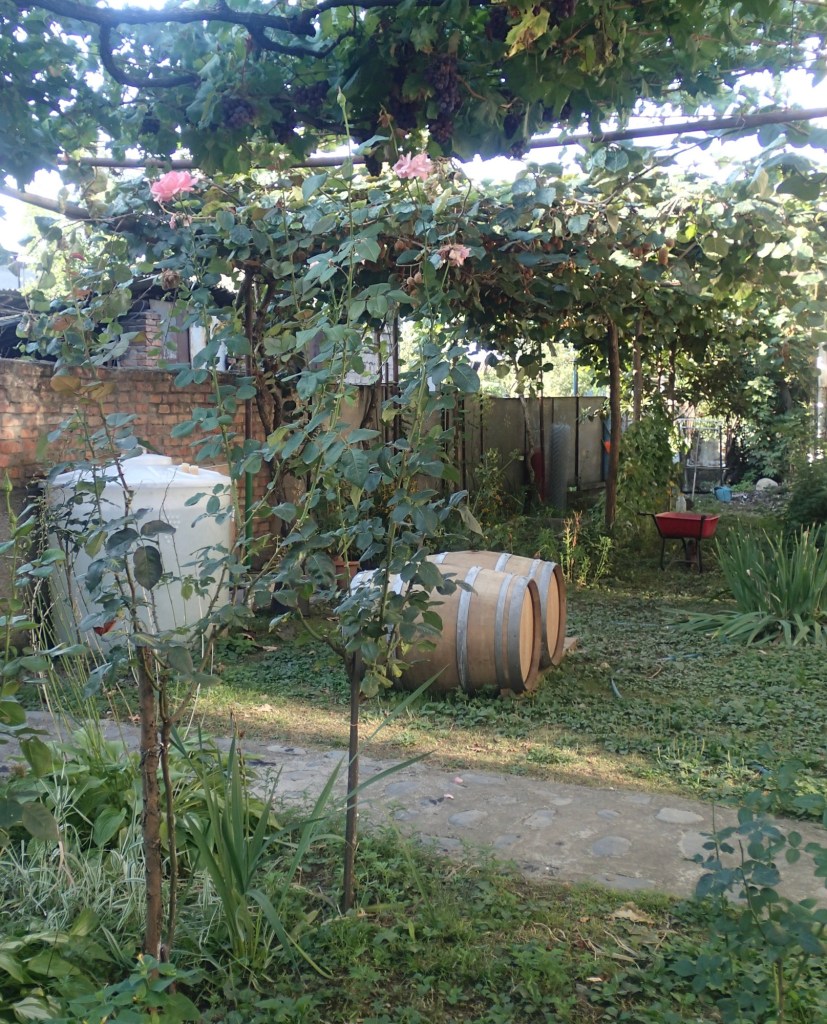
The wine growing region where we’re staying is in the broad valley of the river Alazani, edged by the foothills of the Greater Caucasus to the north and the Kakheti Ridge to the south. Shilda nestles just below the hills on the north side of the valley and we’re the only tourists in town, as far as we can see. We’ve attracted more than a few stares walking or running up the valley on shady tracks but everyone seems friendly. Keti’s House is a quiet spot on the edge of the village, with a lovely garden shaded by fruit trees and vines, and only the occasional sound of dogs barking and cockerels crowing to disturb the peace. I do miss the beautiful views from our hotel balcony in Stepantsminda, which I can only compare with those over the Indus Valley from Leh, but there are plenty of compensations here for someone like me, who dreams of self sufficiency in food.
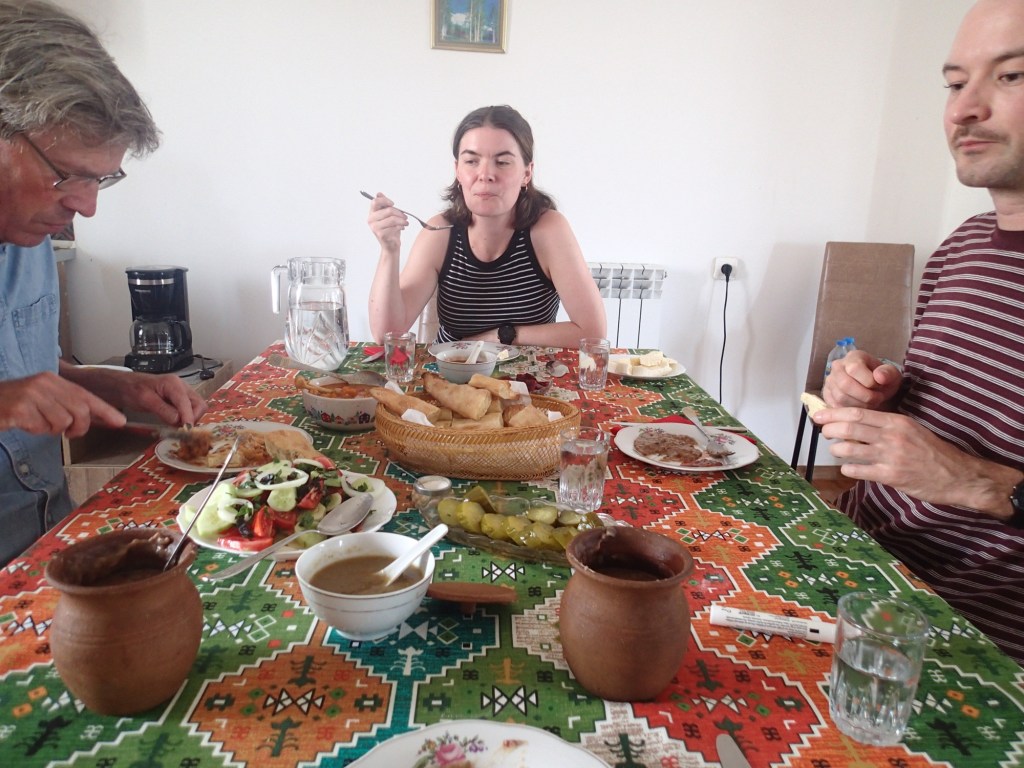
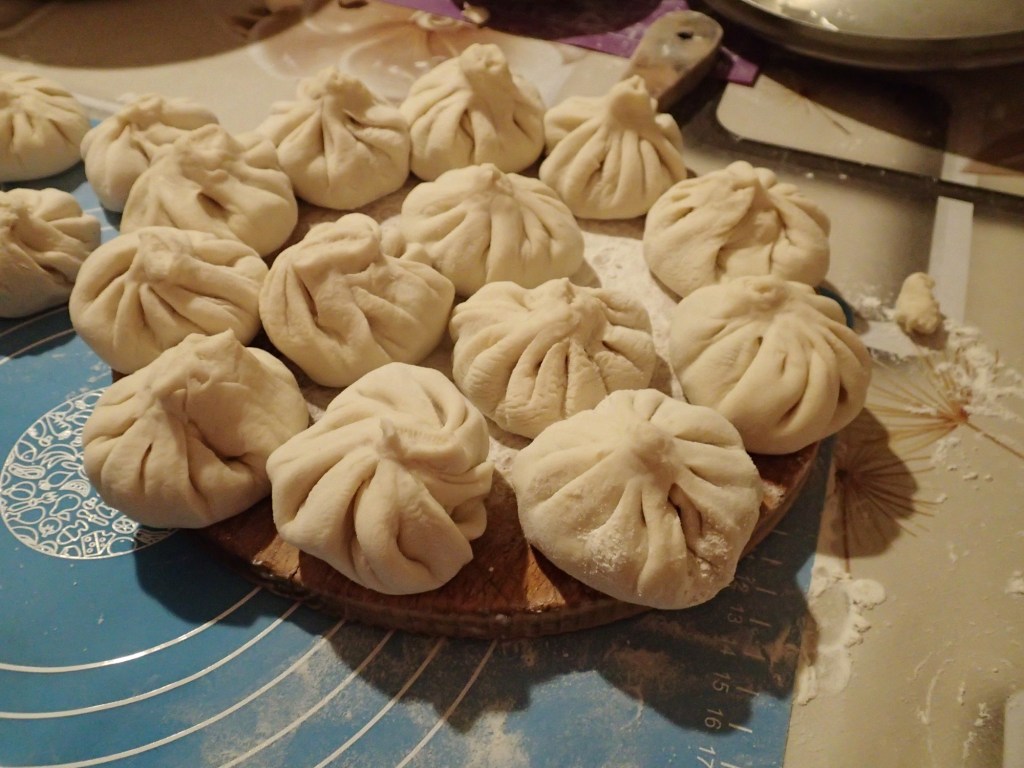
We were greeted on our arrival with figs fresh from the tree and our first glass of homemade orange wine and dinner on Friday night was khinkali dumplings, made ourselves, with Keti’s expert help. The tasty mushroom filling in the vegetarian ones had us thinking of how we could adapt them for a Chinese palate.
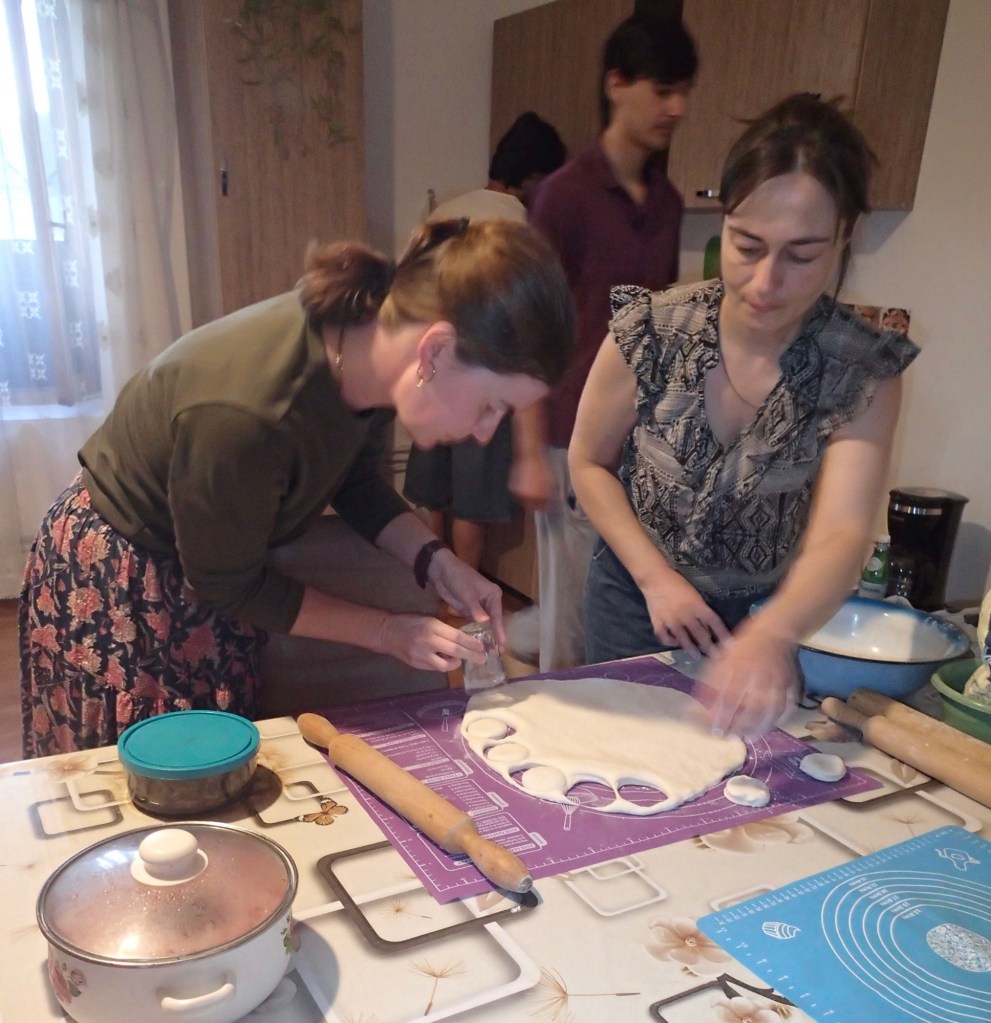
The pace of life is slower here, at least for us, and it’s lovely not to have to make decisions about where or what to eat. There has been plenty of time to relax in the garden and talk, particularly to Keti’s brother, Shota, who is back for a visit but has lived in the UK for more than ten years and speaks excellent English. He’s been able to tell us a lot about how Georgia has changed since he grew up in the 1990s, after the fall of the Soviet Union, as well as about the winemaking we’ve been helping with.
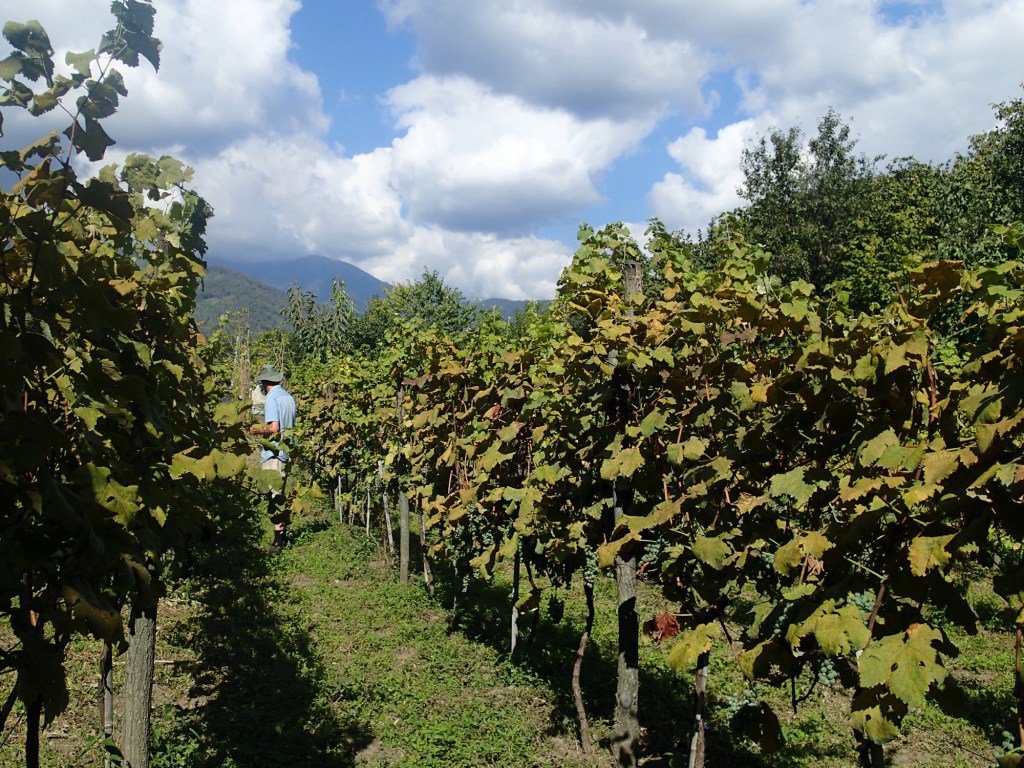
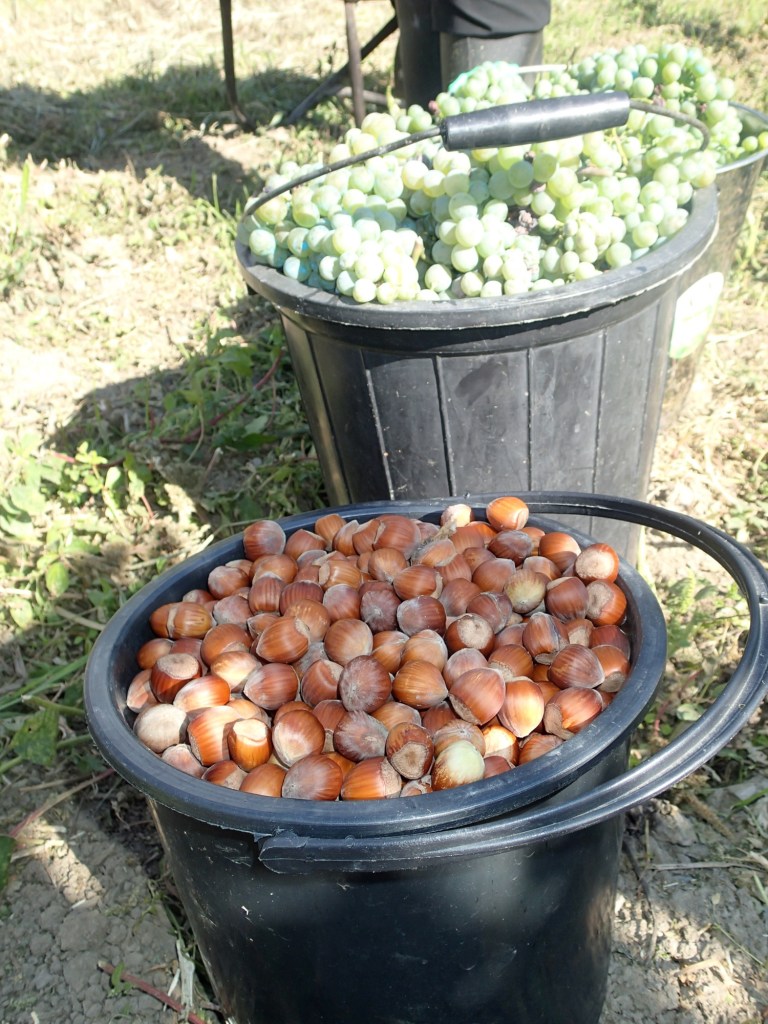
For the winemaking part of the weekend we were joined by a sociable Russian family after lunch on Saturday. We had imagined a long hike to Keti’s friend’s vineyard, but it turned out we were walking less than five minutes round the corner to pick grapes and collect hazelnuts for churchkela. Picking a hundred kilos or so of Rkatsiteli grapes was hot work, but didn’t take eight of us long. I was a bit concerned about the amount of copper sulphate residue still on the grapes – our fingers quickly went blue. This is certainly not organic winemaking, though it’s clear Shota would like to move towards this. He explained that, during the Soviet era, everything was about producing the maximum quantity of any crop and so some of the grape varieties with inherent pest and disease resistance were discarded in favour of higher yielding ones.
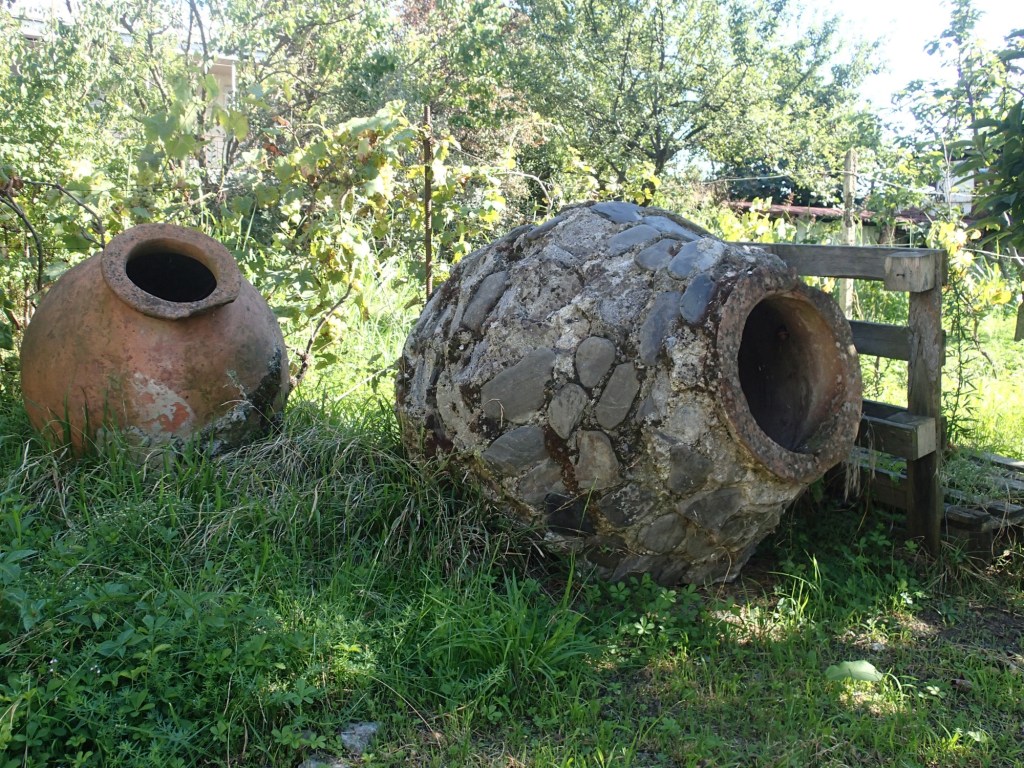
These Georgian orange (or amber) wines are traditionally fermented initially in large egg-shaped clay pots buried in the ground (qvevri); a method so special it’s on the UNESCO list of things of Intangible Cultural Heritage of Humanity. Both Rosie and I had imagined the pots being dug up every year but, in reality, the pots stay in situ, which makes much more sense. You see old qvevri abandoned everywhere, or used as ornaments. The pot in the picture below had been strengthened with stones to make it less likely to break when there’s an earthquake.
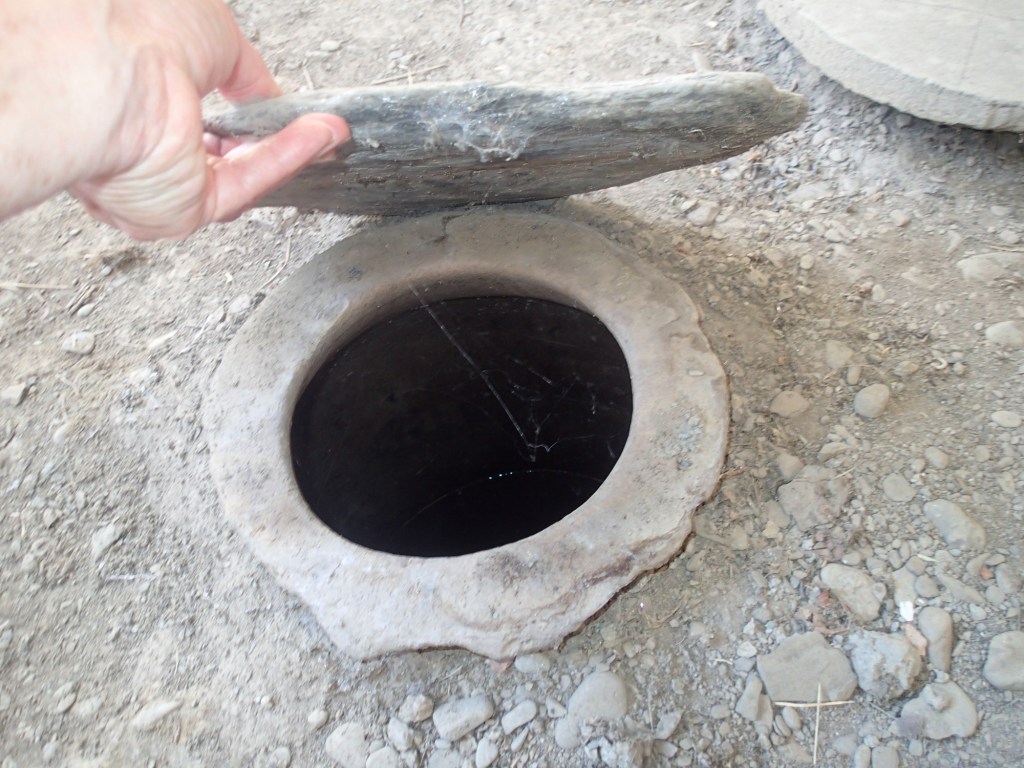
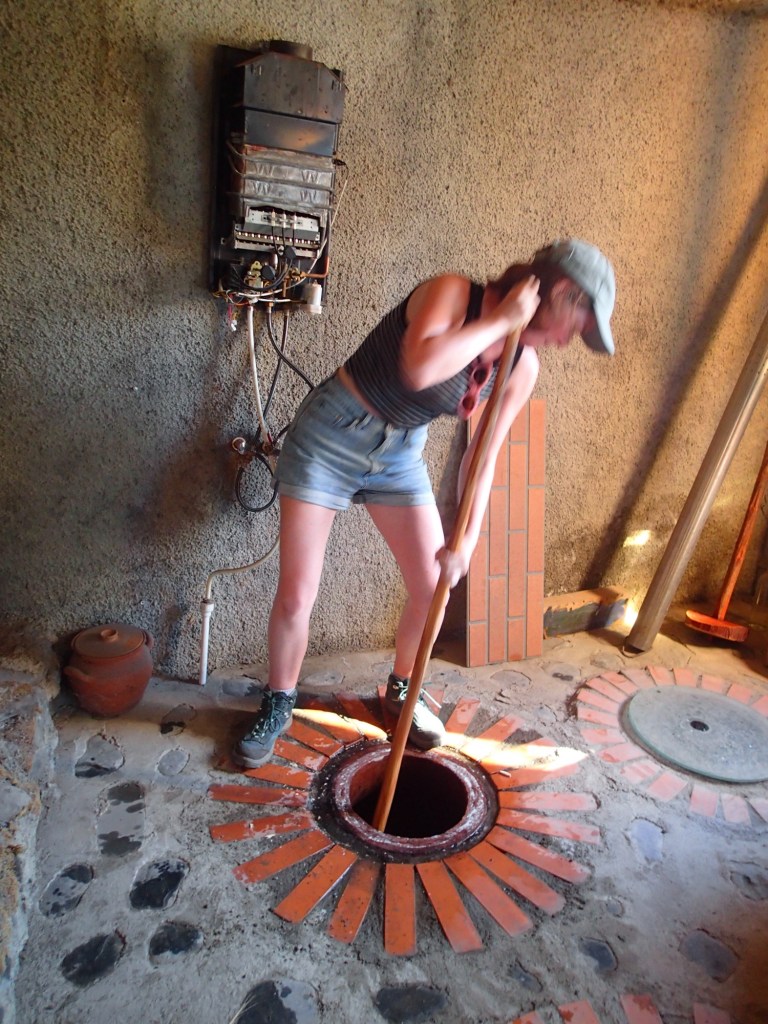
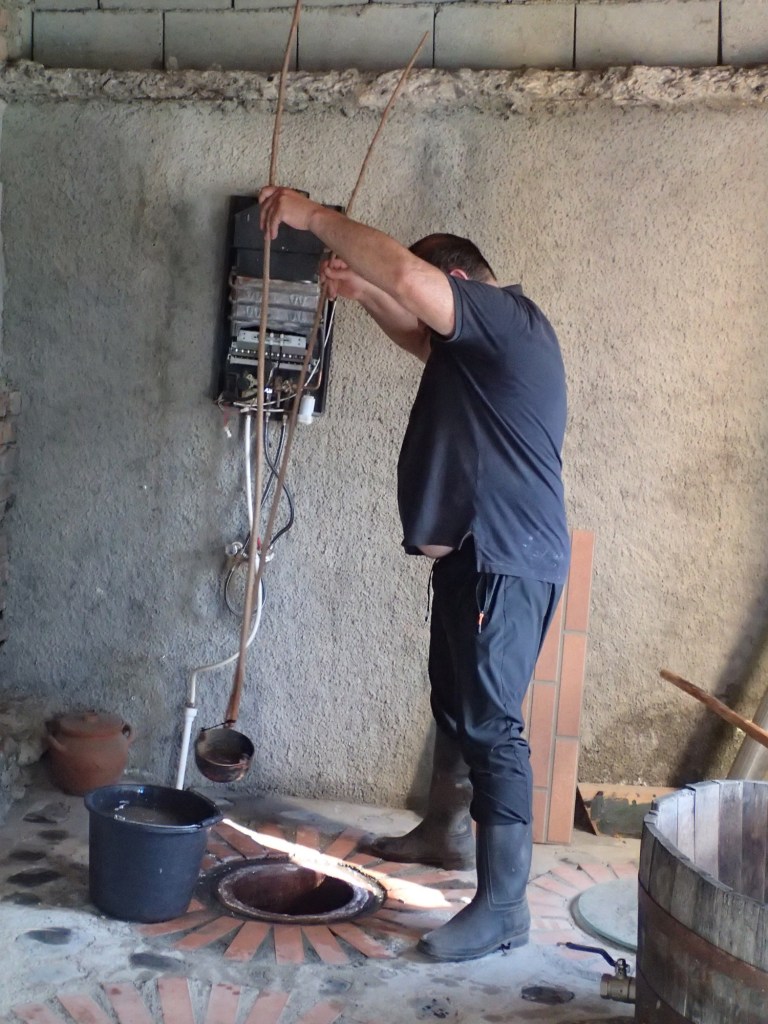
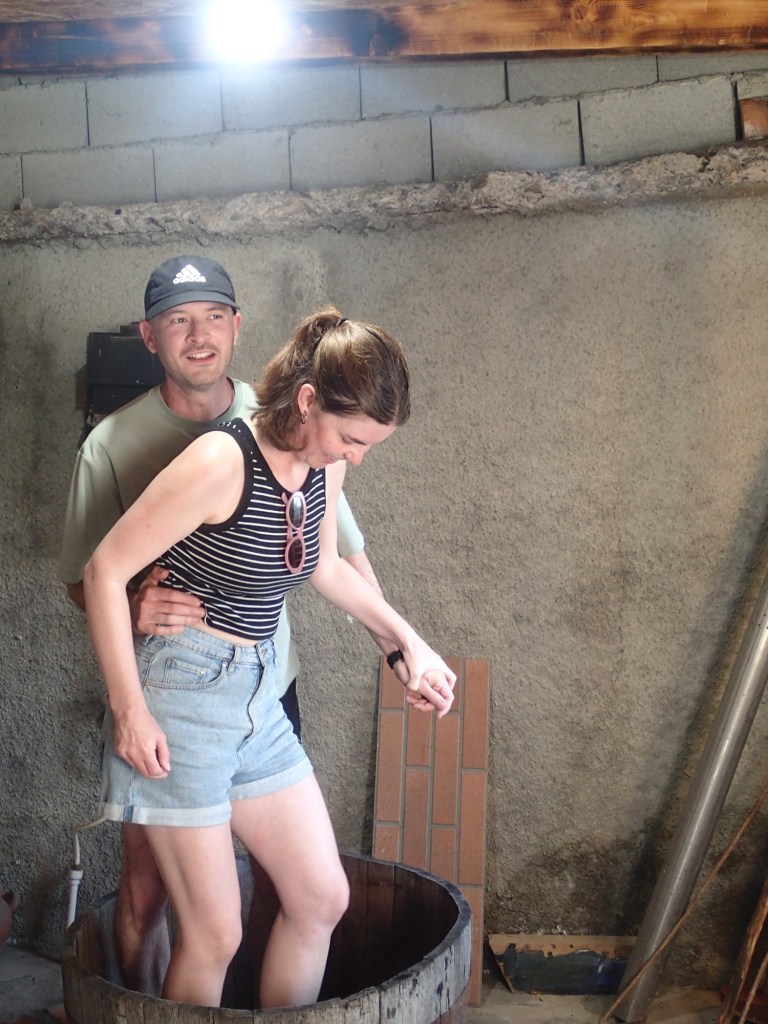
Leaving the qvevri in the ground does mean they have to be cleaned carefully before the new grapes are added and we were shown how to do this using traditional tools; a long-handled brush made of sheets of birch batch pressed together and a scoop held between two poles to empty out the cleaning water. We then took it in turns to trample the grapes in a large half barrel with a tap on one side to allow the juice to flow into the qvevri. This is hard work and is traditionally made into a bit of a party with the neighbours, with music and feasting.
Once all the juice has drained into the qvevri, the squashed grapes are added and the mixture ferments together for between 22 and 30 days; it’s the skins, stalks and pips which give the wine its lovely colour, despite only green grapes being used. The qvevri we’d started filling was nowhere near full, despite being only a moderate sized one. Over the next few days more Rkatsiteli grapes will be added, but also Mtsvane grapes, to about 30% of the total, to add floral, fruity, and citrus notes to the final wine. The qvevri will then be sealed with putty and a stone lid and left to ferment. After the initial fermentation period, the wine is pumped off and bottled, or transferred into casks and the pips, skins and stalks are distilled to produce the famous/notorious spirit known as chacha.
After our labours we sat down to sample the household’s orange wines from 2022 and 2024, as well as a red wine and chacha. We’d been a bit worried about how much we’d be expected to consume, and whether we’d have to cope with numerous toasts in chacha but it was all very moderate and there was plenty of bread, cheese and pickles to cleanse the palate and soak up the alcohol.
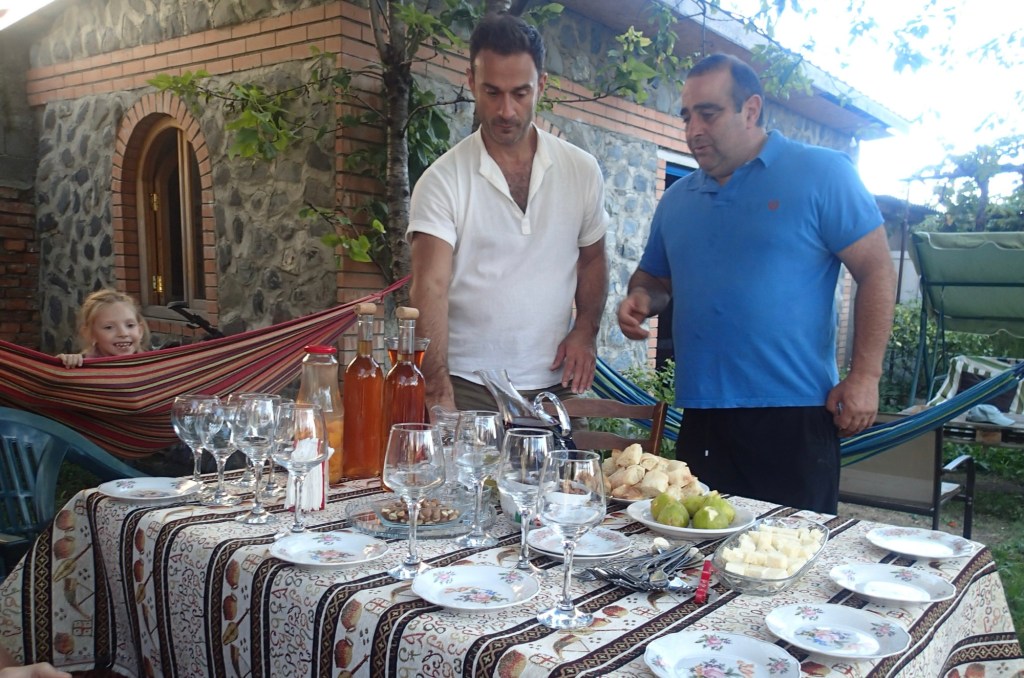
The 2024 orange wine, finished in an oak barrel, was a unanimous favourite. Once the Russian family had left, the evening turned into a lovely, impromptu music-making session, with Sam getting stuck in on the piano and accordion, while Keti and her son played a flute and three-stringed panduri.


I’ve heard lots of good things about Georgian wine
They’re right!