We hired a driver, Sachit, and his car to take us from Tblisi to the small town of Stepantsminda (also known as Kazbegi), in the Great Caucasus mountains. This was supposed to mean a reasonably prompt start. We fancied shakshuka for breakfast but, sadly, the cafe Rosie had found turned out not to open on Mondays so we ended up at the Co:Co collective round the corner from our hotel. The coffee here was excellent, and the food too, when it eventually arrived (mushrooms and poached egg with hollandaise sauce on freshly made rosti), but the service was so slow…
We were finally ready to leave by 11am for the 160km drive. Getting out of Tblisi was very slow, because of the nose-to-tail traffic, but then we were onto the Georgian Military Highway, which runs up the Aragvi river from its junction with the Kura at Mtskheta right up to its watershed at the top of the Jvari pass, 2379 m above sea level. From here the road follows the Terek river down to, and across, the Russian border, which is only 11km north of us here in Stepantsminda.
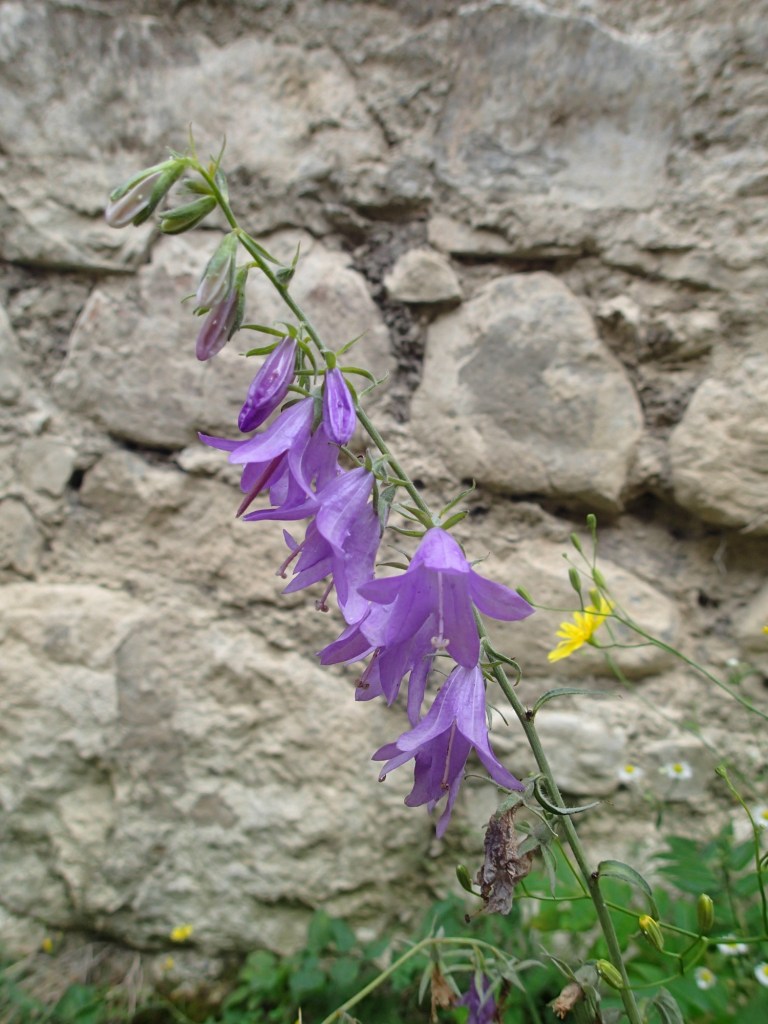
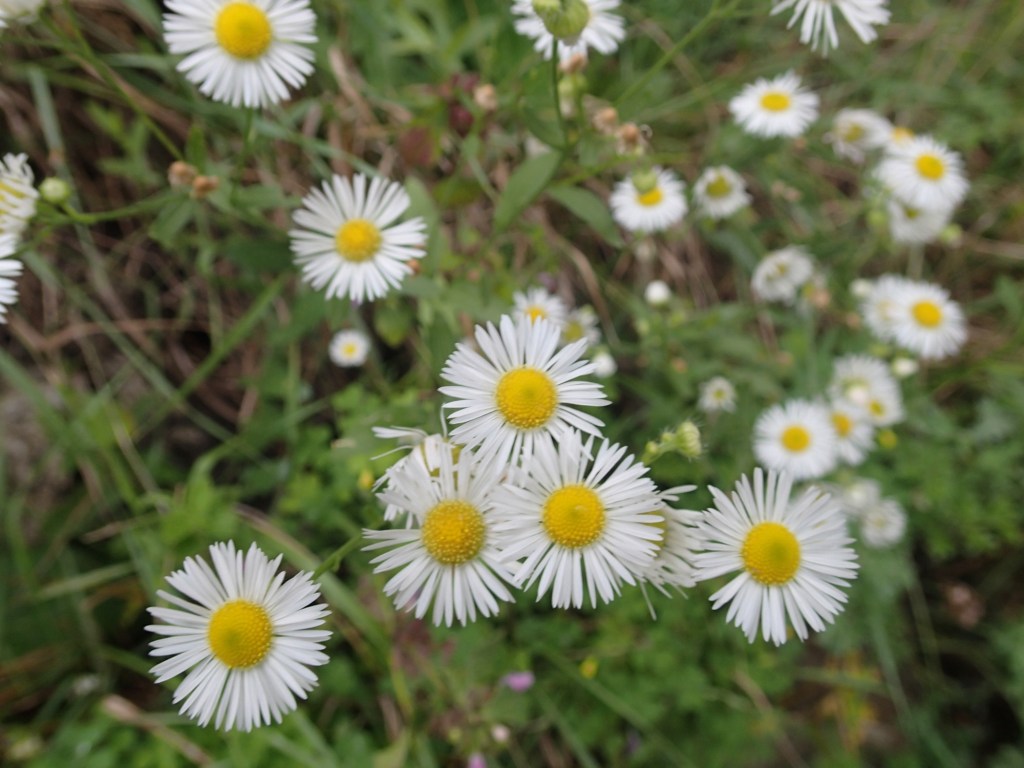
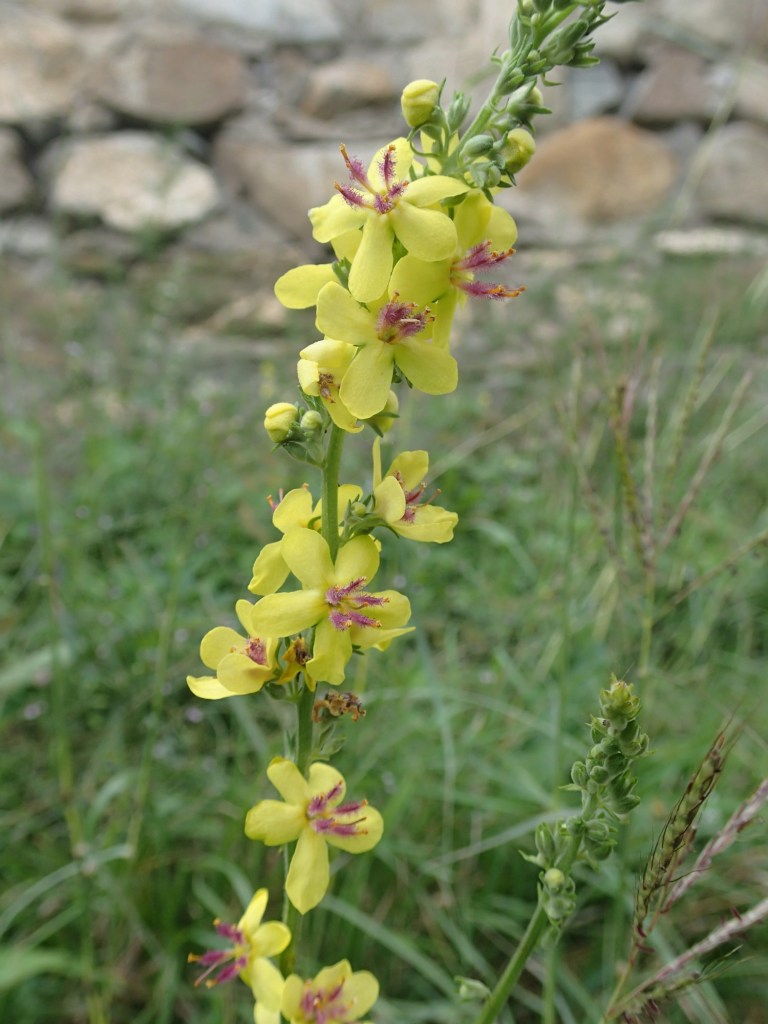
First impressions are of a very green landscape outside the city – lots of deciduous woodland along the river valley with small allotments and meadows cut for hay where there are houses. It’s lovely to see traditional haystacks in the fields and the grass growing back around them. There is no shortage of wildflowers in the meadows and by the roadside.
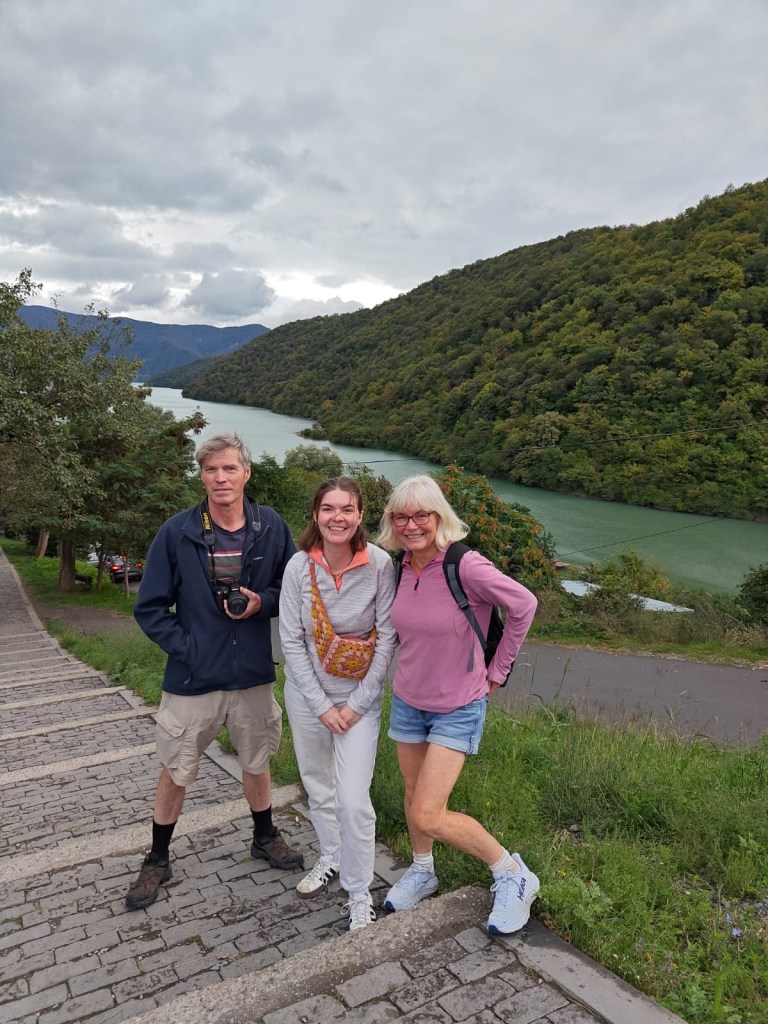
The great advantage of the four of us sharing a car is that we can stop where we want to en route, for some sightseeing. Our first stop was at the Ananuri monastery-fortress, some 70 km from Tblisi, now situated on a rocky outcrop above the huge Zhinvali reservoir. There has been a defensive site here, originally above the Aragvi river, since the 13th Century; the stronghold of a series of local feudal dynasties. The castle was named for a brave woman called Ana, from Nuri, who became a legend for refusing to reveal the site of a secret tunnel under the castle, which allowed food and water to be brought in by river during times of siege.
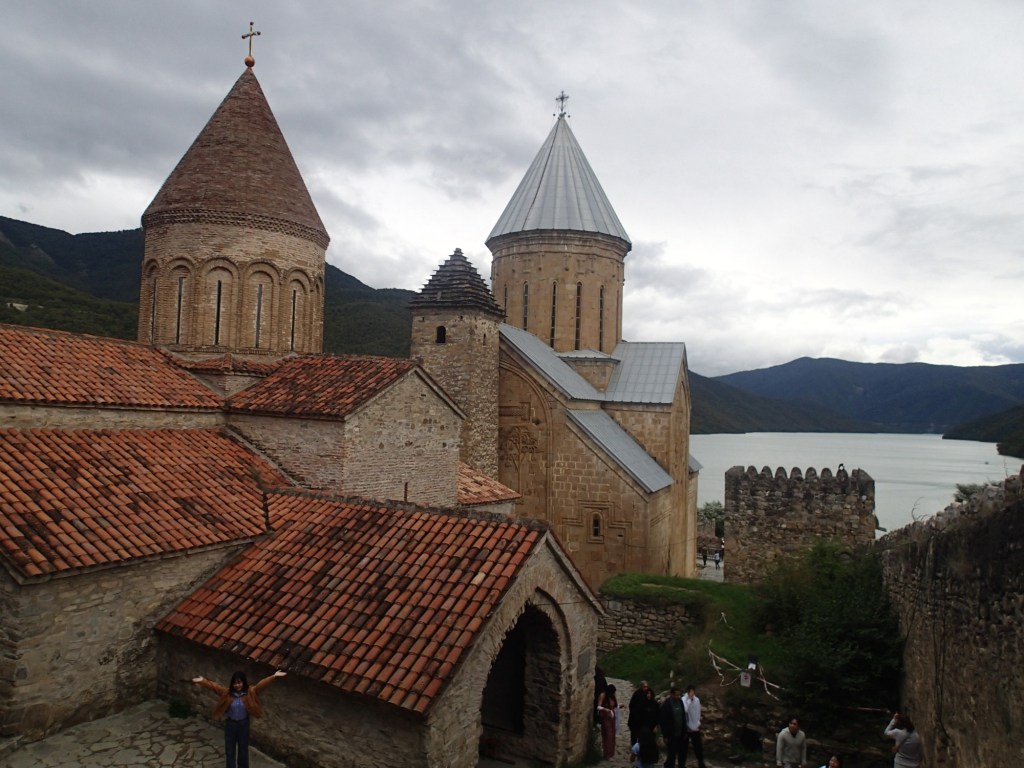
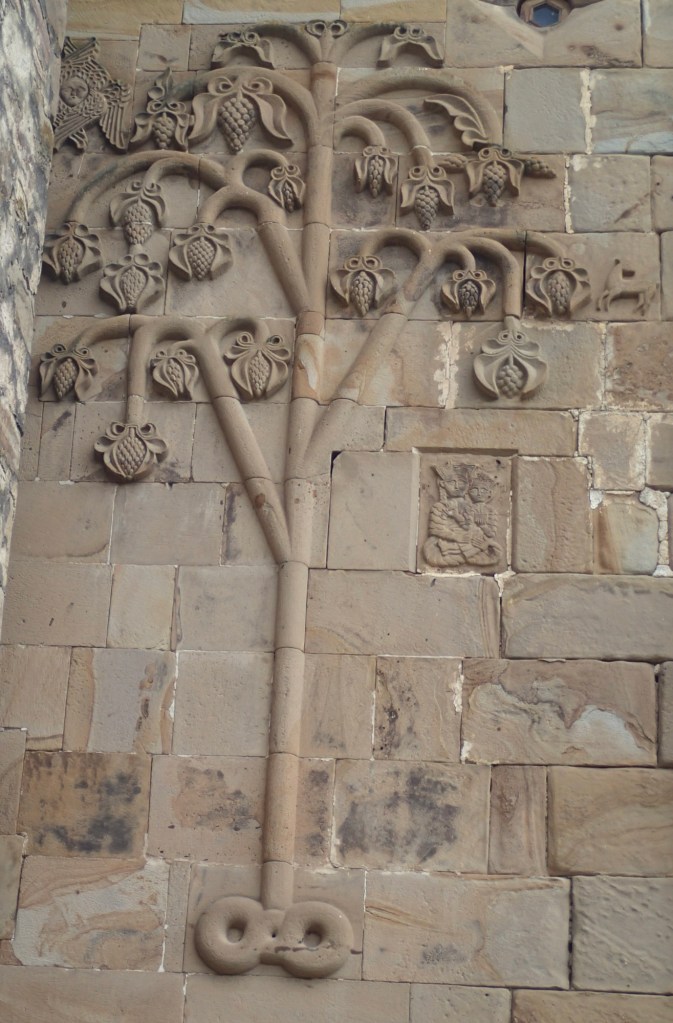
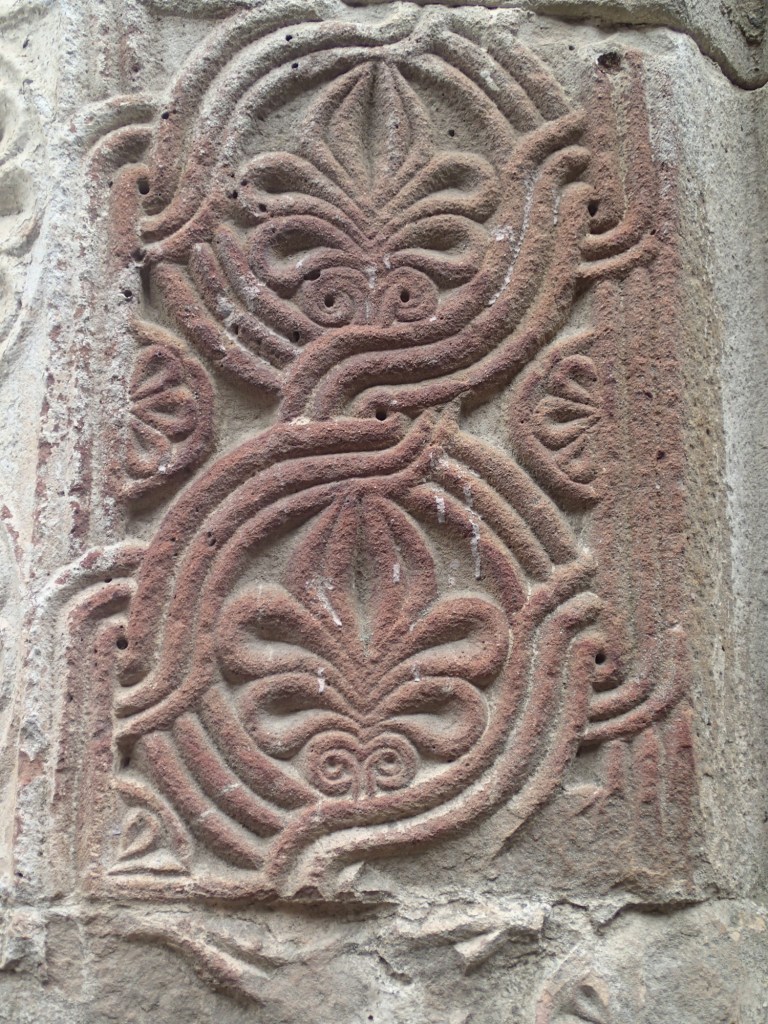
There are two 17th century churches inside the castle walls – the slightly newer Church of the Mother of God has beautiful carvings on the exterior walls – a grapevine on the west face and a very Celtic-looking perpetual knot cross on the east.
We wandered down to the reservoir afterwards, which seems like a very popular spot for water activities in the summer but has a very out-of-season feel about it at this time of year.
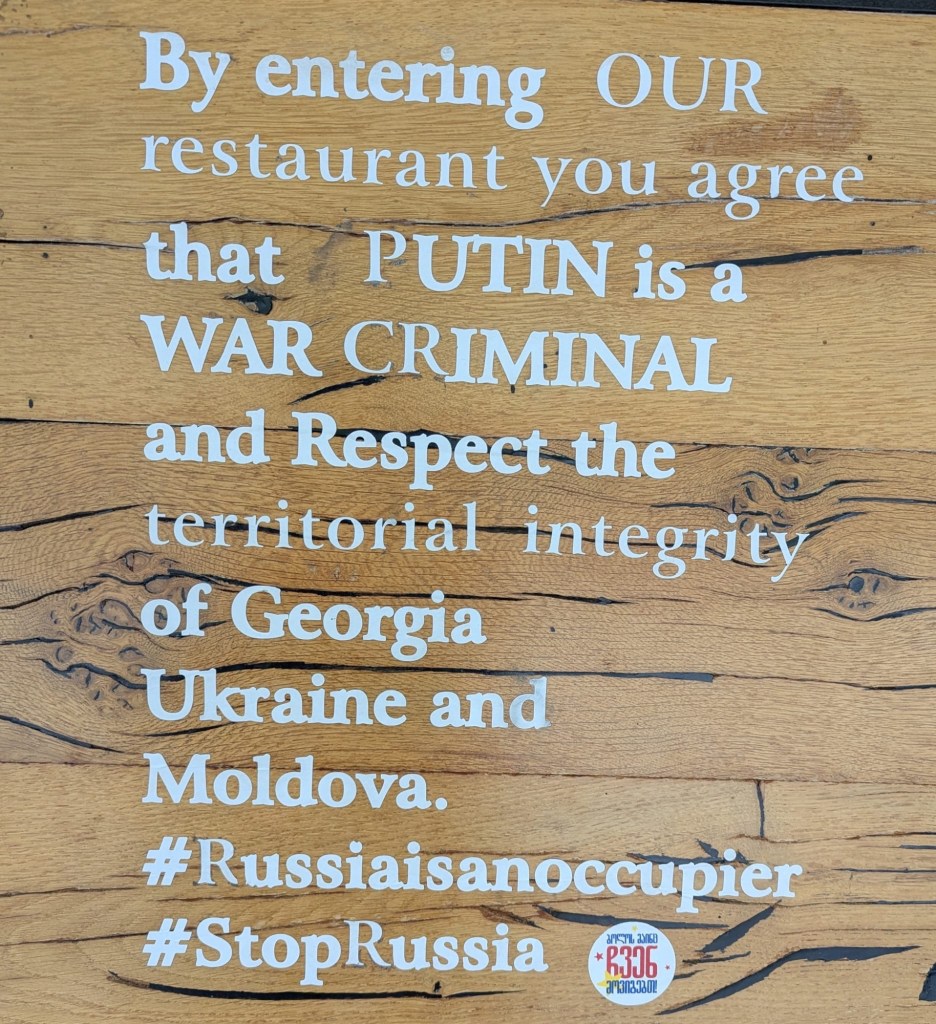
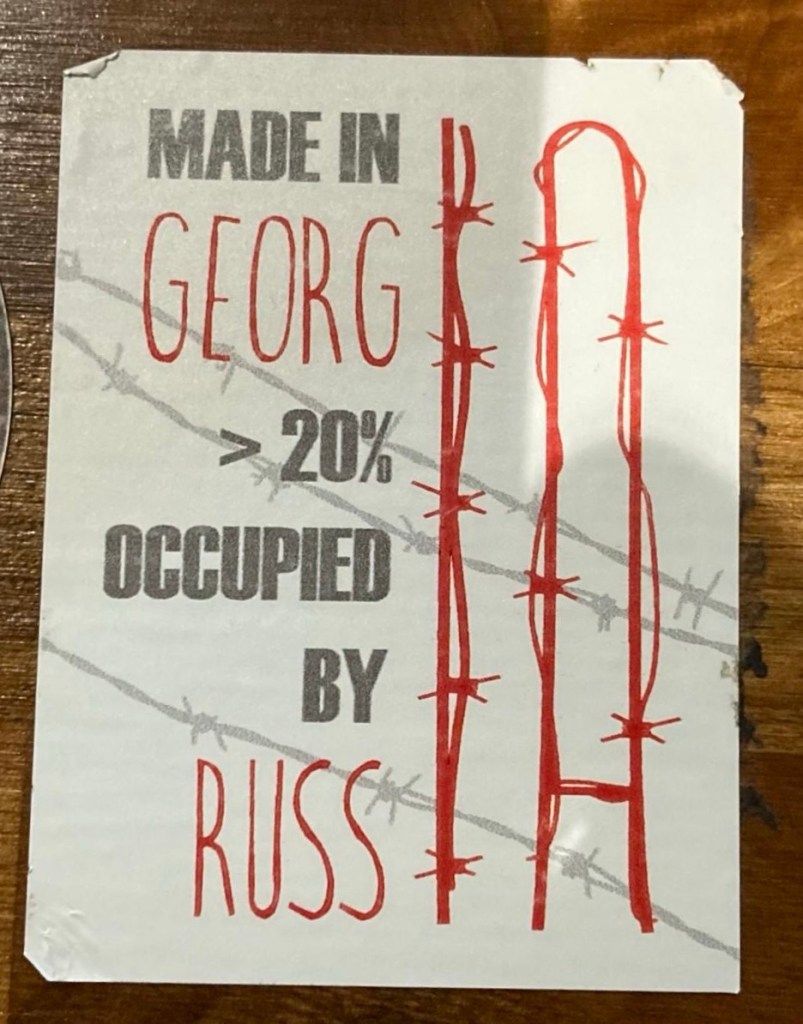
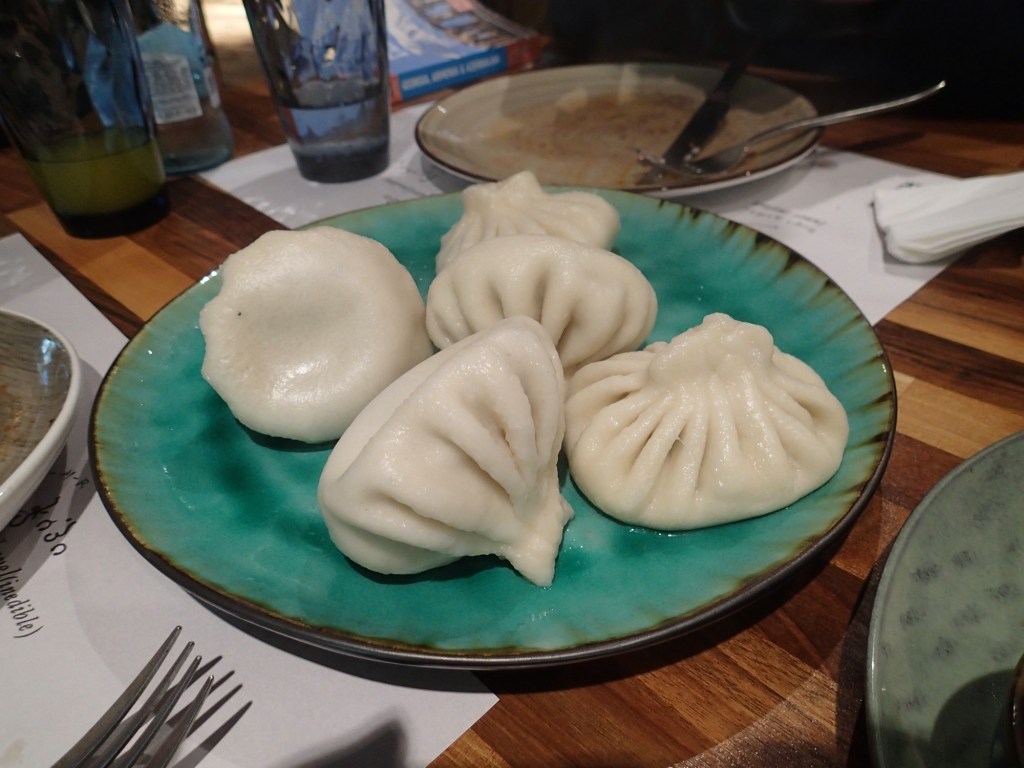
The next, important, stop was for lunch at a little village called Pasanauri, one of the many paces where Georgian khinkali dumplings are supposed to originate. It would have been rude not to try these, which traditionally come stuffed with beef (khevsuruli) – though the vegetarians amongst us ate them filled with mushrooms, mashed potato and garlic instead, washed down with slightly salty Borjomi spring water. The restaurant, called Abkhazia, afte the region of Northern Georgia recognised and propped up as an independent state mainly by Russia, wears its heart on its sleeve:
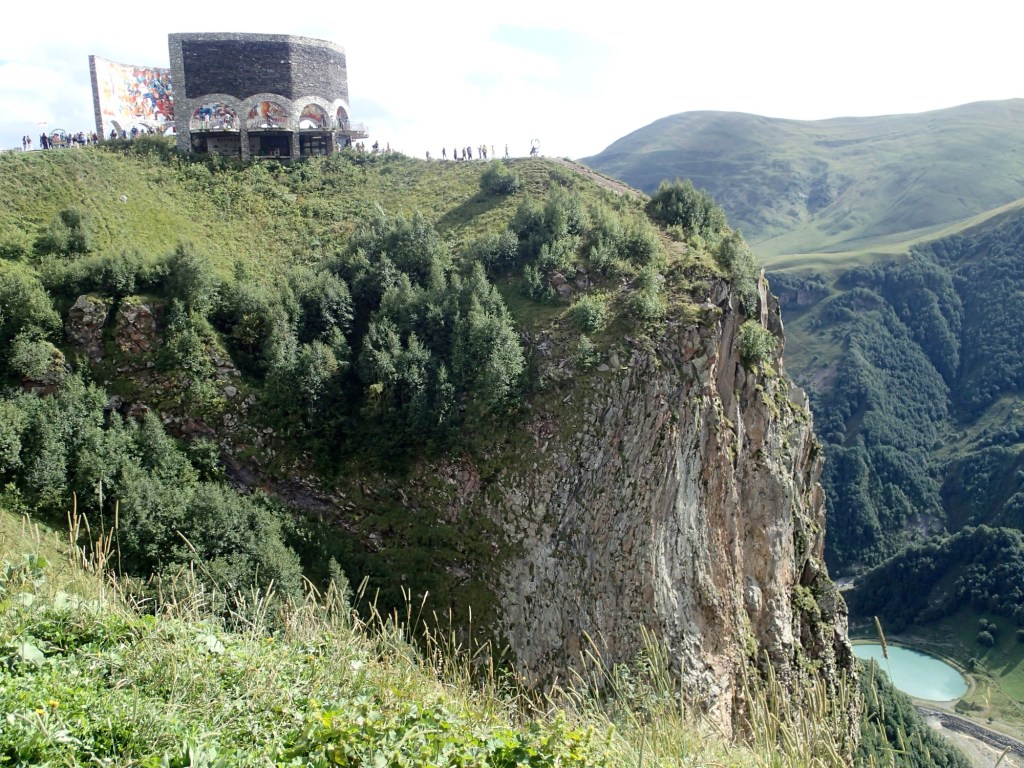
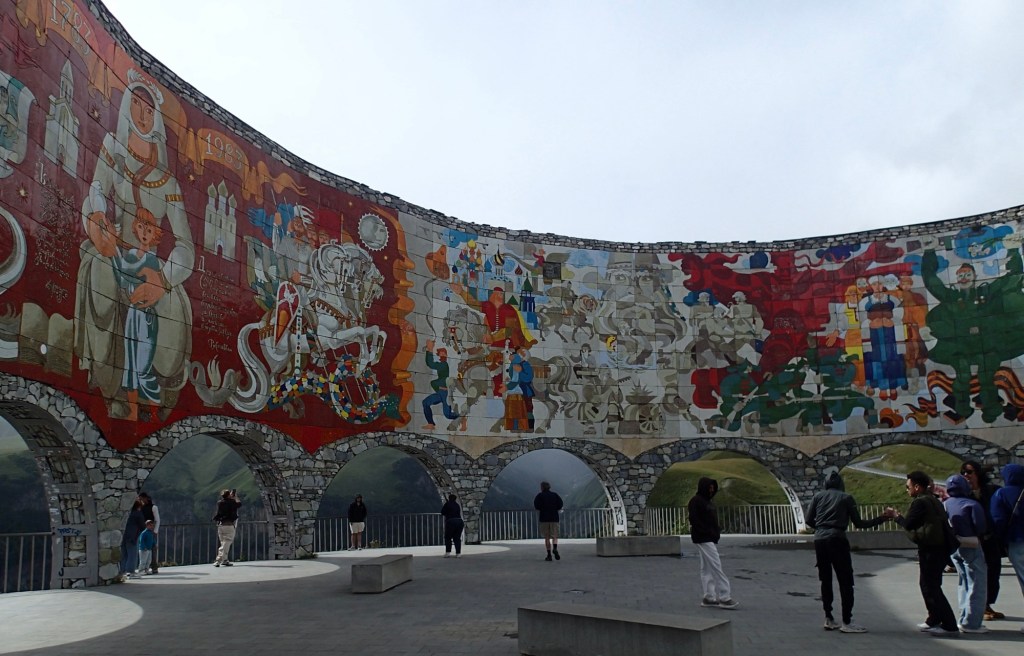
After that, the Georgian-Russian Friendship monument, where we stopped for the last time on our journey, seemed deeply ironic. It was built in 1983 to celebrate 200 years of Georgia as a Russian protectorate. I find it more than a little surprising that it’s still standing, given present relations! It does, at least, offer some spectacular views over Devil’s Valley.
The final stage of the journey took us over the 2379 m high Jvari pass, which has a separate road running through snow tunnels alongside it, for use in winter. I guess this is testament to the road’s importance as a trade route with Armenia, Russia and Iran. Eventually, the pass will be bypassed by a Chinese-funded and built tunnel through the mountains, currently under construction, explaining the Chinese writing on some of the gravel plants we passed along the rivers. An interesting example of real politic, given China’s current support for Putin!
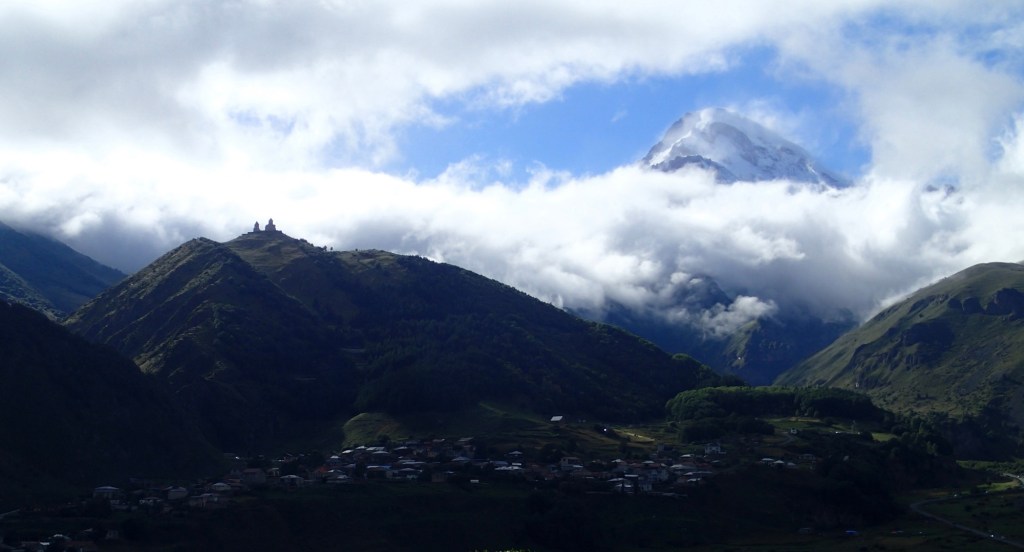
Our lovely hotel (Capra) in Stepantsminda turns out, like most places in the town, to have fabulous views of the famous Gergeti-Trinity church and Mt Kazbeg, the highest peak in this part of the Caucasus, at 5054 m. We were there in time to catch the early evening light over the peaks. Boy is it cold when the sun goes down, though, even at just 1700 m above sea level!
Culinary highlights were the khinkali at Pasanauria, and a very tasty sharing plate of pkhali vegetable and walnut pates with our evening meal. The naturally-sparking Borjomi water might not be to everyone’s taste but we all liked it.


Another interedting mix of food, plants, history and scenery! Our fleabanes and mulleins are over now – that is such a pretty one!
Isn’t it – lots still in flower here, to my surprise!