On Sunday, our second in Georgia, Shota drove us to the nearby Nekresi monastery high in the foothills on the edge of the Alazani river, with fabulous views over the vineyards of the plain. There was a sizeable monastic community and town here, 2000 years ago, but a series of earthquakes and incursions by Arabs put paid to that. Recent archaeological excavations have revealed all sorts of interesting buildings in the area, including the remains of a Zoroastrian fire temple.
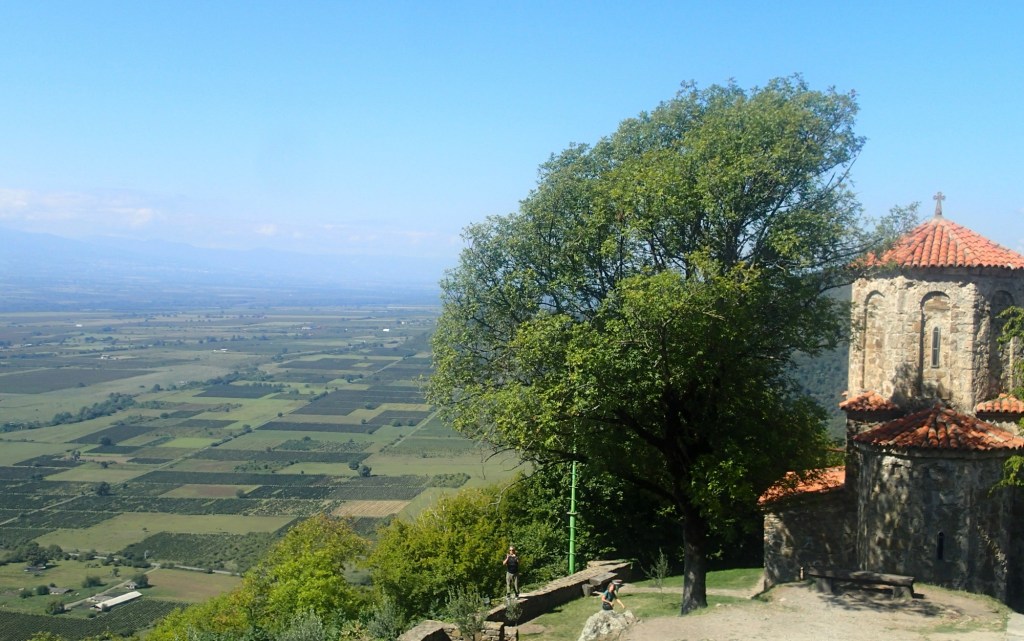
The present monastery was founded in the 6th century, but then closed down after the Imperial Russian takeover of the Georgian Orthodox Church in 1811, not to be reopened until after the fall of the Soviet Union. There have been monks here again since 2000 and, visiting on a Sunday, there was a real sense of a Christian community worshiping at the main Church of the Dormition. As at Grimi, where we stopped on the way to Keti’s house from Stepantsminda, the frescoes are well-worn and difficult to interpret, but at least here the faces don’t seem to have been defaced when the Russians occupied Georgia.
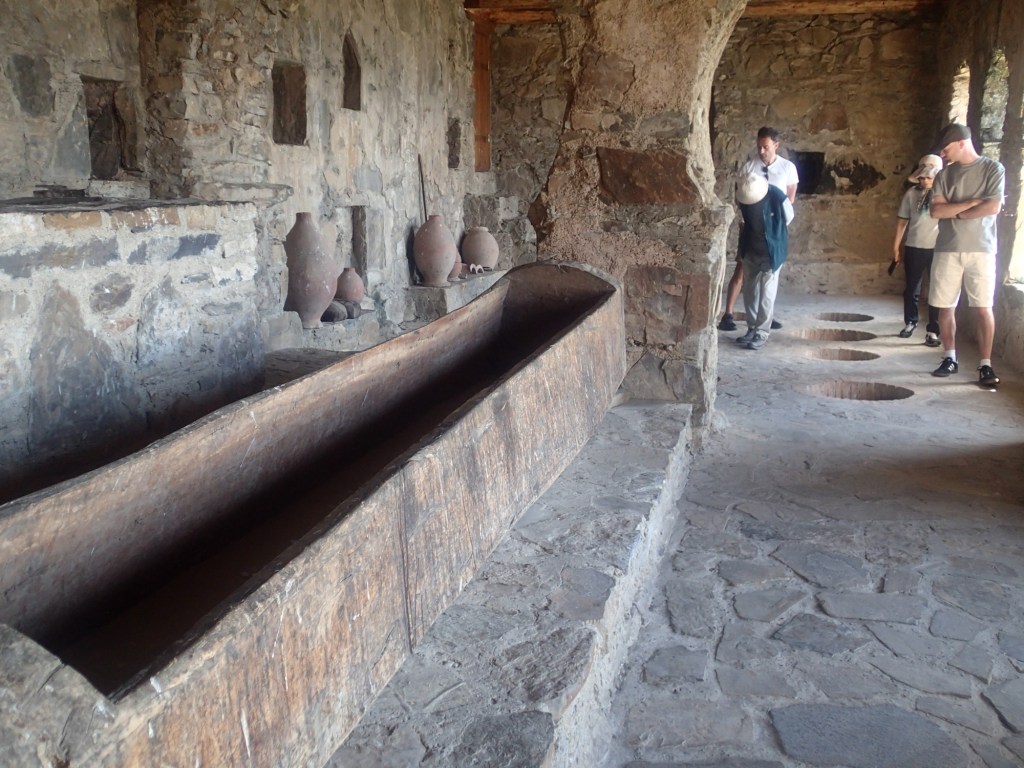
After yesterday, it was interesting to see the wine-making apparatus here – qvevri and a large wooden winepress made from a single hollowed out tree trunk in the Bishop’s palace, and two even larger stone presses. The monks must have had plenty of people to help out with the winemaking!
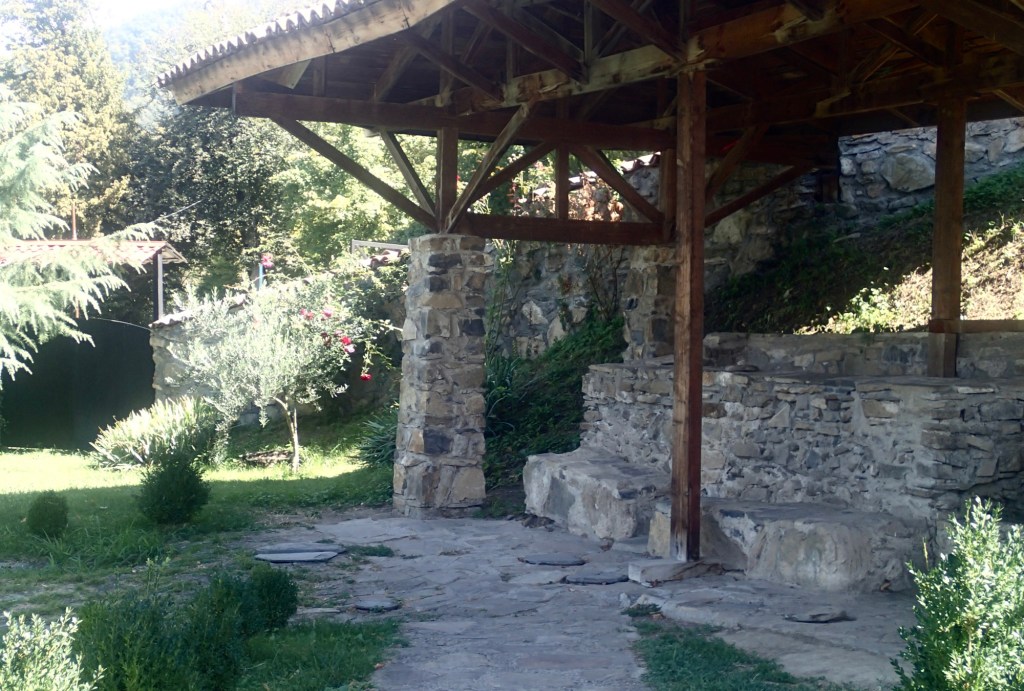
Returning to the car park at the bottom of the hill, we bought ice creams and sat under one of the shelters in the shady barbecue spot. The groups were all single sex, and largely male, this being how people traditionally socialise in Georgia. The group next to us had brought food and plenty of chacha and, as predicted, the volume of their chat and the music they were playing got louder, toast by toast. According to Shota, people often get tearful as time wears on – he described it as the only form of therapy Georgian men engage in. There were a couple of pre-teenage boys in the group, on soft drinks rather than alcohol, and Shota pointed out that they were being inducted into the toasting culture of their elders.
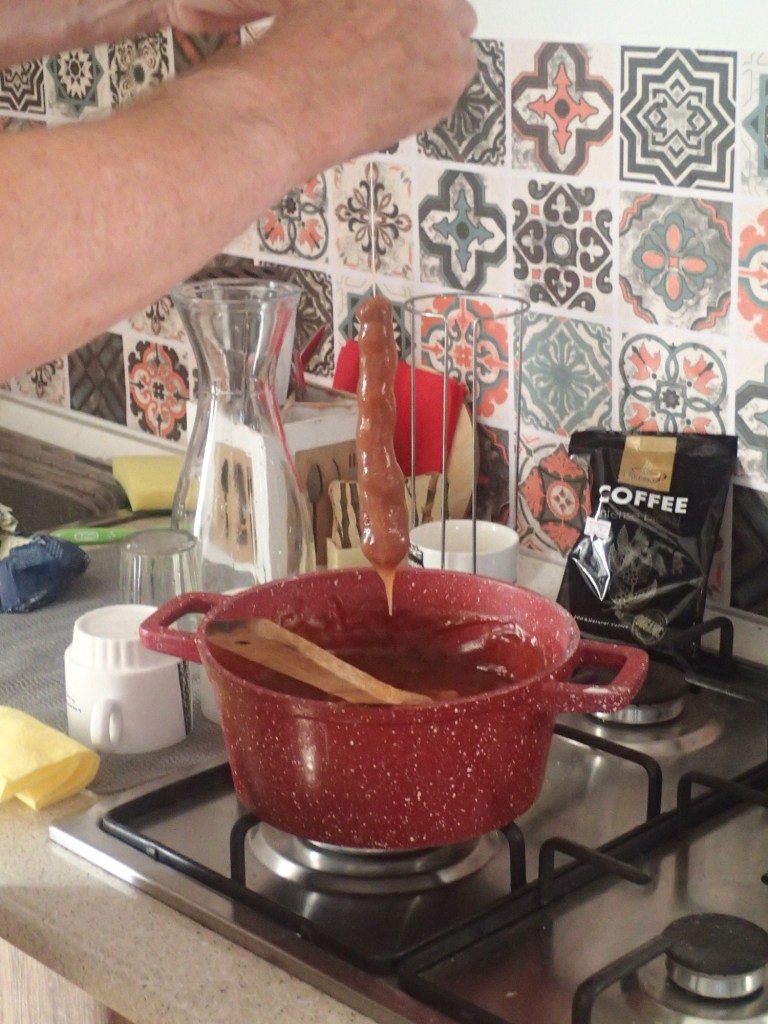
We spent part of the afternoon back at Keti’s making churchkhela, a dessert made of nuts, dipped in grape juice thickened by boiling it with flour, and then hung up to dry. It is ubiquitous now, in every tourist shop and restaurant, but was traditionally a food carried by soldiers and other travellers; highly nutritious and easily transported. We only had to make the thickened grape juice and dip the nuts in the paste. I feel the harder part was probably what Keti had already done – stringing sets of eight or ten hazelnuts using a needle and thread; no mean feat given how hard the nuts are!
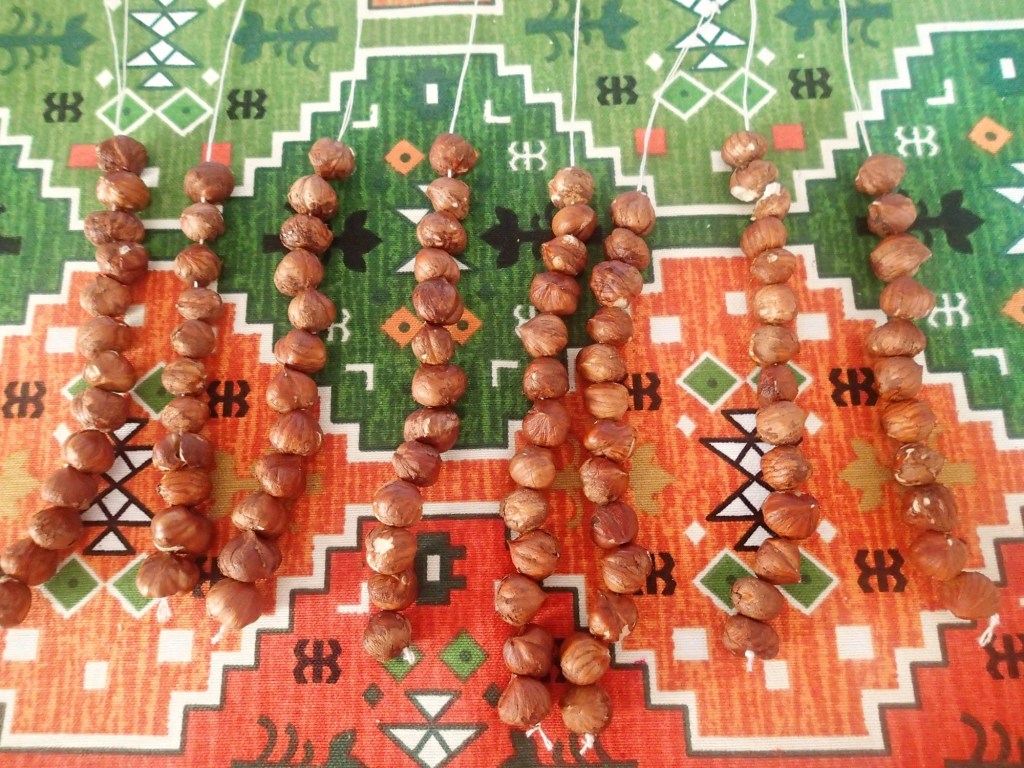
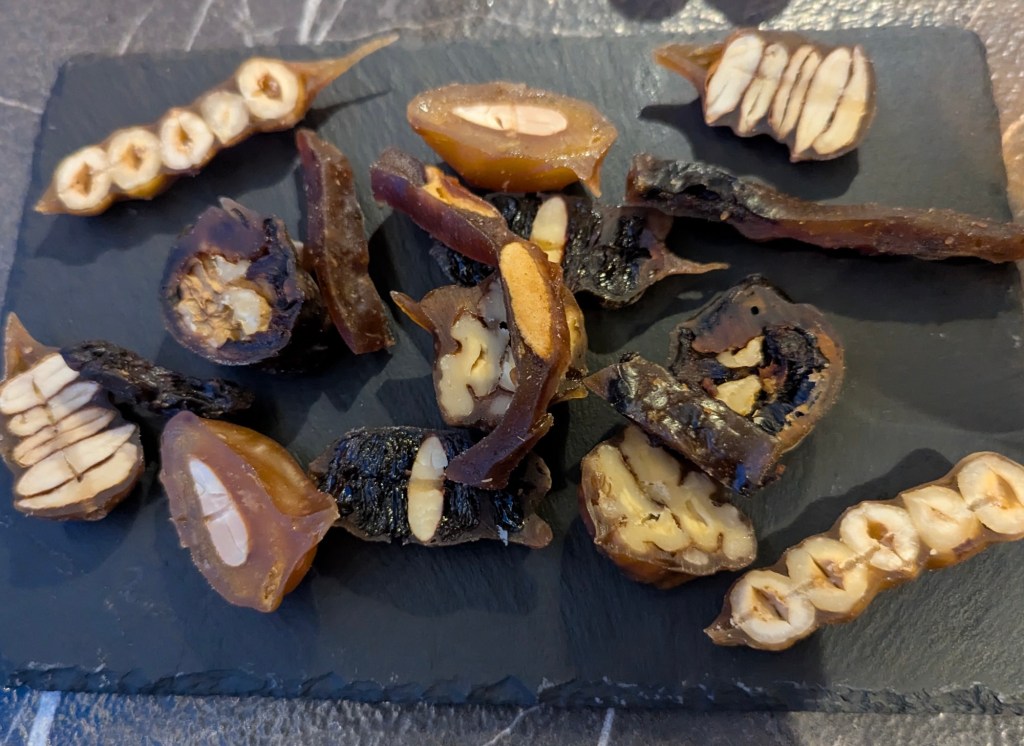
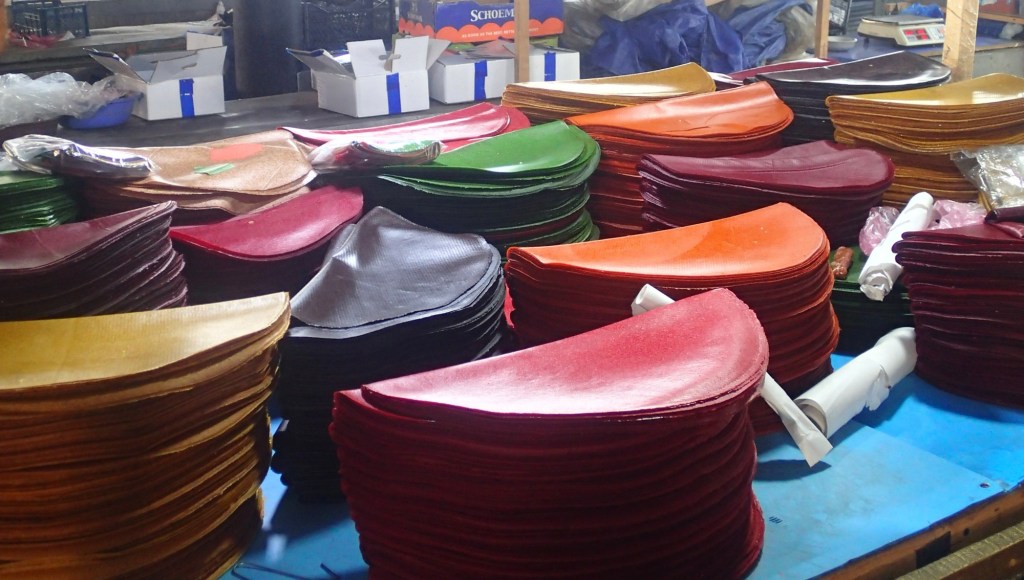
The churchkhela we’d made was not dry enough to take home by the time we left Keti’s house but we got to sample good churchkhela and fruit leather for dessert on our first night back in Tblisi, at Bistro Coneli near the baths. It came with a variety of nuts – walnuts as well as hazelnuts – and I think dried plums as well as grapes. It didn’t come in the range of garish colours we saw when we stopped to buy spices in the bazaar in Telavi, on the way back to Tblisi, I’m glad to say!
The culinary highlight of the last few days has been the amount of very locally produced and homemade food we’ve eaten at every meal; home produced honey with a distinctive minty flavour, figs from the garden, lobio made with home-grown Borlotti beans, stuffed peppers, salads, home made sauces and compotes and tasty chicken stews for the meat eaters. I’d love to be able to grow as much of our food as this – it made Rosie and I think of Barbara Kingsolver’s wonderful book, Animal, Vegetable, Miracle.


Love the sound of the dipped nuts and the fruit leather sounds a bit like the membrillo quince paste in Spain
Linda M H Fowler
On Wed, 16 Sept 2026, 06:34 heatherkellyblog – travel with me and wonder